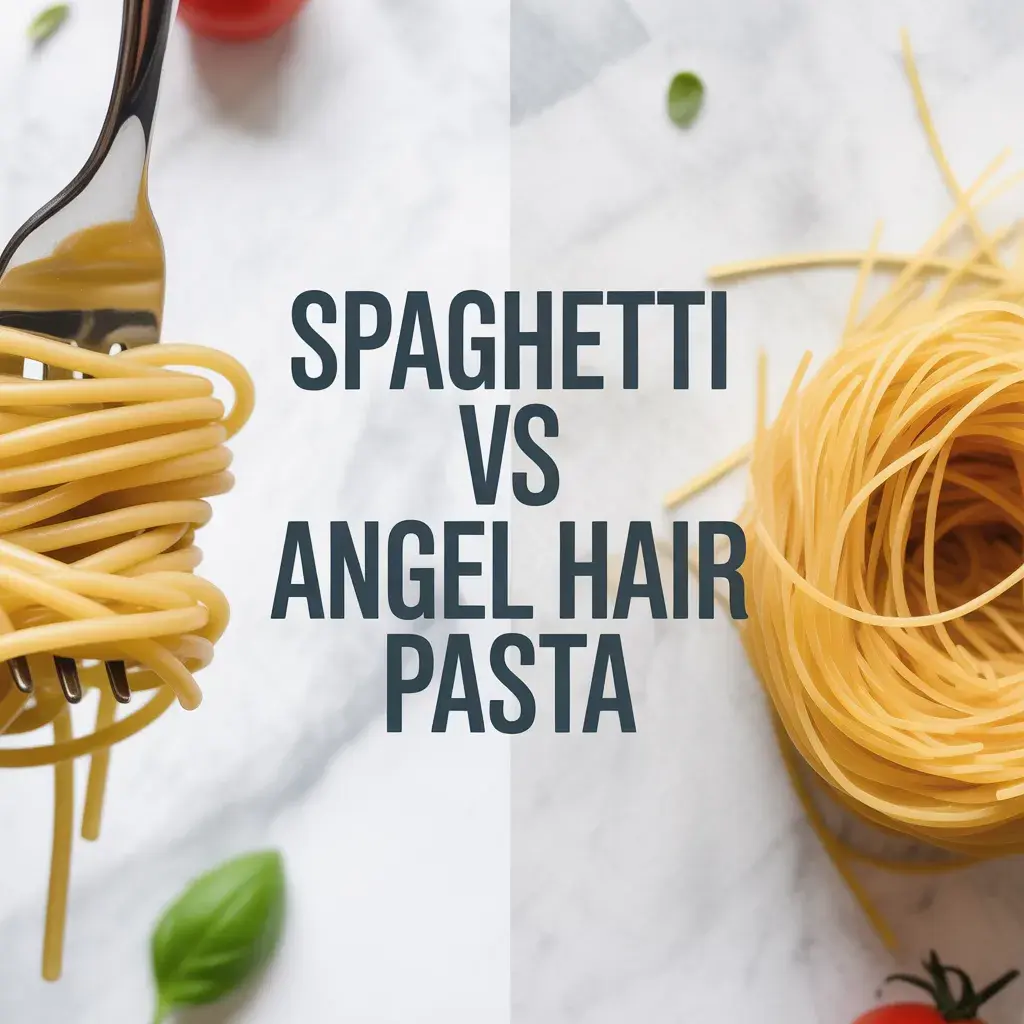
If you’ve ever stood in the pasta aisle staring at two nearly identical boxes wondering “Spaghetti vs Angel Hair Pasta aren’t these basically the same thing?” — you’re not alone. Spaghetti and angel hair look like twins at first glance: both are long, slender, round strands of pasta. But in the kitchen, they behave very differently, and using the wrong one can quietly ruin a dish you worked hard to make.
This guide breaks down everything — from thickness and texture to the science of sauce pairing — so you always know which pasta to reach for.
What Is Spaghetti? A Quick Background
Spaghetti is arguably the world’s most recognized pasta shape. Its name comes from the Italian word spago, meaning “string” or “twine” — which is exactly what it looks like. Originating in Southern Italy, particularly in Naples and Sicily, spaghetti has been a staple of Italian cuisine since at least the 12th century, though early versions were more like thick, hand-rolled noodles.
Today, spaghetti is standardized at roughly 2mm in diameter according to most commercial pasta producers (though this can vary slightly by brand and region). It’s made from durum wheat semolina and water — the same foundational ingredients used in most dried Italian pasta. Its firm, slightly chewy bite is what pasta enthusiasts call al dente — “to the tooth” — and it holds up beautifully to robust, hearty sauces.
What Is Angel Hair Pasta?
Angel hair — known in Italian as capellini or sometimes capelli d’angelo — is the most delicate pasta in the long-noodle family. The name translates literally to “little hairs” and “angel’s hair,” which paints a pretty accurate picture. These ultra-fine strands measure just 0.85mm to 0.92mm in diameter, making them nearly half the thickness of spaghetti.
Angel hair has a softer, more silky texture when cooked and a much more delicate mouthfeel. It originated in the Liguria and Campania regions of Italy, where lighter cooking styles favored subtle, refined sauces that wouldn’t overpower the pasta itself.
Spaghetti vs Angel Hair: The Key Differences at a Glance
| Feature | Spaghetti | Angel Hair (Capellini) |
|---|---|---|
| Diameter | ~2mm | ~0.85–0.92mm |
| Cooking time | 8–12 minutes | 2–4 minutes |
| Texture | Firm, chewy, al dente | Delicate, soft, silky |
| Best sauce weight | Medium to heavy | Light and thin |
| Classic dish | Spaghetti Bolognese, Carbonara | Capellini al Pomodoro, lemon-butter sauces |
| Holds sauce? | Very well | Less so |
| Overcooks easily? | Forgiving | Very easily |
You may interested in: Spaghetti Squash Carbs vs Pasta
The Thickness Factor: Why It Matters More Than You Think
Here’s something most home cooks don’t realize: pasta thickness isn’t just about preference — it’s about how sauce clings to the surface.
Spaghetti’s thicker body creates more surface tension and structural integrity. When you toss it with a thick tomato meat sauce or a creamy carbonara, the noodle can support the weight and the coating is even. The pasta doesn’t collapse under pressure.
Angel hair, on the other hand, has an enormous surface-area-to-volume ratio. This means sauces spread over it very quickly and lightly — which is a feature, not a bug, when used correctly. A drizzle of high-quality olive oil, fresh lemon juice, and a handful of basil leaves transforms angel hair into something almost ethereal. But add a thick Bolognese? The sauce overwhelms the noodle entirely, and you end up with a clumpy, unbalanced mess.
Cooking Time: The Most Practical Difference
This is where the gap between the two pastas is most dramatic — and most dangerous for careless cooks.
Spaghetti generally takes 8 to 12 minutes to cook al dente in boiling salted water, depending on brand and thickness.
Angel hair can be ready in as little as 2 minutes and should almost never go beyond 4. It continues to cook from residual heat even after you drain it. Blink at the wrong moment and it turns into a soft, clumped-together tangle that no sauce can save.
The practical takeaway: never walk away from the pot when cooking angel hair. Unlike spaghetti, which forgives a minute or two of distraction, capellini demands your full attention.
Best Sauces for Spaghetti
Spaghetti is a workhorse pasta. It partners well with a wide range of sauces, especially ones with body, fat, or protein. Some of the best pairings include:
Spaghetti Bolognese — The classic slow-cooked meat ragù from Bologna is practically designed for spaghetti’s sturdy texture. The dense, rich sauce clings to every strand beautifully. (Note: traditional Italians actually use tagliatelle for Bolognese, but spaghetti has become the global standard and it works wonderfully.)
Spaghetti alla Carbonara — The Roman classic of eggs, guanciale, Pecorino Romano, and black pepper needs a pasta that can be coated evenly without absorbing too much of the silky egg sauce. Spaghetti does this perfectly.
Spaghetti Aglio e Olio — Garlic, olive oil, chili flakes, and parsley. One of the simplest pastas in the world, and one of the greatest. The slight roughness of semolina spaghetti helps the oil-based sauce cling rather than slide off.
Marinara and tomato-based sauces — Spaghetti and tomato sauce is a timeless combination. The pasta’s structure handles the acidity and texture of a good San Marzano tomato sauce with ease.
Puttanesca — The bold, briny flavors of olives, capers, anchovies, and tomatoes are a fantastic match for spaghetti’s neutral, slightly wheaty flavor.
Best Sauces for Angel Hair
Also Read: Robust Inspired Tomato Sauce
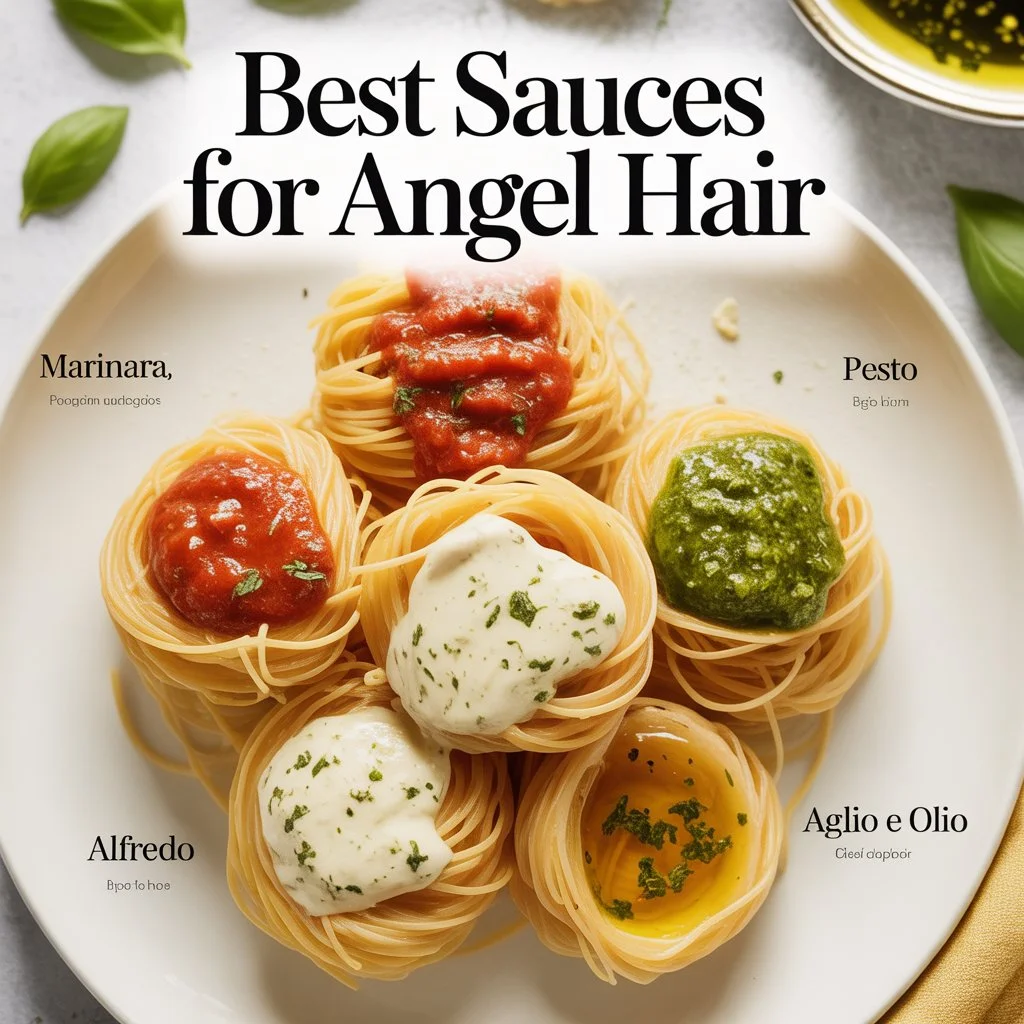
Angel hair shines brightest with sauces that are light, aromatic, and clean. Because the pasta itself is so delicate, you want the flavors to complement — not compete with — the noodle.
Fresh tomato sauce — A quick, uncooked or barely-cooked fresh tomato sauce with basil and extra virgin olive oil is absolutely stunning on angel hair. The lightness of the sauce mirrors the delicacy of the pasta.
Lemon butter sauce — A simple reduction of lemon juice, unsalted butter, garlic, and a splash of white wine creates a silky coating that works in perfect harmony with capellini’s texture.
Seafood and broth-based sauces — Light shrimp scampi, clam sauce (white, not red), or a simple garlic-white wine sauce with mussels are classic angel hair pairings. The brothy base coats the pasta without weighing it down.
Pesto — Basil pesto, when thinned slightly with pasta water, coats angel hair beautifully. The bright, herbal flavors are a natural match for the delicate noodle.
Cold pasta salads — Angel hair is sometimes used in light, cold pasta dishes, especially in Asian-Italian fusion cuisine, where it mimics thin Asian noodles like somen or vermicelli.
Can You Substitute One for the Other?
The short answer: sometimes, but with caution.
You can swap spaghetti into dishes designed for angel hair if you adjust your expectations — the dish will be heartier and slightly less elegant, but it will work. Going the other direction is trickier. Substituting angel hair into a spaghetti dish (like Bolognese or Carbonara) usually ends in disappointment. The noodle can’t handle the weight of the sauce, overcooks quickly, and loses its individual texture.
If you’re out of spaghetti, linguine, spaghettini, or vermicelli are much better substitutes. If you’re out of angel hair, thin spaghetti (spaghettini) is your best bet.
Nutritional Comparison: Are They Different?
Nutritionally, spaghetti and angel hair made from the same base ingredients (durum wheat semolina) are nearly identical per dry weight. The differences are negligible — we’re talking about the same carbohydrate, protein, and fat profiles with only tiny variation.
However, because angel hair is thinner, a given weight of pasta has more surface area, which can slightly affect how much sauce-based fat it absorbs per serving. In practice, this means an angel hair dish with an olive oil sauce may deliver marginally more fat per bite than the equivalent spaghetti dish — though this is more about recipe design than the pasta itself.
Both are available in whole wheat versions, gluten-free variants (corn, rice, or chickpea-based), and even lentil or edamame-based options for higher protein content.
The Italian Perspective: Regional Traditions Worth Knowing
In Italy, pasta shape matching is taken seriously. There’s a whole cultural logic behind why certain sauces belong with certain shapes — and it’s not arbitrary.
In the regions where angel hair (capellini) is traditional — particularly Liguria, the home of pesto, and coastal Campania — the cooking style is inherently lighter. Fresh seafood, garden herbs, citrus, and fine olive oils dominate the cuisine. It makes perfect sense that the pasta of choice would be the most delicate one.
Spaghetti, by contrast, is associated with the heartier, more volcanic south: Naples with its intense tomato culture, Abruzzo with its lamb ragùs, Rome with its umami-rich cured pork and cheese sauces. The pasta holds its own against bold flavors because it was born alongside them.
How to Cook Each Pasta Perfectly
Perfect Spaghetti
- Use a large pot — at least 4–5 liters of water per 400g of pasta.
- Salt the water generously. It should taste “like the sea” — roughly 1–2 tablespoons of salt per 4 liters.
- Add spaghetti only once the water is at a full rolling boil.
- Stir immediately and once every 2 minutes to prevent clumping.
- Start testing 2 minutes before the package time. The pasta should be slightly firm at the center — al dente.
- Reserve a cup of pasta water before draining. This starchy liquid is liquid gold for finishing sauces.
- Never rinse the pasta. The starch on the surface is what helps sauce adhere.
Perfect Angel Hair
- Same salted water rules apply, but use even more water proportionally — the pasta cooks so fast you need a strong rolling boil maintained throughout.
- Have your sauce fully ready and warm before the pasta goes in. There’s no time to scramble.
- Set a timer for 2 minutes. Taste at 90 seconds.
- Drain immediately when it reaches just-underdone. It will finish in the pan with your sauce.
- Toss quickly and serve immediately. Angel hair does not wait well.
Common Mistakes People Make with Both Pastas
With spaghetti:
- Cooking in too little water (leads to gummy, starchy pasta)
- Not salting the water (results in bland pasta no sauce can fix)
- Rinsing after cooking (washes away the starch that binds sauce to noodle)
- Breaking it before cooking (a culinary crime in Italy, and also unnecessary)
With angel hair:
- Walking away from the pot (it overcooks in under a minute)
- Pairing it with heavy sauces (it buckles under the weight)
- Not serving immediately (it clumps and sticks faster than any other pasta)
- Overcrowding the pot (thin pasta sticks together if it doesn’t have room)
Which One Should You Buy?
If you can only have one long pasta in your pantry, spaghetti is the more versatile choice. It handles more sauces, forgives timing errors, and covers more recipe territory than any other pasta shape.
Angel hair earns its place as a specialty item — something you reach for when you want elegance, speed, and lighter summer flavors. It’s the pasta equivalent of a finely tailored shirt: beautiful for the right occasion, but not your everyday choice.
That said, a well-stocked pasta kitchen should absolutely have both. The occasions where angel hair is the right answer — a light garlic-shrimp dish on a warm evening, a quick lemon-butter pasta when time is short — are genuinely wonderful, and spaghetti simply can’t replicate them.
Final Verdict
Spaghetti and angel hair are not interchangeable. They’re two different tools designed for two different jobs.
Choose spaghetti when you’re making hearty meat sauces, creamy egg-based sauces, robust olive oil preparations, or anything where the pasta needs to hold its own against bold ingredients.
Choose angel hair when you want something light and refined — fresh tomatoes, citrus, olive oil, butter, or delicate seafood. And when you’re cooking it, move fast.
Understanding this one distinction — matching pasta weight to sauce weight — will elevate your cooking more than any fancy technique or expensive ingredient. It’s the foundation of how Italian cooking actually works, and once you feel it, you’ll never reach for the wrong pasta again.