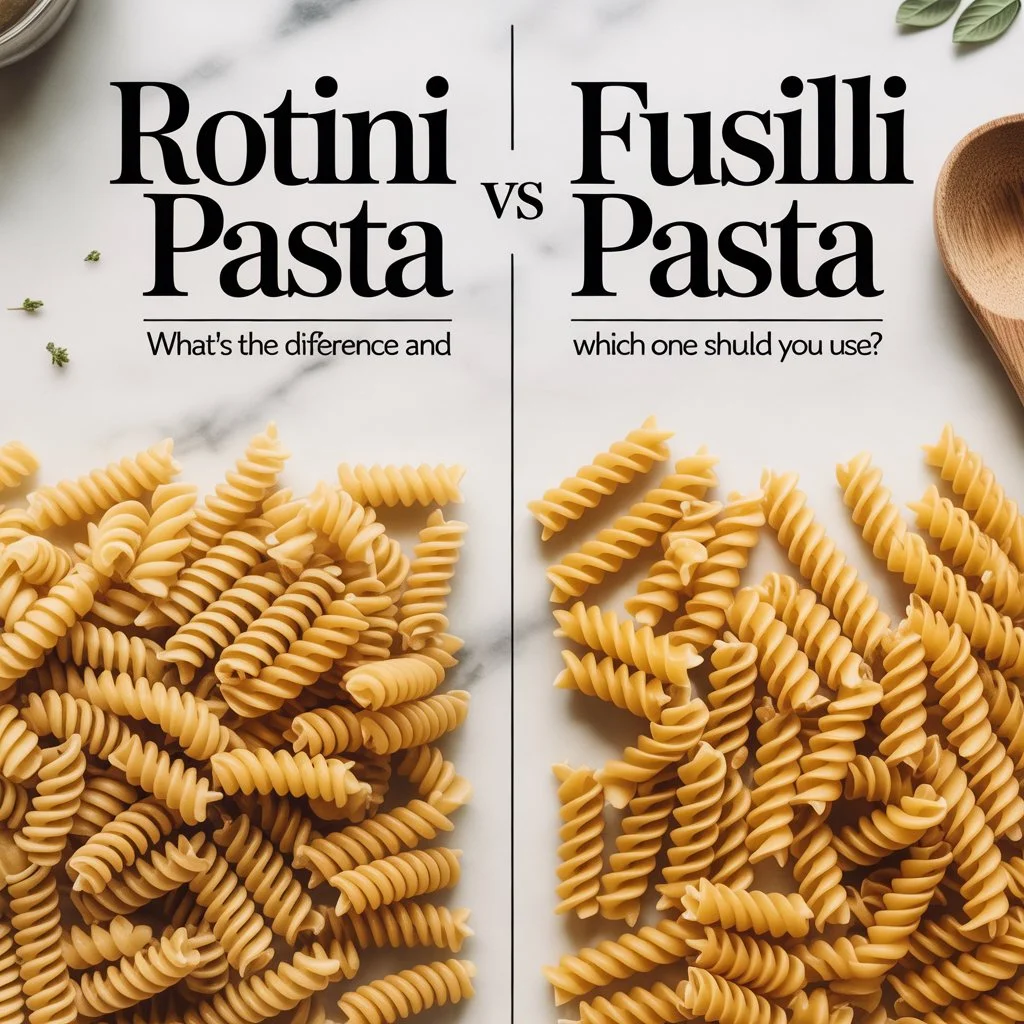
If you’ve ever stood in the pasta aisle staring at two nearly identical spiral-shaped pastas wondering which one to grab — you’re not alone. Rotini and fusilli are two of the most commonly confused pasta shapes in the world, and honestly, the confusion is completely understandable. They look almost identical at first glance, they’re both spiraled, and they’re both incredibly versatile. Yet, they are distinctly different pastas with unique origins, textures, and best uses in the kitchen.
Whether you’re a home cook trying to nail the perfect pasta salad, an Italian food enthusiast wanting to deepen your knowledge, or simply someone who wants to stop grabbing the wrong bag at the grocery store — this guide has you covered. We’re going deep on everything rotini vs fusilli: their origins, shapes, textures, flavors, best sauces, ideal recipes, nutritional profiles, and much more.
By the end of this article, not only will you know the difference — you’ll know exactly which one to reach for every single time.
Also Read: DQ Breakfast Menu
A Brief History of Spiral Pasta
Before we pit rotini against fusilli, it helps to understand where spiral pasta comes from in the first place.
Pasta itself has a history stretching back centuries in Italy, with different regions developing their own unique shapes based on local ingredients, traditions, and cooking methods. Spiral pasta shapes were developed with a very specific purpose in mind — to trap and hold sauce. The ridges, curves, and spirals of these shapes act like tiny vessels, capturing every drop of sauce and ensuring that each bite is packed with flavor.
The Origins of Fusilli
Fusilli is the older of the two shapes and has deep roots in Southern Italy, particularly in the regions of Campania and Calabria. The word “fusilli” comes from the Italian word “fuso,” meaning spindle — a reference to the traditional method of making this pasta by hand, where thin strips of pasta dough were wrapped around a thin rod or spindle and then rolled to create the spiral shape.
In traditional Southern Italian households, fusilli was made by hand using nothing more than a thin knitting needle or a wire, and the skill was passed down through generations. This handmade heritage gives fusilli a sense of rustic authenticity that food lovers deeply appreciate.
The Origins of Rotini
Rotini, on the other hand, is more closely associated with Italian-American cuisine than with traditional Italian cooking. While its exact origins are less clearly documented than fusilli, rotini became widely popular in North America and is now one of the most recognizable pasta shapes in American supermarkets.
The word “rotini” comes from the Italian word “rotini,” meaning “small wheels” or “twists.” It is shorter and tighter in its spiral than fusilli, and its rise to popularity in North America is largely tied to the explosion of pasta salads and casual weeknight dinners in American food culture throughout the late 20th century.
Shape and Appearance — Rotini vs Fusilli
This is where the real distinction begins. While both pastas are spiral-shaped, there are clear differences once you look closely.
Fusilli — Loose, Long, Elegant Spirals
Fusilli features longer, more open, and loosely wound spirals. The twists are spread out, giving each piece a more relaxed, flowing appearance. A typical piece of fusilli is around 4–5 centimeters long and the spiral winds around itself in a way that creates open grooves and gaps along its length.
This open spiral structure means fusilli has more surface area and deeper grooves, making it exceptionally good at capturing chunky, textured sauces. Think of it like a corkscrew with wide, open turns.
Rotini — Tight, Short, Compact Spirals
Rotini, by contrast, features shorter, tighter, and more compact spirals. The twists are wound more closely together, giving each piece a denser, more uniform appearance. A typical piece of rotini is around 2–3 centimeters long — noticeably shorter than fusilli.
The tighter spiral means rotini holds onto smoother, creamier sauces particularly well, as the sauce gets locked into the compact grooves. Think of it like a tightly coiled spring.
Side by Side
| Feature | Fusilli | Rotini |
|---|---|---|
| Length | Longer (4–5 cm) | Shorter (2–3 cm) |
| Spiral | Loose, open | Tight, compact |
| Texture | More grooves, more surface area | Dense, uniform |
| Origin | Southern Italy | Italian-American |
| Best for | Chunky sauces, baked dishes | Creamy sauces, pasta salads |
Texture and Mouthfeel
Beyond appearance, rotini and fusilli offer a noticeably different eating experience.
Fusilli’s Texture
Because of its longer, more open spiral, fusilli has a chewier, more substantial bite. When cooked al dente — which is always recommended — fusilli has a satisfying resistance that holds up well against bold, hearty sauces and ingredients. The open grooves mean that sauce, herbs, and small pieces of vegetables or meat nestle inside each twist, delivering complex flavors in every bite.
Rotini’s Texture
Rotini’s tighter, more compact shape gives it a slightly firmer, more uniform texture. It tends to cook a little more evenly than fusilli due to its consistent density, and it holds its shape exceptionally well — even after sitting in a pasta salad dressing for hours. This structural integrity is one of the main reasons rotini became the go-to pasta for cold pasta salads.
Flavor Profile — Does Shape Affect Taste?
Technically, both rotini and fusilli are made from the same basic ingredients — semolina flour, water, and sometimes eggs — so their base flavor is essentially identical. However, shape does influence the overall flavor experience in a very real way.
Because fusilli’s open spirals capture more sauce and ingredients within its grooves, it tends to deliver a more sauce-forward, complex flavor in each bite. You’re not just tasting pasta — you’re tasting pasta plus whatever delicious sauce is trapped inside it.
Rotini’s compact spirals coat evenly with sauce on the outside, delivering a more balanced pasta-to-sauce ratio that many people find particularly satisfying in dishes where the pasta itself is meant to shine alongside the sauce rather than be overwhelmed by it.
Whole Wheat, Gluten-Free, and Colored Varieties
Both fusilli and rotini are available in a range of varieties beyond the standard semolina version:
- Whole wheat versions of both offer a nuttier, earthier flavor and higher fiber content
- Gluten-free versions made from rice flour, chickpea flour, or corn flour are widely available
- Colored varieties — spinach (green), tomato (red), squid ink (black), and beet (pink) — add visual flair and subtle flavor nuances to both shapes
- Legume-based versions made from lentils or chickpeas pack extra protein and fiber
Best Sauces for Fusilli
Fusilli’s open, groovy spirals make it a champion with certain types of sauces. Here’s where it truly shines:
Pesto
Fusilli and pesto are a match made in culinary heaven. The open spirals of fusilli capture the thick, oily, herb-packed pesto sauce perfectly, ensuring every bite is loaded with basil, garlic, and parmesan goodness. Fusilli al pesto is considered a classic combination in Italian cuisine for very good reason.
Chunky Tomato and Meat Sauces
Hearty ragù, Bolognese, arrabbiata, and amatriciana all pair beautifully with fusilli. The loose spirals trap small chunks of meat, vegetables, and tomato, creating a deeply satisfying eating experience.
Baked Pasta Dishes
Fusilli holds up exceptionally well in baked pasta dishes like pasta al forno. Its structure remains intact through the baking process, and it absorbs surrounding flavors without becoming mushy.
Vegetable-Based Sauces
Roasted vegetable sauces, caponata-style preparations, and sauces with diced zucchini, eggplant, or bell peppers cling beautifully to fusilli’s spirals.
Best Sauces for Rotini
Rotini’s compact, tight spirals make it the go-to choice for a different set of applications:
Creamy Sauces
Alfredo, carbonara, four-cheese sauce, and vodka sauce all coat rotini’s tight spirals evenly and consistently. The compact shape means the sauce doesn’t overpower — it envelops each piece in a smooth, luxurious layer.
Pasta Salads
This is where rotini truly dominates. Its tight spirals hold dressing, vegetables, cheese cubes, olives, and deli meats without becoming soggy, even after hours in the refrigerator. Classic Italian pasta salad, Greek pasta salad, and BLT pasta salad are all iconic rotini dishes for this very reason.
Light Olive Oil Based Sauces
Simple aglio e olio (garlic and olive oil) or lemon butter sauces coat rotini evenly, letting the clean, simple flavors shine without the sauce pooling at the bottom of the bowl.
Tomato-Based Sauces
While fusilli edges ahead with chunky tomato sauces, rotini works beautifully with smoother marinara or pomodoro sauces that coat the compact spirals in a thin, even layer.
Rotini vs Fusilli in Pasta Salads
If there’s one battleground where the rotini vs fusilli debate gets most heated among home cooks, it’s the pasta salad.
Pasta salad is a staple at barbecues, potlucks, picnics, and weeknight dinners across North America, and both shapes are frequently used. But which one is better?
Rotini wins for pasta salad, and here’s why:
Its compact, tight spirals hold their shape and texture even after being dressed and refrigerated for hours — sometimes overnight. The tight grooves trap bits of dressing, herbs, and small vegetables, ensuring every forkful is flavorful. Fusilli, while also capable in pasta salads, can sometimes feel a little too large and unwieldy when served cold, and its open spirals may not hold dressing as consistently.
That said, if you only have fusilli on hand — use it. The difference is noticeable to a trained palate but won’t ruin your dish by any stretch.
Rotini vs Fusilli in Hot Pasta Dishes
When it comes to hot pasta dishes served fresh from the stove, fusilli takes a slight edge over rotini for most sauce types.
Its longer, more open spirals interact more dynamically with sauces, herbs, and additional ingredients — wrapping around pieces of sausage, trapping capers and olives, or cradling a rich pesto. The result is a more texturally complex and visually impressive plate of pasta.
For simple, creamy, or smooth sauces though, rotini’s consistent coating ability makes it a worthy competitor even in hot preparations.
Nutritional Comparison — Rotini vs Fusilli
Since both pastas are typically made from the same base ingredients, their nutritional profiles are nearly identical per serving.
Per 2 oz (56g) dry serving of standard semolina pasta (both shapes):
- Calories: ~200
- Carbohydrates: ~40g
- Protein: ~7g
- Fat: ~1g
- Fiber: ~2g
- Iron: ~10% of daily value
The shape itself doesn’t change the nutritional content — what matters is the variety (whole wheat vs refined, legume-based vs grain-based) and what sauce or toppings you pair it with.
For a healthier option, both rotini and fusilli are available in whole wheat versions that offer significantly more fiber and a lower glycemic index, making them a better choice for those managing blood sugar or looking for more sustained energy.
Can You Substitute One for the Other?
The short answer is yes, in most cases.
Because rotini and fusilli are so similar in shape and cooking behavior, they can be swapped for each other in most recipes without dramatically affecting the outcome. If a recipe calls for fusilli and you only have rotini — go ahead and use it. The dish will still be delicious.
The main scenarios where the substitution matters more:
- Pasta salad — rotini is genuinely better; fusilli may feel too large and doesn’t hold dressing as well when cold
- Pesto dishes — fusilli’s open spirals capture pesto more effectively; rotini will still taste great but may feel slightly less indulgent
- Baked dishes — fusilli holds up slightly better through baking, but rotini works fine too
Tips for Cooking Both Rotini and Fusilli Perfectly
Regardless of which shape you choose, here are some universal tips for cooking spiral pasta perfectly every time:
Always Salt Your Pasta Water Generously
This is non-negotiable. Your pasta water should taste like the sea. Salt is the only opportunity you have to season the pasta itself from the inside out — don’t skip it.
Cook Al Dente
Both rotini and fusilli should be cooked al dente — meaning “to the tooth” in Italian. This means the pasta should be fully cooked but still have a slight firmness when bitten. Check the package instructions and start tasting about 1–2 minutes before the suggested time.
Reserve Pasta Water
Before draining, always save at least a cup of starchy pasta cooking water. This liquid gold is incredible for adjusting sauce consistency and helping sauce cling to the pasta.
Don’t Rinse Your Pasta
Unless making pasta salad, never rinse cooked pasta under cold water. Rinsing washes away the starch that helps sauce adhere to the pasta. The only exception is when making cold pasta salads, where rinsing stops the cooking process and prevents clumping.
Finish in the Sauce
For hot dishes, always finish cooking the pasta directly in the sauce for the last minute or two. This allows the pasta to absorb the flavors of the sauce and creates a cohesive, restaurant-quality dish.
Popular Recipes Using Fusilli
- Fusilli al Pesto Genovese — the ultimate pesto pasta
- Fusilli all’Amatriciana — a Roman classic with guanciale and tomato
- Fusilli with Sausage and Broccoli Rabe — a Southern Italian staple
- Baked Fusilli with Mozzarella and Tomato
- Fusilli with Roasted Red Pepper Sauce
Popular Recipes Using Rotini
- Classic Italian Pasta Salad — the ultimate summer side dish
- Rotini with Alfredo Sauce
- Rotini with Chicken and Sun-Dried Tomatoes
- Greek Pasta Salad with Rotini
- Rotini with Marinara and Italian Sausage
Final Verdict — Rotini vs Fusilli: Which Is Better?
Here’s the truth: neither is objectively better than the other. They are both outstanding pasta shapes that simply excel in different situations.
- Choose fusilli when you’re making pesto, chunky meat or vegetable sauces, or baked pasta dishes where you want maximum sauce capture and a chewy, satisfying bite.
- Choose rotini when you’re making pasta salad, creamy sauces, or any dish where structural integrity and even sauce coating matter most.
If you’re stocking a kitchen from scratch and can only pick one — go with rotini for its versatility and near-universal compatibility with both hot and cold dishes. But honestly, both deserve a permanent spot in your pantry.
Because at the end of the day, the best pasta is the one you have on hand, cooked with love, and shared with people you care about. And both rotini and fusilli are more than up to that task.
Hungry for more pasta guides and recipes? Stay tuned — we’ve got plenty more coming your way.