
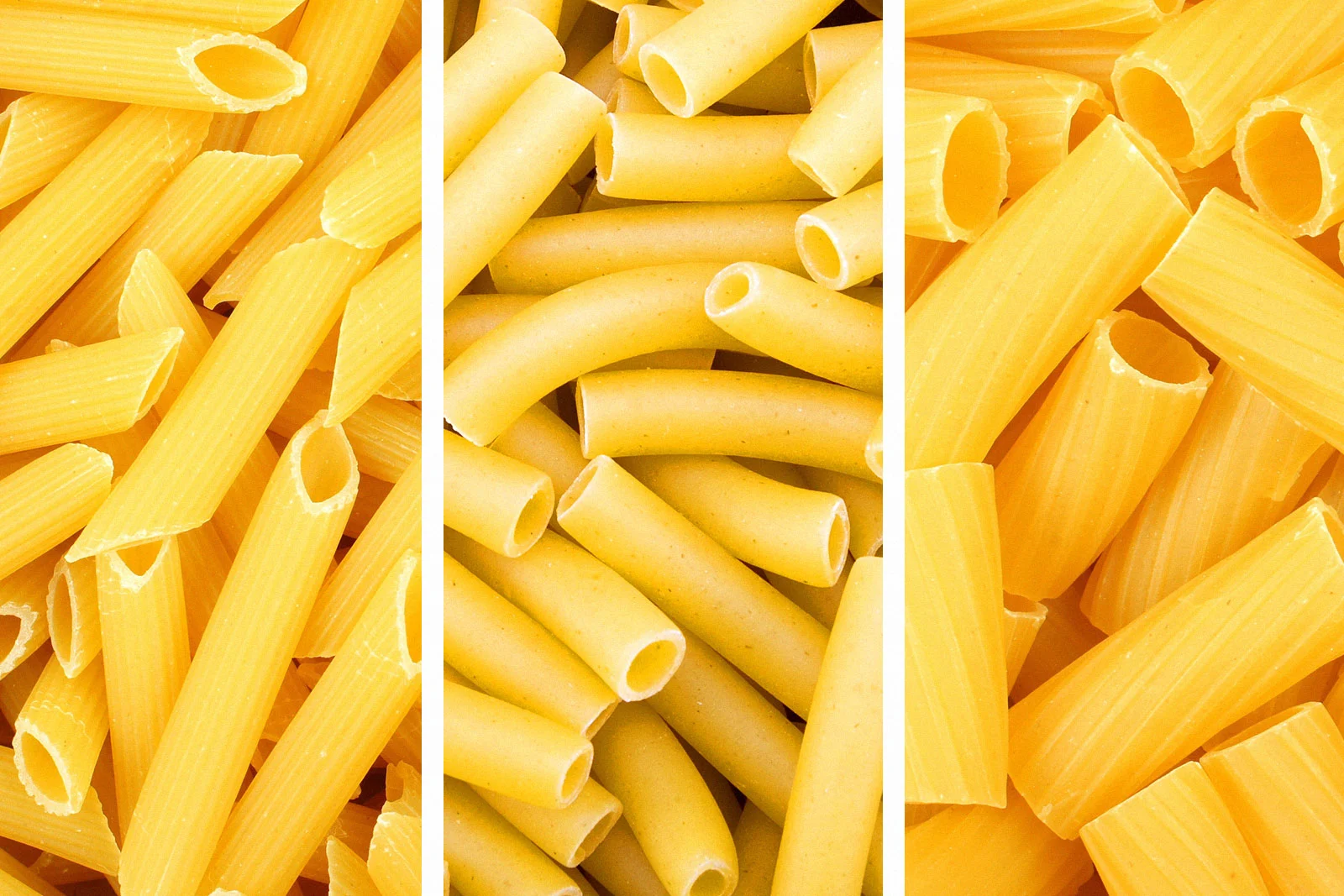
Both are short, tubular, ridged pasta — but rigatoni vs penne are built differently, behave differently with sauce, and belong in different dishes. Here’s the complete breakdown
Thank you for reading this post, don't forget to subscribe!Quick Answer: Rigatoni vs Penne
Rigatoni is a large, straight, ridged tube pasta with square-cut ends and a wide opening. Its name comes from the Italian rigato — “ridged.”
Penne is a smaller, ridged tube pasta cut on the diagonal, giving it pointed ends. Its name comes from the Italian penna — “quill” or “pen,” referencing the shape of a writing quill.
The key differences: size, cut angle, and tube width. Rigatoni is larger, straight-cut, and wider. Penne is smaller, diagonal-cut, and narrower. These differences determine which sauces work best with each.
Side-by-Side Comparison
| Feature | Rigatoni | Penne |
|---|---|---|
| Shape | Large, straight tube, square ends | Smaller tube, diagonal cut ends |
| Size | ~5cm long, ~1.7cm wide | ~4cm long, ~1cm wide |
| Ridges | Deep, prominent ridges | Ridged (rigate) or smooth (lisce) |
| Tube opening | Wide | Narrower |
| Name meaning | “Ridged” | “Quills/Pens” |
| Origin | Rome, central Italy | Campania, southern Italy |
| Texture | Chewy, substantial, meaty bite | Lighter, more uniform bite |
| Sauce grip | Exceptional — ridges + wide tube | Very good — ridges outside, fills inside |
| Best sauces | Chunky meat, rich braised, baked pasta | Creamy, tomato, arrabbiata, vodka |
| Baked dishes | ✅ Excellent | ✅ Good |
| Cooking time | 12–14 minutes (dried) | 10–12 minutes (dried) |
The Shape Difference — Why It Matters
Both are tubes. Both have ridges. But the differences in size, opening width, and cut angle produce meaningfully different eating experiences.
Rigatoni’s wide tube and square cut allows chunky sauce components — pieces of meat, mushroom, vegetables — to enter the tube itself. Every forkful can contain pasta filled with sauce on the inside and coated with it on the outside. The deep ridges also hold more sauce on the exterior than penne’s shallower ridges.
Penne’s narrower tube and diagonal cut means most sauce coats the outside of the pasta. The pointed ends create visual elegance and allow the pasta to stand upright when baked — a practical advantage in dishes like pasta al forno. The diagonal cut also means penne picks up the last of a sauce from the pan more efficiently than a straight cut would.
Bottom line: Rigatoni traps sauce inside and out. Penne coats well on the outside. For heavy, chunky sauces, rigatoni wins. For smooth and cream sauces, penne is equally matched.
Rigatoni vs Penne Rigate vs Penne Lisce
Penne comes in two versions that are worth knowing:
| Type | Ridges | Best For |
|---|---|---|
| Penne rigate | Yes — ridged exterior | Chunky and creamy sauces — the better all-rounder |
| Penne lisce | No — smooth exterior | Brothy, very light sauces where texture is key |
Penne rigate is far more common and what most recipes mean when they say “penne.” Penne lisce is a niche choice — smooth, lighter, and less suited to the robust sauces that define penne’s reputation.
Rigatoni always has ridges — there is no smooth version.
Best Sauces for Rigatoni
Rigatoni’s large size, deep ridges, and wide tube make it ideal for:
Alla Vodka (Rigatoni alla Vodka) — The Signature Dish
Rigatoni alla vodka — tomato cream sauce spiked with vodka — is one of the most famous pasta dishes in Italian-American cooking, and rigatoni is the traditional shape. The wide tube fills with the creamy pink sauce; the ridges coat the exterior. No other pasta delivers the same experience.
Braised Meat Ragu
Slow-cooked lamb, beef, or pork ragù with chunky meat pieces — rigatoni captures pieces inside the tube and holds thick sauce on its ridges better than any other short pasta.
Baked Pasta (Pasta al Forno)
Rigatoni stands up to oven baking better than most pasta. The sturdy walls don’t turn mushy, the ridges hold the béchamel or cheese sauce, and the size means fewer pieces to fill the dish — making assembly easier.
Amatriciana
The Roman classic — guanciale, tomato, Pecorino — pairs naturally with rigatoni in Rome. The chunky guanciale pieces fit partially inside the tube.
Mushroom or Vegetable Ragù
Chunky roasted vegetables, mushrooms, and lentil-based sauces all work brilliantly with rigatoni — the wide opening welcomes larger pieces that would fall off a thinner pasta.
Best Sauces for Penne
Penne’s versatility makes it one of the most all-purpose pasta shapes in existence:
Arrabbiata — The Signature Dish
Penne all’arrabbiata — spicy tomato sauce with garlic and chili — is penne’s most iconic pairing. The smooth, spicy sauce coats the ridges evenly and fills the tube cleanly. This dish is almost always made with penne.
Carbonara (Non-Traditional but Common)
While spaghetti or rigatoni is more traditional for carbonara, penne works well — the egg and Pecorino emulsion coats the ridges and fills the tube evenly.
Creamy Sauces (Alfredo, Gorgonzola, Four Cheese)
Penne handles cream-based sauces beautifully. The sauce fills the tube and coats the ridged exterior in a thin, even layer. Penne al gorgonzola is a classic northern Italian preparation.
Vodka Sauce
While rigatoni is the more traditional choice, penne alla vodka is equally common and beloved — particularly in American Italian cooking.
Pesto
Penne with pesto is a classic Ligurian-inspired pairing. The ridges hold the oil-based pesto without it sliding off, and the narrow tube retains just enough sauce inside for a burst of flavor.
Pasta Salad
Penne is the most popular pasta for cold pasta salads. Its size, shape, and the way it holds dressing make it the default choice across Italian and American cuisine for this preparation.
Can You Substitute One for the Other?
Yes — in most cases. Both are ridged, short tube pastas and function similarly enough that one can replace the other in most dishes without ruining the result.
When to substitute without concern:
- Any baked pasta dish
- Vodka sauce
- Most tomato-based sauces
- Creamy sauces
When substitution makes a noticeable difference:
- Arrabbiata — penne is so associated with this dish that rigatoni feels wrong texturally; the sauce-to-pasta ratio changes
- Braised chunky ragù — rigatoni’s wide tube holds chunks inside; penne loses this advantage
- Rigatoni alla vodka — the wide tube is part of the eating experience; penne delivers less sauce per bite
Cooking Both Correctly
The same fundamentals apply to both:
- Generously salted water — 1 tbsp salt per 4 liters
- Cook to al dente — firm bite, tiny white dot in center when broken
- Reserve pasta water — essential for finishing the sauce
- Finish in the pan — toss pasta with sauce over heat for 60–90 seconds; never just pour sauce on top in a bowl
Cooking times (dried):
| Pasta | Al Dente | Fully Tender |
|---|---|---|
| Rigatoni | 12 min | 14 min |
| Penne rigate | 10 min | 12 min |
Rigatoni tip: Because of its larger size and thicker walls, rigatoni is more forgiving of slight overcooking than penne — it retains chew longer. Pull it 1 minute early and finish in the sauce pan; it will continue cooking.
Penne tip: Penne has a tendency to cook unevenly if the water isn’t at a full rolling boil. Keep the heat high throughout and stir in the first 2 minutes to prevent sticking.
Nutritional Comparison
Both are made from durum wheat semolina — nutritional differences are negligible.
| Nutrient | Rigatoni (100g dry) | Penne (100g dry) |
|---|---|---|
| Calories | ~350 | ~350 |
| Protein | ~12g | ~13g |
| Carbohydrates | ~70g | ~70g |
| Fat | ~1.5g | ~1.5g |
| Fiber | ~3g | ~3g |
No meaningful nutritional difference. Choose based on the sauce and the dish — not the nutrition label.
Which Is More Popular?
Penne is more widely consumed globally — it is one of the top three most popular pasta shapes in the world alongside spaghetti and fusilli. Its versatility, smaller size, and compatibility with almost any sauce make it a default choice for home cooks worldwide.
Rigatoni is the specialist — deeply embedded in Roman and central Italian cooking, it is the deliberate choice when a dish demands a substantial, wide-tubed pasta that can capture chunky sauce components. Anyone who cooks Italian food seriously keeps both.
At a Glance: When to Reach for Each
| Dish / Sauce | Use Rigatoni | Use Penne |
|---|---|---|
| Alla vodka | ✅ Traditional | ✅ Common |
| Arrabbiata | ✗ Works | ✅ Traditional |
| Braised meat ragù | ✅ Best choice | ✗ Acceptable |
| Amatriciana | ✅ Roman classic | ✗ Works |
| Creamy/Alfredo sauce | ✅ Good | ✅ Classic |
| Pesto | ✗ Works | ✅ Better |
| Baked pasta | ✅ Excellent | ✅ Good |
| Pasta salad | ✗ Too large | ✅ Perfect |
| Gorgonzola sauce | ✅ Works | ✅ Classic |
| Arrabbiata | ✗ Works | ✅ Definitive |
| Mushroom ragù | ✅ Best choice | ✗ Acceptable |
Frequently Asked Questions
What is the main difference between rigatoni and penne? Rigatoni is larger, wider, and cut straight across with square ends. Penne is smaller, narrower, and cut on the diagonal with pointed ends. Rigatoni’s wide tube captures chunky sauce components inside the pasta; penne’s narrower tube primarily coats the exterior. Both are ridged, but rigatoni’s ridges are typically deeper and more prominent.
Is rigatoni or penne better for baked pasta? Both work well for baked pasta, but rigatoni has a slight advantage. Its larger size and thicker walls hold up better under the prolonged heat of oven baking without turning mushy. The wide tube also captures béchamel or cheese sauce inside each piece, making every bite more flavorful. Penne is an excellent substitute if rigatoni isn’t available.
Can I use penne instead of rigatoni? Yes in most cases. The dish will taste very similar — both are ridged tube pastas that hold sauce well. The most noticeable difference is with chunky meat sauces, where rigatoni’s wide opening captures pieces of meat inside the tube — an experience penne can’t fully replicate.
Why is rigatoni used in vodka sauce? Rigatoni alla vodka is a Roman and Italian-American classic because the wide tube captures the creamy pink sauce both inside and outside the pasta, maximizing the sauce-to-pasta ratio in every bite. The deep ridges also hold the cream and tomato emulsion better than smooth or smaller pasta shapes.
What does penne mean in Italian? Penne means “quills” or “pens” in Italian — a reference to the diagonal cut at each end, which resembles the pointed tip of an old-fashioned writing quill. The shape was reportedly inspired by a pasta maker who asked a pasta machine designer to create a diagonal cut similar to a quill pen.
What does rigatoni mean in Italian? Rigatoni comes from the Italian word rigato, meaning “ridged” or “lined.” It refers directly to the deep ridges that run lengthwise along the exterior of the pasta — the defining physical characteristic that gives rigatoni its name and its sauce-holding ability.
Is penne rigate or penne lisce better? Penne rigate (ridged) is better for almost every sauce. The ridges provide significantly more surface area for sauce adhesion compared to smooth penne lisce. Penne lisce is occasionally preferred for very light brothy preparations where the smooth texture is deliberately chosen — but for the robust sauces penne is known for, rigate is always the better choice.
The Bottom Line
Rigatoni and penne are closer relatives than linguine and spaghetti — but the differences still matter in the kitchen.
Choose rigatoni when the sauce is chunky, braised, or substantial enough to fill a wide tube. Alla vodka, meat ragù, amatriciana, mushroom ragu, and baked pasta are its home territory.
Choose penne when the sauce is smooth, creamy, or spicy and you want even coating across a versatile shape. Arrabbiata, pesto, cream sauces, and pasta salad are where penne dominates.
Keep both in your pantry. The right shape for the right sauce is one of the lowest-effort, highest-impact upgrades in home cooking.
Which is your go-to — rigatoni or penne? Tell us in the comments.