
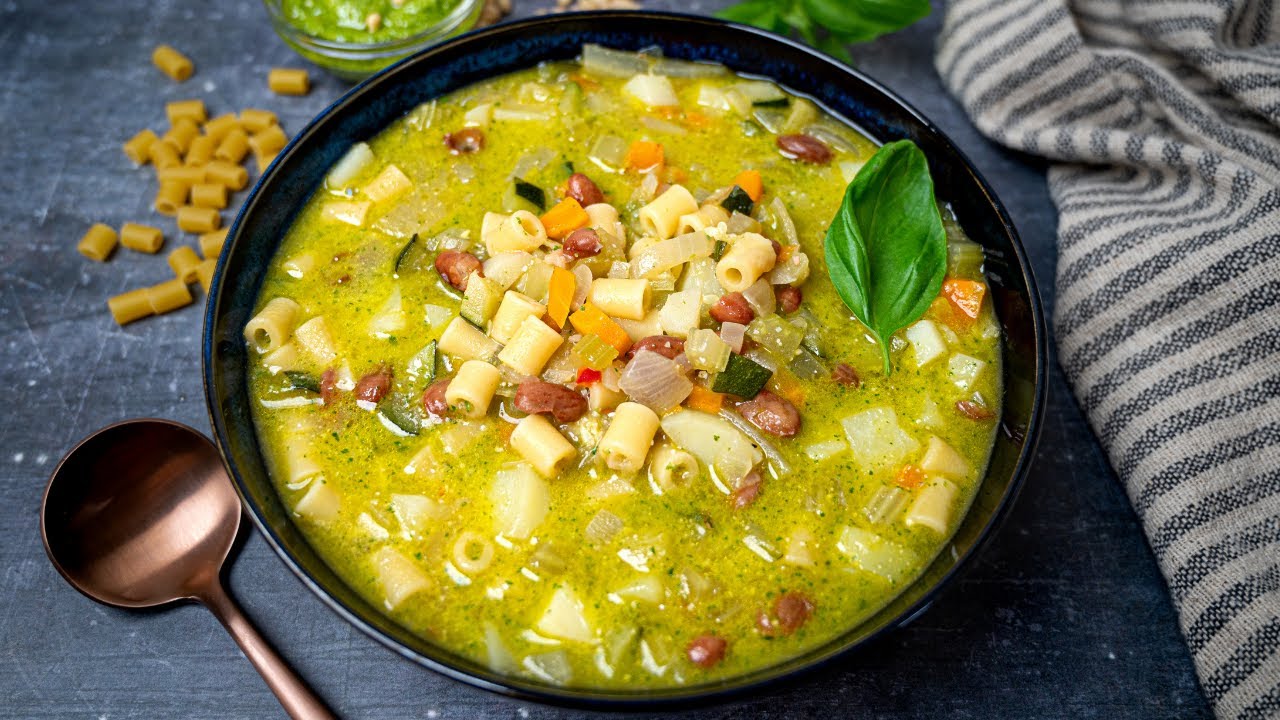
The best minestrone soup you’ll ever eat is the one made properly from scratch — with the right base, the right vegetables, and the patience to let it develop flavor. This guide covers the traditional Italian method, the best variations, and everything you need to make a pot of minestrone that tastes like it came from a trattoria in northern Italy.
Thank you for reading this post, don't forget to subscribe!Quick Answer: What Is Minestrone Soup?
Minestrone is a thick, hearty Italian vegetable soup made with seasonal vegetables, beans, and usually pasta or rice, cooked in a rich tomato-based broth. The word comes from the Italian minestra (soup) with the suffix -one (big) — literally “the big soup.” It is one of Italy’s oldest and most beloved dishes, with no single definitive recipe — minestrone is defined by its philosophy (use what’s in the garden) rather than a fixed ingredient list.
The Philosophy Behind Traditional Italian Minestrone
Before the recipe, the mindset.
Minestrone is not a recipe in the rigid sense — it is a principle. Traditional Italian cooks made minestrone with whatever vegetables were in season, whatever was left in the garden, whatever needed using up before it went bad. This is the origin of the dish, and it’s why there is no single “authentic” minestrone recipe — there are hundreds, varying by region, season, and family.
What makes minestrone minestrone is not the specific vegetables but the method:
- A deeply built soffritto base (onion, celery, carrot cooked in olive oil)
- Seasonal vegetables cut into uniform pieces
- Beans for protein and body
- Pasta or rice for substance
- A good broth as the liquid base
- Parmesan rind simmered in the pot for depth
- Time — minestrone rewards patience
The result is a soup that is greater than the sum of its parts — thick, complex, and deeply satisfying in a way that vegetable soup has no right being.
Regional Variations: Minestrone Across Italy
Italy’s regions each have their own approach to minestrone, and understanding these differences helps you make better decisions when cooking your own version.
| Region | Characteristic | Key Ingredients |
|---|---|---|
| Lombardy (Milan) | Rich, thick — minestrone alla milanese | Rice instead of pasta, lard in the soffritto, saffron |
| Liguria (Genoa) | Light, bright — finished with pesto | Pesto stirred in at the end, green beans, potatoes |
| Tuscany | Hearty and bean-forward | Cannellini beans, cavolo nero (black kale), stale bread |
| Veneto | Brothy, seasonal | Seasonal vegetables, barley instead of pasta |
| Sicily | Mediterranean profile | Eggplant, zucchini, fresh tomatoes, oregano |
| Rome / Central Italy | Robust, tomato-forward | Pecorino instead of Parmesan, guanciale in soffritto |
This guide focuses on a classic northern Italian base recipe that works as a foundation — with regional adaptations noted throughout.
Also Read: Minestrone vs Pasta e Fagioli
The Best Minestrone Soup Recipe (Classic Italian)
Ingredients (serves 6–8)
The Soffritto Base
- 4 tbsp extra virgin olive oil — use a good one; it’s a primary flavor
- 1 large onion, finely diced
- 3 celery stalks, finely diced
- 3 medium carrots, finely diced
- 4 garlic cloves, minced
- 1 tsp fine salt (added to the soffritto — draws out moisture and builds flavor)
The Vegetables
- 2 medium zucchini, diced into ½-inch pieces
- 2 medium potatoes (waxy variety), peeled and diced
- 2 cups green beans, trimmed and cut into 1-inch pieces
- 2 cups savoy or green cabbage, roughly chopped
- 1 can (400g) diced tomatoes (or 3 fresh ripe tomatoes, diced)
- 2 cups cavolo nero or kale, stems removed, roughly chopped
The Beans
- 1 can (400g) cannellini beans, drained and rinsed
- 1 can (400g) borlotti (cranberry) beans, drained and rinsed (Or use dried beans soaked overnight and cooked separately — see note below)
The Broth
- 1.5 liters (6 cups) good quality vegetable broth (or chicken broth for a richer result)
- 1 Parmesan rind — the single most important flavor secret in Italian soups
- 1 bay leaf
- 1 tsp dried thyme or a few fresh thyme sprigs
The Pasta
- 150g (5 oz) small pasta — ditalini, elbow macaroni, small shells, or broken spaghetti (Add rice instead for minestrone alla milanese)
To Finish
- Freshly grated Parmesan — generous, at the table
- Extra virgin olive oil — a drizzle over each bowl
- Fresh basil or flat-leaf parsley, torn
- Salt and black pepper to taste
- Optional: 1–2 tsp red wine vinegar — a secret finishing touch that brightens everything
Step 1: Build the Soffritto — Don’t Rush This
The soffritto is the flavor foundation of the entire soup. It is not a quick step — and treating it like one is the most common reason homemade minestrone tastes flat.
Heat the olive oil in a large, heavy-bottomed pot (a Dutch oven is ideal) over medium-low heat. Add the onion, celery, and carrot with 1 tsp of salt. Cook, stirring occasionally, for 15–20 minutes — until the vegetables are very soft, translucent, and beginning to turn golden at the edges.
Do not cook over high heat. You want the vegetables to soften and sweeten, releasing their sugars and building flavor. High heat browns them too quickly without developing the depth that a slow soffritto produces.
Add the garlic in the last 2 minutes of the soffritto — garlic burns quickly and bitter, burnt garlic is irreversible.
Why this matters: The soffritto caramelizes the natural sugars in the vegetables, creating a layered, complex base that no amount of seasoning at the end can replicate. A proper soffritto is the difference between minestrone that tastes like a restaurant and minestrone that tastes like boiled vegetables.
Step 2: Add the Tomatoes and Build the Base
Add the canned tomatoes to the soffritto. Increase heat slightly to medium and cook for 8–10 minutes, stirring occasionally, until the tomatoes have broken down and darkened slightly and the mixture has become paste-like and fragrant.
This step — cooking the tomato into the soffritto before adding any liquid — is another professional technique that concentrates tomato flavor and removes the raw, acidic edge.
Step 3: Add Broth, Parmesan Rind, and Hardy Vegetables
Add the vegetable broth, Parmesan rind, bay leaf, thyme, potatoes, and green beans. Bring to a boil, then reduce heat to a steady simmer.
The Parmesan rind: This is non-negotiable for depth of flavor. Keep a zip-lock bag in the freezer for Parmesan rinds — they accumulate naturally as you finish blocks of cheese. The rind dissolves slowly into the broth, releasing months of concentrated Parmesan flavor: salty, nutty, deeply umami. If you don’t have one, add a splash of soy sauce (½ tsp) instead — it adds similar umami without tasting like soy.
Simmer for 15 minutes — until the potatoes are beginning to soften.
Step 4: Add the Remaining Vegetables and Beans
Add the zucchini, cabbage, and cavolo nero/kale. Add the drained beans. Stir to combine.
Continue simmering for another 10–15 minutes — until all the vegetables are tender but not mushy. Taste the broth and adjust salt.
Vegetable timing matters:
- Hardy vegetables (potatoes, green beans, carrots — already added with the broth) need 25–30 minutes total
- Medium vegetables (zucchini, cabbage) need 10–15 minutes
- Delicate greens (kale, spinach, fresh peas) need 5–8 minutes
- Fresh herbs go in at the very end
Getting the timing right keeps the soup vibrant and the vegetables at their correct texture — not everything should be equally soft.
Step 5: Add the Pasta
Add the pasta directly to the simmering soup. Cook according to the pasta’s package time minus 2 minutes — it will continue cooking in the hot soup after you turn off the heat.
Important: If you plan to store or freeze minestrone, cook the pasta separately and add it to individual bowls when serving. Pasta left in the soup absorbs liquid and becomes mushy, and the soup thickens dramatically in the fridge.
Step 6: Finish and Serve
Remove the Parmesan rind and bay leaf. Taste and adjust seasoning — this is the moment for more salt, more pepper, and the finishing touches that elevate the soup from good to great:
- A splash of red wine vinegar or lemon juice (1–2 tsp) — lifts and brightens all the flavors
- A generous drizzle of your best extra virgin olive oil — adds richness and fruitiness that cooked-in oil cannot replicate
- Fresh torn basil or parsley
Ladle into wide bowls. Top with a mountain of freshly grated Parmesan and another drizzle of olive oil.
Serve with good crusty bread — minestrone demands something to drag through the broth at the bottom of the bowl.
Traditional Minestrone Soup Recipe: The Keys to Authenticity
What separates traditional Italian minestrone from a generic vegetable soup comes down to a handful of non-negotiable elements:
1. The Parmesan Rind
Already mentioned — but worth repeating because it is the single most impactful technique in Italian soup making. Every Italian grandmother has a jar of Parmesan rinds in the fridge. Start one.
2. A Proper Soffritto
Twenty minutes of patient, low-heat cooking of onion, celery, and carrot in good olive oil. Not ten minutes. Not five. Twenty.
3. Dried Beans Cooked from Scratch (When You Have Time)
Canned beans are convenient and produce excellent results. But dried beans, soaked overnight and cooked slowly in the soup, release starch into the broth that thickens and enriches it in a way canned beans cannot match.
How to use dried beans: Soak 200g (1 cup) dried cannellini or borlotti beans in cold water overnight. Drain and add to the soup with the broth. They will need 60–90 minutes of simmering — add the other vegetables only in the last 30 minutes.
4. Seasonal Vegetables
Traditional minestrone changes with the season. Summer minestrone uses zucchini, fresh tomatoes, green beans, and basil. Winter minestrone uses root vegetables, cabbage, dried beans, and kale. This is not a fixed recipe — it is a template.
5. The Finishing Drizzle
In Italy, a bowl of minestrone is never served without a drizzle of raw extra virgin olive oil over the top. The heat of the soup warms the oil and releases its aroma — this step is as important as the cooking itself.
Best Minestrone Soup Variations
Ligurian Minestrone with Pesto (Minestrone alla Genovese)
The most famous regional variation — a lighter minestrone finished with a large spoonful of basil pesto stirred in just before serving. The pesto melts into the hot broth, releasing the fragrance of basil and garlic throughout the bowl.
What changes: Use more green vegetables (zucchini, green beans, peas), add small pasta or trofie, and stir 2–3 tbsp of good basil pesto per portion into the soup immediately before serving. Do not cook the pesto — it should be stirred in raw so the basil flavor remains fresh and vibrant.
Calories per serving: ~320
Tuscan Minestrone (Ribollita Base)
A heartier, more rustic version that borders on ribollita — the classic Tuscan bread soup. Use cavolo nero (black kale) as the dominant green, increase the beans, and add a slice of stale Tuscan bread to each bowl, soaked in the broth.
What changes: Double the cannellini beans, use cavolo nero instead of regular cabbage, skip the pasta, and add a thick slice of toasted or stale bread to each bowl before ladling in the soup. The bread dissolves slightly into the broth, creating an extraordinarily thick, rich texture.
Minestrone alla Milanese (Milanese-Style)
The Lombardy version — richer, with rice instead of pasta and a traditional inclusion of lard or pancetta in the soffritto.
What changes: Replace the pasta with 150g Arborio or carnaroli rice added in the last 18 minutes. Add 75g pancetta or guanciale to the soffritto at the beginning, rendered until crispy before adding the vegetables. Some versions include a pinch of saffron dissolved in warm broth.
Summer Minestrone
A lighter, brighter version using peak summer produce.
Key vegetables: Zucchini, fresh tomatoes (not canned), fresh corn cut from the cob, green beans, fresh peas, basil. Skip: Heavy cabbage, root vegetables, dried beans (use fresh or canned). Finish: Generous basil, lemon zest, lighter hand with Parmesan.
Winter Minestrone
A deeply warming, hearty version for cold months.
Key vegetables: Butternut squash, parsnips, turnips, cavolo nero, leeks, dried beans. Add: A Parmesan rind, smoked paprika, rosemary. Skip: Zucchini, green beans, fresh tomatoes (use canned). Finish: Extra Parmesan, hearty bread, a drizzle of chili oil.
Slow Cooker Minestrone
All the flavor of traditional minestrone with minimal active cooking time.
Method: Build the soffritto in a pan first — this step cannot be done in a slow cooker effectively. Transfer to the slow cooker with all remaining ingredients except the pasta and greens. Cook on Low for 7–8 hours or High for 4–5 hours. Add greens and pasta in the last 30 minutes on High. Finish with olive oil and Parmesan.
Minestrone Soup: Nutrition Overview
Minestrone is one of the most nutritionally complete soups you can make — genuinely healthy in a way that doesn’t require compromise on flavor.
| Nutrient | Per Serving (~400ml) | Notes |
|---|---|---|
| Calories | ~280–320 | Without bread or extra Parmesan |
| Protein | ~12–14g | From beans and Parmesan |
| Fiber | ~10–12g | Beans and vegetables |
| Fat | ~9g | Primarily from olive oil (healthy monounsaturated) |
| Carbohydrates | ~42g | Vegetables, beans, pasta |
| Sodium | ~680mg | Varies with broth choice |
| Vitamin C | ~45% RDA | From tomatoes, cabbage, kale |
| Iron | ~20% RDA | From beans and greens |
For a lower-calorie version: Skip the pasta, increase the greens, use a lighter hand with the olive oil. Calorie count drops to ~200 per serving while maintaining all the fiber and protein.
For a higher-protein version: Add a Parmesan rind, double the beans, or add a small amount of cooked Italian sausage.
What to Serve With Minestrone Soup
Minestrone is substantial enough to be a full meal, but the right accompaniments make it even better:
- Crusty Italian bread or ciabatta — for dunking into the broth; this is not optional in Italy
- Focaccia — particularly good with Ligurian minestrone with pesto
- Garlic bruschetta — toasted bread rubbed with garlic and drizzled with olive oil; float it in the bowl
- A simple green salad — for a complete meal
- Extra Parmesan on the table — always; let people add as much as they want
Make-Ahead, Storage and Freezing
Minestrone is one of the best make-ahead soups in existence — it genuinely improves overnight as the flavors meld and deepen.
| Storage Method | Duration | Notes |
|---|---|---|
| Fridge (without pasta) | 5–6 days | Store pasta separately; add when reheating |
| Fridge (with pasta) | 2–3 days | Pasta absorbs broth; will need extra liquid when reheating |
| Freezer (without pasta) | 3–4 months | Freeze in portions; thaw overnight in fridge |
| Freezer (with pasta) | Not recommended | Pasta texture suffers significantly when frozen |
Reheating tip: Minestrone thickens significantly in the fridge as the starch from the beans and pasta absorbs the broth. Add a splash of water or broth when reheating and stir well. Reheat gently over medium-low heat — don’t boil aggressively or the vegetables will overcook further.
The next-day bonus: Minestrone served the next day is widely considered better than freshly made. The vegetables have absorbed the broth, the flavors have unified, and the soup has thickened to a more satisfying consistency. Italian grandmothers plan for this.
Troubleshooting: Common Minestrone Problems
| Problem | Cause | Fix |
|---|---|---|
| Soup tastes flat | Under-seasoned or rushed soffritto | Add salt, Parmesan, splash of acid; next time slow down the soffritto |
| Vegetables mushy | Added everything at once or overcooked | Add vegetables in stages based on cooking time |
| Soup too thin | Not enough beans or starch | Blend a cup of the soup and stir back in; add more beans |
| Soup too thick | Too much pasta absorbed liquid | Add hot broth or water; stir well |
| Pasta mushy | Cooked too long in soup | Cook pasta separately; add to bowls at serving |
| Lacks depth | No Parmesan rind or umami base | Add Parmesan rind, splash of soy sauce, or tomato paste |
| Too acidic | Too much tomato, no balance | Add a pinch of sugar or more beans to balance |
Frequently Asked Questions
What is the difference between minestrone and vegetable soup? The key differences are technique and richness. Minestrone is built on a slow-cooked soffritto base that creates depth of flavor before any liquid is added. It includes beans (adding protein and body), pasta or rice (adding substance), and is typically finished with Parmesan and olive oil. Standard vegetable soup often skips these steps and is therefore lighter and less complex. Minestrone is a meal; most vegetable soups are a starter.
What vegetables are traditionally in minestrone? Traditional minestrone has no fixed vegetable list — the vegetables vary by season and region. The most commonly used are: onion, celery, and carrot (the soffritto base — always); tomatoes; potatoes; zucchini; green beans; cabbage or cavolo nero; and peas. Beans (cannellini, borlotti) are nearly universal. The specific combination changes with what’s available and in season.
Can minestrone be made vegan? Yes — minestrone is naturally vegan when made with vegetable broth and without the Parmesan rind. To replace the depth the Parmesan rind provides, add a tablespoon of white miso paste or a teaspoon of soy sauce to the broth. Skip the Parmesan garnish or use a plant-based alternative. All other elements of the recipe are already plant-based.
Why does my minestrone taste bland? Bland minestrone is almost always caused by three things: insufficient seasoning (season at every stage — the soffritto, the broth, and again at the end), a rushed soffritto (20 minutes of patient cooking produces far more flavor than 5 minutes), and missing the finishing touches (the raw olive oil drizzle, fresh herbs, and generous Parmesan are not optional garnishes — they are primary flavors).
Should I put pasta or rice in minestrone? Both are traditional depending on the region. Pasta (small shapes like ditalini, elbows, or small shells) is most common across Italy. Rice is traditional in Lombardy (minestrone alla milanese). Barley is traditional in the Veneto. For make-ahead and freezer-friendly minestrone, skip the starch entirely and add it per bowl when serving — this keeps the soup from becoming too thick and prevents the starch from absorbing all the broth.
How do you thicken minestrone soup? Three techniques: blend a ladle of the soup (with some beans) and stir it back in — this is the most traditional method and produces a naturally thick, creamy texture without changing the flavor. Add more beans. Or simply let the soup simmer uncovered for longer to reduce. Avoid using cornstarch or flour — they produce a starchy, gluey texture that isn’t appropriate for this style of soup.
What pasta is best for minestrone? Small pasta shapes work best — they fit on a spoon with the vegetables and beans, making each bite balanced. The best choices are: ditalini (tiny tubes — the most traditional), elbow macaroni, small shells (conchigliette), or tubetti. Avoid long pasta or large shapes. Breaking spaghetti or linguine into short pieces also works in a pinch.
Quick-Reference: Minestrone at a Glance
| Element | Traditional Choice | Why |
|---|---|---|
| Fat | Extra virgin olive oil | Flavor base and finishing drizzle |
| Soffritto time | 15–20 minutes on low heat | Builds depth — can’t be rushed |
| Tomato | Cooked into soffritto before adding liquid | Concentrates flavor, removes raw edge |
| Beans | Cannellini + borlotti | Body, protein, natural thickening |
| Secret ingredient | Parmesan rind | Umami depth throughout the broth |
| Pasta | Ditalini or small shells | Fits with vegetables on a spoon |
| Finishing touch | Raw olive oil drizzle + Parmesan | Adds freshness and richness |
| Acid | Red wine vinegar or lemon juice | Lifts and brightens all flavors |
| Best served | Next day | Flavors deepen overnight |
The Bottom Line
Minestrone is Italy’s great peasant soup — born from necessity, perfected over centuries, and made extraordinary not by expensive ingredients but by patient technique. A slow soffritto, a Parmesan rind, seasonal vegetables cooked in stages, and a generous finish of raw olive oil and Parmesan — these are the moves that turn a pot of vegetables into something genuinely memorable.
There is no single correct minestrone recipe. There is only your minestrone — built around what’s in season, what’s in your fridge, and what your family loves. The framework in this guide gives you the technique; the vegetables are yours to choose.
Make a big pot on Sunday. Eat it better on Monday.
Which variation are you making first — classic, Ligurian with pesto, or Tuscan style? Tell us in the comments.