
Flavorful Lamb Chops are one of those dishes that feel luxurious and intimidating — until you make them once and realize they’re actually one of the fastest, most forgiving cuts of meat you can cook. This guide covers everything: choosing the right chop, building real flavor, nailing the cook, and finishing like a pro.
Thank you for reading this post, don't forget to subscribe!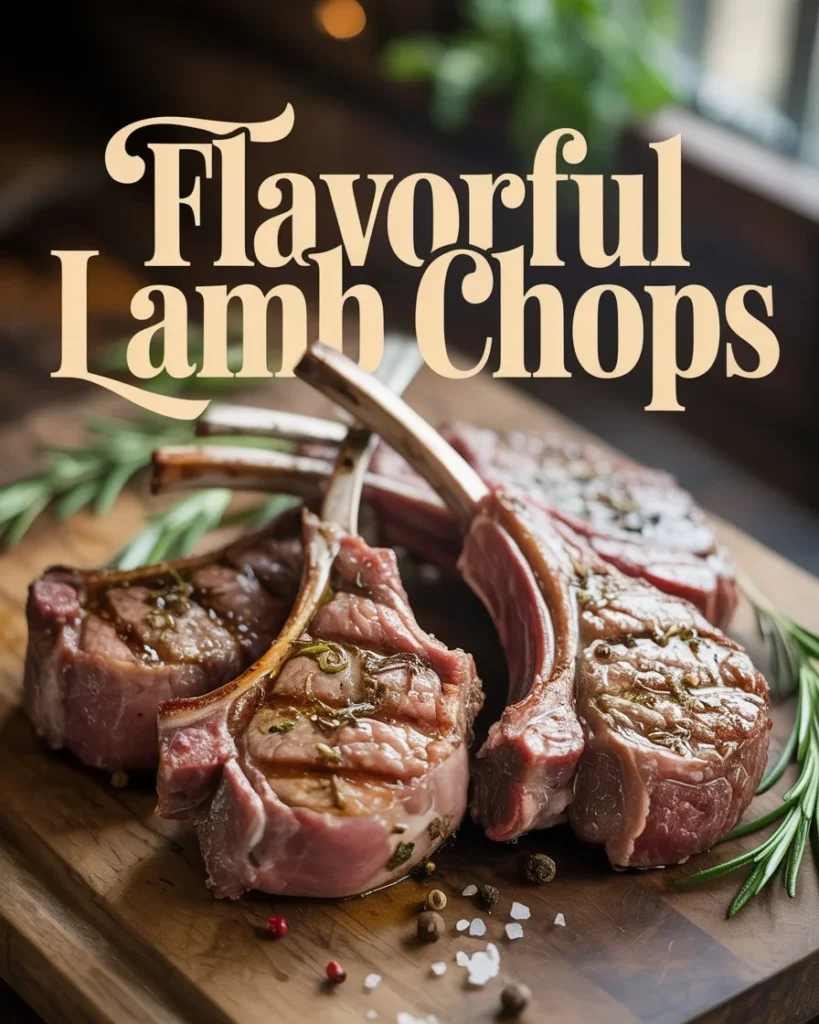
Why Flavorful Lamb Chops Deserve a Regular Spot in Your Kitchen
Lamb chops have a reputation as restaurant food — something you order out rather than make at home. That reputation is almost entirely undeserved.
The truth is that lamb chops, particularly loin chops and rib chops, cook faster than a chicken breast. A proper medium-rare lamb chop takes 3–4 minutes per side in a screaming hot pan. The challenge isn’t the cooking — it’s the preparation and understanding of what makes lamb so distinctively good.
Lamb has a flavor profile unlike any other meat: rich, slightly gamey, deeply savory, with a natural sweetness that plays beautifully against bold aromatics like rosemary, garlic, and lemon. When seasoned well and cooked correctly, it’s one of the most satisfying proteins you can put on a plate — and one of the most impressive meals you can serve without spending hours in the kitchen.
This guide teaches you to cook lamb chops the way they deserve to be cooked.
Understanding the Different Cuts of Lamb Chops
Not all lamb chops are the same. The cut you choose affects flavor, texture, cooking time, and price — and matching the right cut to the right cooking method is the first step to a great result.
| Cut | Description | Flavor | Best Cooking Method | Price |
|---|---|---|---|---|
| Rib Chops | Cut from the rack of lamb, with a long bone — the most elegant presentation | Mild, tender, delicate | Fast sear, grill | $$$ |
| Loin Chops | T-bone shaped, like a miniature T-bone steak — two muscles separated by the bone | Rich, meaty, tender | Pan sear, grill | $$ |
| Shoulder Chops | Larger, slightly tougher with more connective tissue | Deep, bold, complex | Braise, slow cook | $ |
| Sirloin Chops | Cut from the hip — lean and meaty | Robust, less tender than loin | Grill, pan sear | $$ |
| Blade Chops | From the shoulder blade — more marbling | Rich, fatty, intense | Braise or marinate well before grilling | $ |
For this guide, we focus primarily on rib chops and loin chops — they’re the cuts most people mean when they say “lamb chops,” they cook quickly, and they deliver the best eating experience for the effort involved.
What Makes Lamb Chops Flavorful: The Science and Strategy
Lamb’s distinctive flavor comes from branched-chain fatty acids in its fat — compounds that produce that characteristic slightly gamey taste that lamb lovers crave and the uninitiated sometimes find off-putting. Understanding this helps you cook smarter.
Fat Is Flavor — But Trim the Excess
The fat on lamb is where most of the flavor lives. You want some of it — but not all of it. Thick caps of hard white fat can make the eating experience heavy and the flavor overwhelming. Trim lamb chops to about ¼ inch of fat before cooking. This keeps the flavor you want and removes the excess that can taste tallowy.
The Maillard Reaction Is Everything
The deep brown crust on a perfectly seared lamb chop isn’t just visual — it’s hundreds of flavor compounds created by the Maillard reaction, the chemical process that occurs when protein and sugars are exposed to high heat. You cannot achieve this with a lukewarm pan. The pan must be hot enough that the lamb sizzles aggressively the moment it makes contact — this is non-negotiable for flavor.
Aromatics Complement, Not Mask
Rosemary, garlic, thyme, lemon, and mint are the classic companions to lamb — not because they cover the lamb’s flavor but because they complement it. The earthiness of rosemary, the sharpness of garlic, the brightness of lemon all work with lamb’s richness rather than against it. Heavy-handed seasoning that drowns out the meat is a mistake. You want to taste the lamb first, with the aromatics as a supporting cast.
Temperature Is the Difference Between Great and Ruined
Lamb is best served medium-rare to medium. At medium-rare (125–130°F / 52–54°C internal), the meat is deeply pink, incredibly juicy, and tender. At medium (135–140°F / 57–60°C), it’s still pink and moist. Beyond that — well-done lamb is tough, dry, and loses much of what makes it special. If you’re nervous about pink meat, medium is the compromise that still produces a great result.
The Flavor Foundation: Marinades and Dry Rubs
The Best Lamb Chop Marinade (Classic)
This is the marinade that works every time — bold enough to add character, restrained enough to let the lamb speak.
Ingredients (for 8 lamb chops):
- 4 tbsp extra virgin olive oil
- 6 garlic cloves, minced or grated
- 2 tbsp fresh rosemary, finely chopped
- 1 tbsp fresh thyme leaves
- Zest and juice of 1 lemon
- 1 tsp Dijon mustard
- 1 tsp black pepper, coarsely ground
- 1½ tsp salt
Instructions: Combine all ingredients in a bowl. Score any thick fat caps with a sharp knife — this helps the marinade penetrate and prevents the fat from curling the chop during cooking. Coat lamb chops thoroughly on all sides. Marinate at room temperature for 30–45 minutes for a quick weeknight cook, or refrigerate for up to 8 hours for deeper flavor. Remove from the fridge 30 minutes before cooking — cold meat hitting a hot pan is the enemy of an even sear.
Why it works: The Dijon mustard acts as an emulsifier, binding the oil and lemon juice together so the marinade coats evenly rather than sliding off. The lemon zest (not just juice) adds bright aromatic oils that survive high heat cooking better than juice alone.
Spiced Moroccan Marinade
For lamb chops with North African warmth and complexity — equally excellent for grilling or pan-searing.
Ingredients:
- 3 tbsp olive oil
- 4 garlic cloves, grated
- 1 tsp cumin
- 1 tsp coriander
- 1 tsp smoked paprika
- ½ tsp cinnamon
- ½ tsp turmeric
- ¼ tsp cayenne
- Juice of 1 lemon
- 1 tsp salt, ½ tsp black pepper
- 2 tbsp fresh mint, chopped
Marinate for at least 1 hour. The warm spices caramelize beautifully under high heat, creating an intensely flavored crust.
Greek-Style Marinade
Simple, bright, and herb-forward — the classic Mediterranean approach.
Ingredients:
- 4 tbsp olive oil
- 4 garlic cloves, minced
- 2 tbsp fresh oregano (or 2 tsp dried)
- 1 tbsp fresh rosemary, chopped
- Juice and zest of 1 lemon
- 1 tsp salt, ½ tsp black pepper
Marinate 2–4 hours. Pairs beautifully with a simple Greek salad and tzatziki.
Quick Dry Rub (When You Have 10 Minutes)
No time to marinate? A well-seasoned dry rub applied 30 minutes before cooking still produces outstanding results.
| Spice | Amount |
|---|---|
| Salt | 1½ tsp |
| Black pepper | 1 tsp |
| Garlic powder | 1 tsp |
| Smoked paprika | 1 tsp |
| Dried rosemary, crushed | 1 tsp |
| Cumin | ½ tsp |
| Cayenne | ¼ tsp |
Mix together and press firmly onto both sides of the chops. Let sit at room temperature 20–30 minutes before cooking.
How to Cook Lamb Chops: Three Methods
Method 1: Cast Iron Pan Sear (Best for Indoors — Recommended)
This is the method that produces the most consistently excellent lamb chops at home. A cast iron skillet holds heat better than any other pan, creating the consistent high temperature needed for a proper sear.
What you need:
- Cast iron skillet or heavy stainless steel pan
- High smoke-point oil (avocado oil, grapeseed, or refined coconut oil — not olive oil for this step)
- Instant-read thermometer
- Tongs
Step-by-step:
Step 1: Bring lamb to room temperature. Pull the chops from the fridge 30–45 minutes before cooking. This is critical — cold meat hitting a hot pan drops the pan temperature sharply, causes uneven cooking, and produces steam rather than a sear.
Step 2: Pat completely dry. Use paper towels to dry the surface of the chops thoroughly, including any marinade residue. Moisture on the surface prevents browning — it has to evaporate before the Maillard reaction can begin. Dry surface = better crust.
Step 3: Heat the pan until it’s genuinely very hot. Over high heat, heat the cast iron for 2–3 minutes until it’s smoking slightly. Add a thin layer of high smoke-point oil. The oil should shimmer immediately.
Step 4: Sear the first side — and don’t touch it. Add lamb chops in a single layer without crowding. They should sizzle loudly on contact. Cook 3–4 minutes without moving them. Resist any urge to press, prod, or lift — undisturbed contact with the hot pan is what creates the crust.
Step 5: Flip once. After 3–4 minutes, the first side should be deeply browned. Flip and cook another 2–3 minutes for medium-rare, 3–4 for medium.
Step 6: Sear the fat cap. Use tongs to hold each chop on its fatty edge for 1–2 minutes. This renders the fat, crisps it beautifully, and adds another dimension of flavor.
Step 7: Baste with butter and aromatics. In the last 90 seconds of cooking, add 2 tbsp unsalted butter, 2 crushed garlic cloves, and a sprig of fresh rosemary to the pan. As the butter melts and foams, tilt the pan and use a spoon to continuously baste the chops with the aromatic butter. This is the step that separates a good lamb chop from a great one.
Step 8: Rest. Remove chops from the pan and rest on a wire rack or cutting board for 5 minutes. Cover loosely with foil. Do not skip this — resting allows the juices to redistribute through the meat. Cutting immediately loses all that moisture onto the board.
Internal Temperature Guide:
| Doneness | Internal Temp | Description |
|---|---|---|
| Rare | 115–120°F (46–49°C) | Very pink, very juicy — not recommended |
| Medium-Rare | 125–130°F (52–54°C) | Pink throughout, most tender and juicy — ideal |
| Medium | 135–140°F (57–60°C) | Light pink center, still moist — good compromise |
| Medium-Well | 145–150°F (63–66°C) | Slightly pink, firmer — losing moisture |
| Well Done | 160°F+ (71°C+) | No pink, tough, dry — not recommended for lamb |
Method 2: Grilling (Best for Summer, Best Char)
Grilling adds a smoky, charred quality to lamb chops that pan-searing can’t fully replicate. Excellent for rib chops and loin chops.
Setup: Create a two-zone fire — high heat on one side, medium on the other. This gives you a sear zone and a finishing zone.
Instructions:
- Preheat grill to high (450–500°F / 230–260°C)
- Oil the grates just before grilling (use a folded paper towel dipped in oil, applied with tongs)
- Grill chops over direct high heat, 3–4 minutes per side for medium-rare
- If flare-ups occur, move chops to the cooler zone briefly
- Rest 5 minutes before serving
Grill marks tip: Place chops at a 45-degree angle to the grates. After 2 minutes, rotate 90 degrees for crosshatch marks without flipping. Flip and repeat on the second side.
Method 3: Oven-Finished (Best for Thick Chops or Large Batches)
For very thick loin chops or when cooking for a crowd, the reverse sear or sear-then-roast method gives you more control.
Sear and finish in oven:
- Preheat oven to 400°F (200°C)
- Sear chops in a cast iron pan over high heat, 2 minutes per side — you’re building crust, not cooking through
- Transfer the entire pan to the oven
- Roast 5–8 minutes until desired internal temperature
- Rest and serve
This method is particularly useful for shoulder chops, which benefit from longer, more even cooking.
The Complete Flavorful Lamb Chops Recipe
Pulling everything together into one go-to recipe that delivers restaurant results.
Ingredients (serves 4)
- 8 lamb loin or rib chops (about 1 inch thick)
- 4 tbsp extra virgin olive oil
- 6 garlic cloves, 4 minced (for marinade) + 2 crushed (for basting)
- 2 tbsp fresh rosemary, finely chopped + 1 whole sprig
- 1 tbsp fresh thyme
- Zest and juice of 1 lemon
- 1 tsp Dijon mustard
- 1½ tsp salt
- 1 tsp coarsely ground black pepper
- 2 tbsp unsalted butter (for basting)
- Avocado or grapeseed oil for searing
Instructions
Day before or morning of: Combine olive oil, minced garlic, rosemary, thyme, lemon zest and juice, Dijon, salt, and pepper. Score fat caps. Coat chops and marinate refrigerated.
30–45 minutes before cooking: Remove from fridge. Pat completely dry with paper towels.
Cook:
- Heat cast iron over high heat until smoking, 2–3 minutes. Add thin layer of high smoke-point oil.
- Add chops in a single layer. Sear undisturbed 3–4 minutes.
- Flip. Cook 2–3 minutes more (medium-rare target: 125–130°F).
- Stand each chop on its fat edge, held with tongs, 1–2 minutes until fat is rendered and crispy.
- Add butter, crushed garlic, and rosemary sprig to pan. Baste continuously for 60–90 seconds.
- Remove and rest on a rack 5 minutes, loosely tented with foil.
Serve with your chosen sauce and sides (see below).
Sauces That Make Lamb Chops Even Better
Mint Chimichurri
The modern upgrade to mint jelly — bright, herbaceous, and acidic.
- 1 cup fresh mint leaves
- ½ cup fresh parsley
- 3 garlic cloves
- 3 tbsp red wine vinegar
- ½ cup extra virgin olive oil
- ½ tsp red pepper flakes
- Salt and black pepper
Blend until roughly chopped — not smooth. Rest 10 minutes before serving. The vinegar brightens the mint and cuts right through the richness of the lamb.
Garlic Yogurt Sauce (Tzatziki Style)
Cool, creamy, and the perfect counterpoint to the seared lamb’s heat and richness.
- 1 cup plain Greek yogurt (full fat)
- 1 cucumber, grated and squeezed dry
- 2 garlic cloves, grated
- 1 tbsp fresh mint, chopped
- 1 tbsp fresh dill
- Juice of half a lemon
- Salt and pepper
- Drizzle of olive oil to finish
Mix together, refrigerate 30 minutes before serving. Keeps for 3 days in the fridge.
Red Wine Pan Sauce
Made directly in the pan after searing — uses every bit of flavor stuck to the bottom of the pan.
After removing lamb chops to rest:
- Pour off excess fat from the pan, leaving about 1 tbsp
- Add 1 shallot, minced — cook 1 minute
- Add ½ cup dry red wine — scrape up all the browned bits (deglazing)
- Add ½ cup lamb or beef stock
- Simmer until reduced by half, 3–4 minutes
- Swirl in 1 tbsp cold butter to add gloss and richness
- Season with salt and pepper
Spoon over lamb chops just before serving.
Harissa Butter
For bold, spicy, North African-inspired lamb chops.
- 4 tbsp unsalted butter, softened
- 2 tbsp harissa paste
- 1 tsp lemon zest
- 1 tbsp fresh cilantro, chopped
- Pinch of salt
Beat together. Roll into a log in plastic wrap and refrigerate. Slice a round and place on each hot lamb chop — it melts dramatically over the meat as you serve.
What to Serve With Lamb Chops
The right side dish makes the whole plate. Lamb’s rich, bold flavor needs sides that either complement its earthiness or cut through its richness with brightness and acid.
The Best Side Dishes for Lamb Chops
| Side | Why It Works | Prep Time |
|---|---|---|
| Roasted garlic mashed potatoes | Creamy, rich — soaks up the pan juices beautifully | 30 min |
| Greek salad | Bright, acidic, fresh — cuts through the richness perfectly | 10 min |
| Roasted root vegetables | Earthy sweetness (carrots, parsnips, beets) pairs naturally with lamb | 35 min |
| Tabbouleh | Herby, lemony grain salad — classic Middle Eastern pairing | 20 min |
| Roasted asparagus | Clean, simple, elegant — doesn’t compete with the lamb | 15 min |
| Couscous with herbs | Light, fluffy, absorbs sauce well — perfect for Moroccan preparations | 10 min |
| Ratatouille | Provençal vegetable stew — deeply complementary to herb-marinated lamb | 40 min |
| White bean purée | Creamy, mild, earthy — the most underrated side for lamb | 20 min |
Simple White Bean Purée (The Best Side You’re Not Making)
- 2 cans cannellini beans, drained
- 3 garlic cloves
- 3 tbsp olive oil
- Juice of half a lemon
- ¼ cup warm chicken stock or water
- Salt, white pepper, fresh rosemary
Warm beans and garlic in olive oil 3 minutes. Blend with stock until very smooth. Season generously. The creaminess and mild earthiness of the beans is an extraordinary pairing with seared lamb.
Common Lamb Chop Mistakes and How to Avoid Them
Mistake 1: Cooking straight from the fridge. Cold lamb + hot pan = uneven cooking, poor sear, overcooked exterior before interior reaches temperature. Always rest at room temperature 30–45 minutes before cooking.
Mistake 2: Not drying the surface. Even a small amount of surface moisture kills the sear. Pat completely dry immediately before cooking — even if you just pulled the marinated chops out.
Mistake 3: Using a pan that isn’t hot enough. If the lamb doesn’t sizzle loudly on contact, the pan isn’t hot enough. You’ll steam the meat rather than sear it. Wait until the pan is visibly smoking before adding the chops.
Mistake 4: Crowding the pan. Too many chops at once drops the pan temperature and causes steaming. Cook in batches if needed — a proper sear is more important than speed.
Mistake 5: Flipping repeatedly. Flip once. One side down, let it build a crust, flip, build a crust on the other side. Constant flipping prevents crust development and makes you lose track of timing.
Mistake 6: Skipping the rest. Five minutes of resting is non-negotiable. The internal temperature continues to rise 3–5°F after removing from heat (carryover cooking) and the juices redistribute throughout the meat. Cutting immediately means losing all that juice onto the cutting board.
Mistake 7: Overcooking. Well-done lamb is a very different eating experience from medium-rare lamb — not in a good way. Invest in an instant-read thermometer. It costs $15 and removes all guesswork permanently.
Mistake 8: Not rendering the fat cap. The fat edge of a lamb chop is loaded with flavor — but raw, thick fat has an unpleasant texture. Take the time to stand each chop on its fat edge and render it properly. It takes 90 seconds and makes a significant difference.
Frequently Asked Questions
What is the best way to cook lamb chops for maximum flavor? Pan-searing in a cast iron skillet over high heat, followed by butter basting with garlic and rosemary in the final 90 seconds, produces the most flavor-intense lamb chops you can make at home. The combination of a hard Maillard sear and aromatic butter creates layers of flavor that no other indoor method matches. Finish with a squeeze of fresh lemon just before serving.
How long should you marinate lamb chops? A minimum of 30 minutes at room temperature delivers noticeable flavor improvement. For the best results, marinate 4–8 hours in the refrigerator. Overnight works well for shoulder chops. Avoid marinating lean rib or loin chops in heavily acidic marinades for more than 8 hours — extended acid exposure begins to break down the surface texture unpleasantly.
Why do my lamb chops taste gamey and how do I fix it? Some gaminess is natural and desirable — it’s part of what makes lamb taste like lamb. Excessive gaminess is usually caused by one of three things: very mature lamb (older animals have more intense flavor), leaving too much fat on the chops (the gamey compounds live primarily in the fat), or buying low-quality lamb. To reduce gaminess: trim excess fat, marinate with acidic ingredients like lemon juice or yogurt, and use bold aromatics like garlic, rosemary, and mint. Younger lamb (labeled “spring lamb”) is significantly milder.
What internal temperature should lamb chops reach? Medium-rare (125–130°F / 52–54°C) is the ideal temperature for lamb chops — it produces juicy, tender, deeply pink meat. Medium (135–140°F / 57–60°C) is a good compromise if you prefer less pink. Beyond medium, lamb becomes progressively tougher and less juicy. Always use an instant-read thermometer inserted into the thickest part of the chop, away from the bone.
Can I cook lamb chops from frozen? This is not recommended. Frozen lamb chops cannot develop a proper sear because the surface moisture from ice prevents the Maillard reaction. They also cook extremely unevenly — the exterior overcooks before the interior thaws and reaches temperature. Always thaw completely in the refrigerator overnight before cooking.
How do you store and reheat leftover lamb chops? Store cooked lamb chops in an airtight container in the refrigerator for up to 3 days. Reheat gently — the biggest risk is overcooking them further. Best method: bring to room temperature for 20 minutes, then warm in a 275°F (135°C) oven for 10–12 minutes until heated through. A quick 30-second sear in a hot pan after oven warming restores some of the crust. Microwave reheating is the last resort — it heats unevenly and can make the meat rubbery.
What wine pairs best with lamb chops? Red wine almost always. For herb-marinated lamb: Cabernet Sauvignon or a Bordeaux blend — their tannic structure stands up to the richness of the meat. For Moroccan-spiced lamb: Syrah/Shiraz — its peppery, dark fruit character echoes the spice profile beautifully. For lighter preparations: Pinot Noir — its bright acidity and earthiness complement lamb without overwhelming it. For white wine lovers, an oaked Chardonnay or a full-bodied Viognier are the strongest pairings.
Quick-Reference: Flavorful Lamb Chops at a Glance
| Step | Key Point | Common Mistake |
|---|---|---|
| Choosing the cut | Rib or loin chops for quick cooking | Using shoulder chops without enough cook time |
| Trimming | Leave ¼ inch fat cap | Leaving too much fat = overpowering flavor |
| Marinating | 4–8 hours ideal; 30 min minimum | Skipping the marinade entirely |
| Temperature | Bring to room temp 30–45 min before cooking | Cooking straight from the fridge |
| Pan heat | Smoking hot before adding lamb | Under-heated pan = steam not sear |
| Surface | Pat completely dry before searing | Wet surface kills the crust |
| Searing | One flip, don’t touch | Constant flipping |
| Fat cap | Render on the edge 1–2 min | Leaving it soft and chewy |
| Butter basting | Last 90 seconds, continuous basting | Skipping this entirely |
| Resting | 5 minutes, loosely tented | Cutting immediately |
| Doneness | 125–130°F for medium-rare | Overcooking to well-done |
| Finishing | Fresh lemon squeeze + flaky salt | Serving without acid |
The Bottom Line
Lamb chops are not a difficult dish. They are a fast-cooking, deeply flavorful cut of meat that rewards proper preparation and punishes shortcuts — mostly in the form of a poor sear, tough texture, or lost juices on the cutting board.
Master the fundamentals: marinate with purpose, bring to room temperature, sear in a screaming hot pan without touching, render the fat cap, baste with aromatic butter, rest before cutting, and finish with acid. Do those things and you’ll produce lamb chops that rival any restaurant — in a fraction of the time and at a fraction of the price.
The first time you pull a perfectly seared, butter-basted lamb chop from the pan, let it rest, slice into it and see that deep pink center, you’ll understand why this is one of the great cuts of meat in the world.
Now go cook some lamb.
Made these lamb chops? Tell us which marinade you used and what you served alongside — drop it in the comments below