Jerk chicken pasta is one of the most exciting fusion dishes in modern home cooking — bold Jamaican spice meets creamy pasta sauce in a combination that somehow works perfectly. This guide covers the best recipe, the right jerk seasoning, sauce variations, and everything you need to nail it the first time.
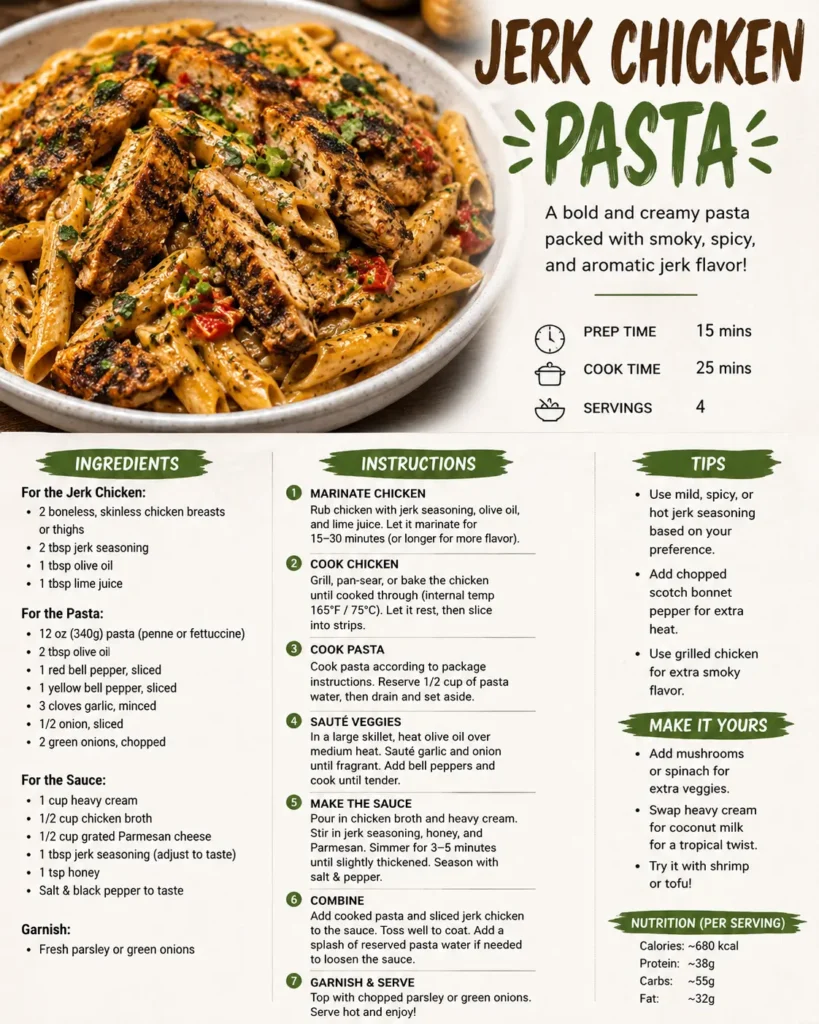
Quick Answer: What Is Jerk Chicken Pasta?
Jerk chicken pasta is a Caribbean-Italian fusion dish combining jerk-marinated, spiced chicken with pasta in a creamy sauce — typically coconut milk, heavy cream, or a tomato-cream base. It originated in the Caribbean-British food scene, popularized through social media and UK street food culture before becoming a globally recognized dish. It is spicy, smoky, creamy, and deeply satisfying.
Why Jerk Chicken Pasta Works
The combination sounds unlikely — Jamaican jerk spice with Italian pasta — but the flavor logic is sound:
- Jerk’s heat and smoke needs something creamy to carry it — pasta sauce does exactly that
- Coconut milk echoes the Caribbean base of jerk cooking while adding richness to the sauce
- The pasta absorbs the spiced sauce deeply, delivering flavor in every bite
- The char on the chicken adds texture and smokiness that a plain cream pasta never has
The result is a dish that’s bolder than standard pasta, more comforting than plain jerk chicken, and genuinely greater than either element alone.
The Jerk Seasoning: Store-Bought vs Homemade
The quality of your jerk seasoning determines everything. Two options:
Store-Bought (Quick and Reliable)
Grace, Walkerswood, and Dunn’s River are the most trusted Jamaican jerk seasoning brands. Walkerswood is widely considered the gold standard — deeply spiced, authentically flavored, and available at most international grocery stores and online.
Use 2–3 tbsp per pound of chicken for a genuine jerk flavor. Don’t be timid — under-seasoned jerk chicken produces a mediocre pasta.
Homemade Jerk Marinade (Best Flavor)
Ingredients (for 1.5 lbs chicken):
- 4 scotch bonnet peppers (or habaneros for milder heat) — seeds removed for less heat
- 4 green onions, roughly chopped
- 4 garlic cloves
- 1 tbsp fresh ginger, grated
- 2 tbsp soy sauce
- 2 tbsp brown sugar
- 2 tbsp olive oil
- 1 tbsp apple cider vinegar
- 1 tbsp fresh thyme (or 1 tsp dried)
- 1 tsp allspice — the defining spice of jerk
- 1 tsp cinnamon
- ½ tsp nutmeg
- ½ tsp black pepper
- 1 tsp salt
Method: Blend everything until smooth. Taste — it should be spicy, fragrant, and deeply complex. Adjust heat by adding or reducing scotch bonnets.
Heat guide:
| Pepper | Heat Level | Notes |
|---|---|---|
| Scotch bonnet | Very hot | Authentic Jamaican choice |
| Habanero | Hot | Close substitute, slightly different flavor |
| Jalapeño | Mild | Not traditional — use if very heat-sensitive |
| Serrano | Medium | Good middle ground |
The Best Jerk Chicken Pasta Recipe
Details
Prep time: 20 min (+ 2hr marinade) | Cook time: 30 min | Total: ~50 min active Serves: 4 | Calories: ~620 per serving | Protein: ~42g
Ingredients
For the jerk chicken:
- 1.5 lbs (680g) boneless, skinless chicken thighs
- 3 tbsp jerk seasoning (store-bought or homemade above)
- 1 tbsp olive oil
- Salt to taste
For the pasta:
- 400g penne rigate or rigatoni (holds the sauce well)
- 1 tbsp olive oil
- 1 red bell pepper, sliced
- 1 yellow bell pepper, sliced
- 1 small red onion, sliced
- 4 garlic cloves, minced
- 1 can (400ml) coconut milk — full fat for richness
- 200ml chicken broth
- 2 tbsp tomato paste
- 1 tsp dried thyme
- 1 tsp allspice
- ½ tsp smoked paprika
- Salt and black pepper
To finish:
- Fresh green onions, sliced
- Fresh cilantro or parsley
- Juice of ½ lime
- Parmesan (optional — non-traditional but works)
- Extra chili flakes for heat
Step 1: Marinate the Chicken
Coat chicken thighs thoroughly in jerk seasoning and olive oil. Marinate for minimum 2 hours — overnight in the fridge produces significantly better results. The longer the marinade, the deeper the flavor penetrates the meat.
Why thighs: Chicken thighs stay juicy under high heat and don’t dry out like breasts. The fat content carries the jerk spices better and produces more flavor throughout. If using chicken breasts, pound to even thickness and don’t cook beyond 165°F.
Step 2: Cook the Chicken
Best method — grill pan or cast iron: Heat a grill pan or cast iron skillet over high heat until smoking. Add a thin layer of oil. Cook chicken thighs 5–6 minutes per side without moving them — you want char marks and a proper crust, not steamed chicken.
Internal temperature: 165°F (74°C). Rest 5 minutes before slicing.
Why char matters: The Maillard reaction on the jerk-marinated surface creates hundreds of flavor compounds — smoky, caramelized, complex. This char is the heart of jerk flavor. A pale, steamed chicken produces a flat pasta.
Slice into strips or bite-sized pieces after resting.
Alternative: Bake at 425°F (220°C) for 20–22 minutes, then broil 3–4 minutes to develop color.
Step 3: Make the Sauce
In the same pan used for the chicken (don’t clean it — those brown bits are flavor):
- Reduce heat to medium. Add olive oil.
- Add bell peppers and red onion — cook 5–6 minutes until softened and slightly caramelized.
- Add garlic — cook 1 minute until fragrant.
- Add tomato paste — stir into the vegetables and cook 2 minutes until it darkens slightly. This step concentrates the tomato flavor.
- Pour in coconut milk and chicken broth. Add thyme, allspice, and smoked paprika. Stir to combine.
- Simmer 8–10 minutes until the sauce thickens slightly and the flavors meld.
- Taste and season with salt and pepper. The sauce should be creamy, slightly spicy, and fragrant with allspice and thyme.
Step 4: Cook the Pasta
Cook pasta in generously salted boiling water until al dente — 1–2 minutes less than the package time. Reserve 1 cup of pasta water before draining.
Pasta choice matters:
- Penne rigate — ridges hold the creamy sauce; diagonal cut scoops up every drop
- Rigatoni — wider tube captures sauce and chicken pieces inside
- Fettuccine or linguine — flat strands work beautifully if you prefer long pasta
- Avoid: Delicate pasta (angel hair, thin spaghetti) — the bold sauce overwhelms them
Step 5: Combine and Finish
- Add drained pasta to the sauce pan. Toss to coat over medium heat.
- Add a splash of pasta water if the sauce is too thick — the starch helps it cling to the pasta.
- Add the sliced jerk chicken and toss gently to combine.
- Squeeze lime juice over the top — this is non-negotiable; the acid lifts and brightens all the flavors.
- Finish with fresh green onions, cilantro, and extra chili flakes.
Sauce Variations
| Sauce Style | Key Change | Flavor Profile |
|---|---|---|
| Coconut cream (above — recommended) | Full-fat coconut milk | Rich, slightly sweet, Caribbean |
| Heavy cream | Replace coconut milk with 300ml heavy cream | Richer, more Italian, less Caribbean |
| Tomato-cream | Equal parts crushed tomato + cream | Tangy, balanced, popular in UK restaurants |
| Dry / no cream | Skip cream entirely; deglaze with chicken broth + lime | Lighter, more traditional jerk flavor |
| Scotch bonnet butter sauce | Butter + scotch bonnet + garlic | Very spicy, intense, restaurant-style |
Heat Level Guide
Jerk chicken pasta can be calibrated to any heat preference:
| Heat Level | How to Achieve |
|---|---|
| Mild | Use jerk seasoning sparingly (1 tbsp); remove all pepper seeds; use jalapeño instead of scotch bonnet |
| Medium | Standard recipe as written; 2 tbsp jerk seasoning; habanero with seeds removed |
| Hot | 3 tbsp jerk seasoning; full scotch bonnet with seeds |
| Very hot | Add extra chili flakes to the sauce + fresh scotch bonnet sliced on top at serving |
Best Side Dishes for Jerk Chicken Pasta
| Side | Why It Works |
|---|---|
| Garlic bread | Classic — soaks up the creamy sauce |
| Simple green salad | Cuts through the richness |
| Fried plantains | Caribbean classic — sweet against the spice |
| Coleslaw | Cool, creamy — perfect contrast to the heat |
| Rice and peas | Full Caribbean spread for entertaining |
| Corn on the cob | Grilled sweetness against the spice works beautifully |
Make-Ahead and Storage
| Method | Duration | Notes |
|---|---|---|
| Fridge (with pasta) | 3 days | Sauce absorbs into pasta — add splash of broth when reheating |
| Fridge (sauce only) | 4–5 days | Cook pasta fresh when serving |
| Freezer (sauce + chicken only) | 2 months | Freeze without pasta; cook pasta fresh |
| Marinated raw chicken | 24 hours fridge / 3 months freezer | Marinate in bulk; freeze raw for future meals |
Reheating tip: Reheat gently in a pan over medium-low with a splash of coconut milk or chicken broth. High heat dries out the chicken and breaks the cream sauce.
Nutrition Facts
| Nutrient | Per Serving (~400g) |
|---|---|
| Calories | ~620 |
| Protein | ~42g |
| Fat | ~24g |
| Carbohydrates | ~58g |
| Fiber | ~4g |
| Sodium | ~780mg |
For a lighter version: Use light coconut milk, reduce oil, serve over zucchini noodles or cauliflower rice instead of pasta — drops to approximately 380 calories per serving.
Common Mistakes to Avoid
| Mistake | Fix |
|---|---|
| Not marinating long enough | Minimum 2 hours; overnight is better |
| Under-seasoning the jerk | Be generous — the cream sauce dilutes the spice |
| No char on the chicken | High heat, cast iron or grill pan, don’t move it |
| Skipping the lime at the end | Acid is essential — the dish tastes flat without it |
| Overcooking the pasta | Pull 1–2 minutes early; it finishes in the sauce |
| Using light coconut milk | Full-fat only for a properly rich sauce |
| Cleaning the pan before making sauce | Those brown bits from the chicken are pure flavor |
Frequently Asked Questions
What pasta is best for jerk chicken pasta? Penne rigate and rigatoni are the best choices — both are ridged, short tube pastas that hold the creamy jerk sauce exceptionally well. The ridges grip the sauce on the exterior and the tube captures it inside. Fettuccine and linguine are excellent alternatives for those who prefer long pasta.
Can I make jerk chicken pasta without coconut milk? Yes. Replace coconut milk with heavy cream (300ml) for a richer, more Italian-style sauce, or use a tomato-cream base (equal parts crushed tomato and cream) for a tangier result. The coconut milk version is closest to the Caribbean-inspired original, but all three versions are excellent.
How spicy is jerk chicken pasta? Heat level depends entirely on the jerk seasoning used and the quantity. Traditional scotch bonnet-based jerk seasoning is very hot. Store-bought jerk seasonings like Walkerswood can be medium to hot. The cream or coconut milk sauce moderates the heat significantly — the finished dish is typically medium spicy. Adjust by using less seasoning or choosing milder peppers.
Where did jerk chicken pasta originate? Jerk chicken pasta originated in the UK Caribbean-British food scene, where Caribbean and Italian culinary traditions overlap significantly. It gained widespread popularity through London street food markets and social media — particularly TikTok and Instagram — before spreading globally as a popular fusion dish. It is not a traditional Jamaican or Italian dish but a genuinely original fusion creation.
Can I make jerk chicken pasta ahead of time? Yes — the sauce and chicken can be made up to 2 days ahead and refrigerated. Cook the pasta fresh when serving for the best texture. If storing the fully assembled dish, the pasta absorbs the sauce and softens in the fridge — add a splash of coconut milk or broth when reheating to restore the sauce consistency.
What is jerk seasoning made of? Traditional Jamaican jerk seasoning is built on: scotch bonnet peppers (heat), allspice (the defining spice), thyme, garlic, ginger, green onions, soy sauce, brown sugar, cinnamon, and nutmeg. Allspice and scotch bonnet together are the non-negotiable flavor foundation — without both, it isn’t genuinely jerk.
Quick-Reference Summary
| Element | Best Choice | Why |
|---|---|---|
| Chicken cut | Thighs | Juicier, holds flavor, doesn’t dry out |
| Marinade time | Overnight | Deeper flavor penetration |
| Cooking method | Cast iron or grill pan | Char is essential to jerk flavor |
| Sauce base | Full-fat coconut milk | Caribbean flavor, richness, balance |
| Pasta shape | Penne rigate or rigatoni | Ridges hold sauce, tube captures it |
| Essential finish | Fresh lime juice | Lifts and brightens all flavors |
| Heat level | Adjustable | More scotch bonnet = more heat |
| Don’t skip | Resting the chicken | Keeps juices in the meat |
The Bottom Line
Jerk chicken pasta works because it follows the same logic as every great fusion dish — it takes the best element of two traditions (the smoky, spiced char of Caribbean jerk cooking and the creamy, comforting base of Italian pasta sauce) and combines them in a way that amplifies both.
The fundamentals are straightforward: marinate the chicken long, char it hard, build a proper coconut milk sauce, finish with lime. Do those things and you’ll produce a dish that is genuinely more exciting than either a plain pasta or a plain jerk chicken could ever be.
Made this recipe? Tell us your heat level and what pasta you used in the comments.