Meta description: Minestrone vs Pasta e Fagioli — a clear, practical guide comparing ingredients, texture, nutrition, seasonality, cooking tips and when to pick each Italian soup.
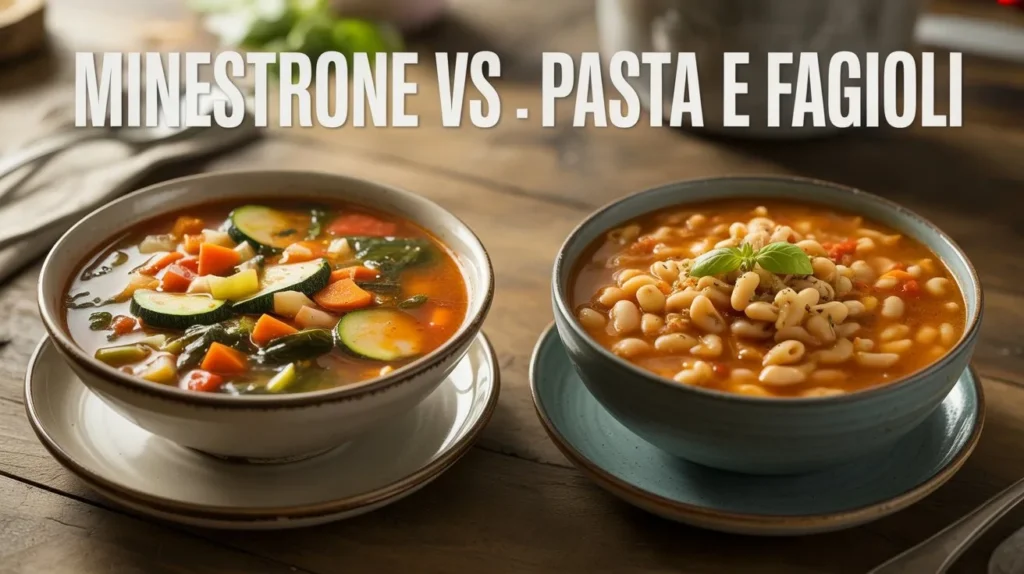
Minestrone vs Pasta e Fagioli is one of those questions people ask when they want a comforting, healthy bowl and are unsure which Italian soup to choose. In short: minestrone soup is a vegetable-rich, often brothy dish, while pasta e fagioli soup (literally “pasta and beans”) is bean-forward, heartier and more stew-like.
To answer quickly: if you want a light, vitamin-packed bowl loaded with seasonal vegetables, pick minestrone; if you need something filling and protein-rich that feels almost like a meal in itself, choose pasta e fagioli. Both belong to Italian soup tradition, but they serve different needs.
In this article I’ll take you step-by-step through what each soup is, the minestrone ingredients and pasta e fagioli ingredients, the difference between minestrone and pasta e fagioli, simple minestrone recipe and pasta e fagioli recipe ideas, common mistakes, serving sizes, and final tips so you can cook both confidently. By the end, you’ll know which to serve for a light lunch, which to serve for a comforting dinner, and how to avoid the usual mishaps.
What is Minestrone?
Let’s start from the basics — because before we compare, we should understand what each dish is. Minestrone is a flexible, vegetable and beans-based soup from Italy. It’s part of the traditional Italian soup recipe family and grew from cucina povera — the “peasant” tradition of cooking with whatever is on hand. There is no set recipe for minestrone; that’s one of its charms.
Typical minestrone ingredients include carrots, celery, onion, tomatoes, seasonal greens (spinach, kale, chard), potatoes or squash, and sometimes beans or a small amount of pasta or rice. The soup is often brothy and can be finished with fresh herbs or a spoon of pesto — that bright hit at the end which lifts the bowl.
Key features of minestrone soup:
- It is vegetable-rich and often lighter in calories than bean-and-pasta stews.
- It is brothy soup in many versions, though some regional variants thicken it slightly.
- It’s traditionally seasonal — summer minestrone differs from winter minestrone because of vegetable availability.
What is Pasta e Fagioli?
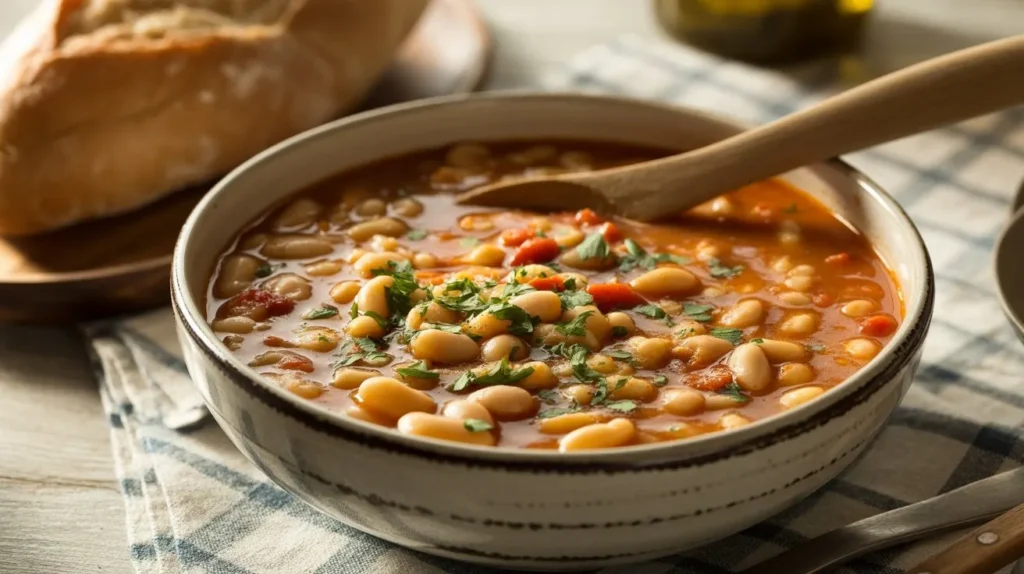
Now that we’ve covered minestrone, let’s move to pasta e fagioli soup. The name means beans and pasta — and that tells you the soul of the dish. Instead of being vegetable-forward, pasta e fagioli (a.k.a. pasta fasul or pasta fazool in certain dialects) highlights beans as the main ingredient with pasta added for the body.
Typical pasta e fagioli ingredients: small pasta shapes (ditalini, tubetti), cooked beans (cannellini, borlotti), sautéed aromatics (onion, carrot, celery), tomatoes or tomato paste in some versions, and often a richer base — sometimes a meat-based stock or a soffritto enriched with pancetta. The result is usually thicker, more stew-like consistency than minestrone.
Key features of pasta e fagioli soup:
- Beans and pasta are the focus — more filling and higher in protein and carbs.
- Often stewed so the broth is heartier and more clingy to the pasta.
- It can be vegetarian or meat-based depending on the stock and additions.
To help satisfy your cravings, I’m sharing a YouTube recipe video you might enjoy.
I’ve also explained the difference between minestrone soup and pasta fagioli below, but if you’d like to dive deeper, you can check out this Quora thread linked here.
Difference between Minestrone vs Pasta e Fagioli — the essentials
We’ve described each soup — now see the difference between minestrone and pasta e fagioli in simple points:
- Main focus: Minestrone = vegetables (sometimes beans/pasta optional). Pasta e fagioli = beans + pasta (vegetables secondary).
- Texture: Minestrone tends to be brothy, diced vegetable chunks; Pasta e fagioli is thicker, almost stew-like consistency.
- Recipe rigidity: Minestrone has no set recipe and many minestrone variations; pasta e fagioli often follows a more** fixed recipe** pattern (beans + pasta) though regional variants exist.
- Role of pasta and rice: In minestrone, small additions of pasta or rice are optional; in pasta e fagioli, pasta is a true requirement of the dish.
- Culinary mood: Minestrone = light and fresh; Pasta e Fagioli = hearty and filling.
Now that we’re clear on the basics, let’s dig deeper into ingredients, texture, nutrition, and cooking.
Ingredients and texture — a closer look
Minestrone ingredients & texture
Minestrone ingredients vary widely. Typical pantry items: onion, carrot, celery (the classic soffritto), potatoes, zucchini, green beans, tomatoes, leafy greens, herbs, optional beans, and sometimes a handful of mixed pasta shapes or rice near the end. The texture here is vegetable chunks in a light broth — you should taste the individual vegetables.
If you want a creamier minestrone, use an immersion blender lightly to purée some of the vegetables, or mash a few beans into the pot. But the classic is chunky: diced vegetables, clear broth, bright herbs.
Pasta e Fagioli ingredients & texture
Pasta e fagioli ingredients focus on beans (cannellini or borlotti), small pasta shapes, onion, carrot, celery, garlic, tomatoes (optional), herbs, and stock. Some versions use pancetta or bacon for depth. Texture is often thick — either because beans are mashed slightly or because starchy pasta is cooked into the broth. The mouthfeel is dense and satisfying.
A common mistake in pasta e fagioli is adding pasta too early and letting it overcook — it absorbs liquid and makes the dish overly thick or mushy. The best method is to cook pasta separately or add it near the end.
Step-by-step recipes with exact quantities (serves 4) — follow closely
I’ll give fully detailed, foolproof recipes for both, designed for 4 people. I’ll include timing, common mistakes, and options. Read carefully and keep this open in the kitchen.
A. Classic Minestrone (serves 4)
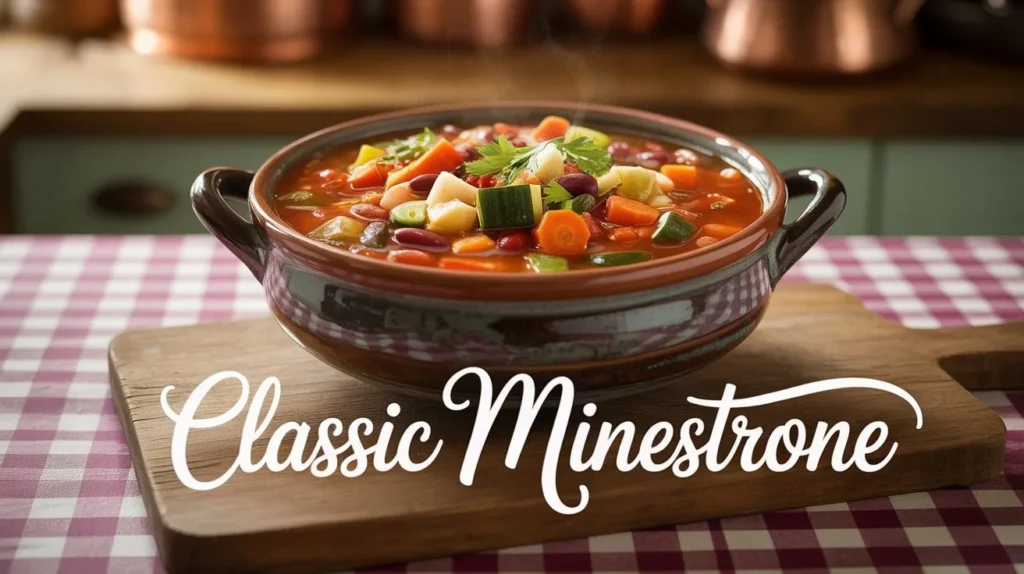
Ingredients:
- 2 tbsp olive oil
- 1 medium onion, finely diced
- 2 carrots, diced
- 2 celery stalks, diced
- 2 medium potatoes, diced (or 1 small squash)
- 1 small zucchini, diced
- 1 cup green beans, cut into 1–2 cm pieces
- 400 g canned tomatoes (or 2 fresh tomatoes, chopped)
- 4 cups (1 liter) vegetable stock
- 1 can (400 g) cannellini or borlotti beans, drained (optional)
- 75 g small pasta (or 100 g cooked rice) — optional
- Handful chopped kale or spinach (added last)
- Salt & pepper to taste, handful chopped parsley, grated Parmesan / pesto to finish
Method (step-by-step):
- Heat oil in a large pot, add onion, carrot, celery. Sauté on medium heat until soft (7–10 minutes). Mistake I made: I once used high heat and burned the onion — the soup tasted bitter. Keep it gentle.
- Add diced potatoes and green beans. Stir for 2 minutes, then add canned tomatoes and stock. Bring to a simmer.
- Simmer gently 20–25 minutes until vegetables are tender. At this point, if you use canned beans, add them and simmer for 5 more minutes. Tip: reserve half the beans and mash them; fold back to thicken slightly without losing chunkiness.
- If using pasta, cook separately to al dente (3–4 minutes less than package), drain and add to bowls, then ladle soup on top. If you add pasta to the pot, do so 6–8 minutes before serving and test often. I prefer cooking pasta separately when I make leftovers.
- Finish with chopped parsley, a drizzle of olive oil or a spoon of pesto, and grated cheese if desired.
Common mistakes & fixes: Overcooking pasta (fix: cook separately), underseasoning (fix: salt in layers), burning the soffritto (fix: medium heat).
Why this method works: It keeps vegetables distinct, guarantees pasta texture, and lets you control thickness.
B. Classic Pasta e Fagioli (serves 4)
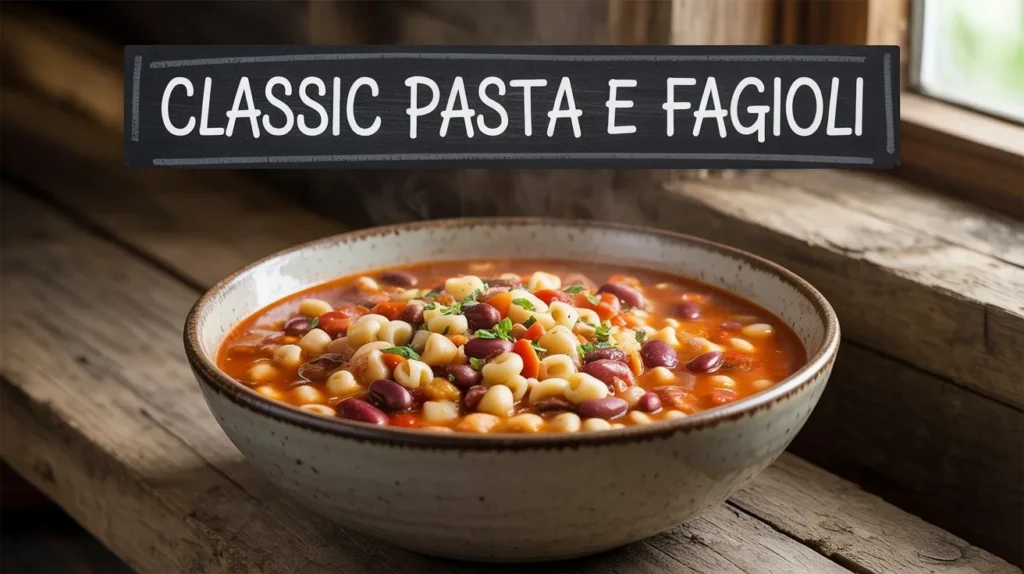
Ingredients:
- 2 tbsp olive oil
- 1 small onion, diced
- 1 carrot, diced
- 1 celery stalk, diced
- 2 cloves garlic, minced
- 200 g cooked cannellini or borlotti beans (1 can drained) — or 1 cup dried, soaked & cooked
- 400 g canned tomatoes (optional) or 2 tbsp tomato paste
- 4 cups (1 liter) chicken or vegetable stock (use vegetable for vegan)
- 120–150 g small pasta (ditalini/tubetti)
- Optional: 50 g pancetta finely diced (browned at the start)
- Salt, pepper, chopped parsley, grated Parmesan to serve
Method (step-by-step):
- If using pancetta, brown it first and remove excess fat. Otherwise start with olive oil and sweat onion, carrot and celery until translucent (8 minutes). Add garlic and sauté 30 seconds. My early mistake: adding garlic too early and letting it burn — it turns bitter. Add it near the end of the soffritto.
- Add tomatoes (if using) and stock, then add most of the beans. Keep a small portion of beans aside to mash later. Simmer gently for 15–20 minutes so flavors blend.
- Mash 1/3 of the beans against the pot with a spoon or use a food mill — this thickens the broth naturally to a stew-like consistency without cream. Why this matters: mashed beans create body and comfort.
- Option A: Cook pasta separately in salted water to al dente, drain and add to bowls; ladle the soup over pasta. Option B: Add pasta to the pot 8–10 minutes before serving and stir frequently. I usually cook pasta separately to avoid absorbing all the broth if I plan leftovers.
- Finish with chopped parsley and grated Parmesan (if not vegan). Adjust salt at the end — beans absorb salt.
Common mistakes & fixes: Undercooked beans (fix: soak & cook thoroughly), overcooked pasta (fix: cook separately), making the stew too thin (fix: mash some beans or reduce liquid slightly).
Cooking and Preparation Tips (Avoid Common Mistakes)
We’ve talked theory — now some practical, step-by-step guidance for both soups, including mistakes I made early on and how I fixed them.
- Soaking beans: If you’re using dried beans, soak them overnight and cook until soft. Undercooked beans taste chalky and are hard to digest.
- Salt strategy: Add salt early for vegetables but taste and adjust at the end. Beans and pasta absorb salt, so don’t oversalt too soon.
- Pasta timing: For both soups, cook pasta separately if you want leftovers — once it sits in soup, it gets soft and bloated.
- Thickening without cream: Mash a small portion of beans or blend a cup of vegetables into the broth for a natural body instead of adding dairy.
- Start with a good base: Gently sauté onion, carrot, and celery (the soffritto) over medium heat until soft and fragrant. Don’t rush this — high heat burns onions and ruins the flavor.
- Add vegetables in stages: Put hard vegetables like carrots and potatoes first, and softer greens near the end to keep texture.
- Season in layers: Taste as you go. Add salt in small amounts throughout cooking for balanced flavor.
- Finish with freshness: Just before serving, stir in pesto, lemon juice, or fresh parsley. This brightens both soups and adds a homemade touch.
Nutrition & health — which is lighter?
If you’re comparing minestrone vs pasta e fagioli from a nutrition view:
- Minestrone is usually lower in calories and carbohydrates because it’s mostly vegetables and broth. It’s high in vitamins, minerals and fiber (especially if beans are added), and it’s often a good choice for a vegetarian minestrone or low-calorie meal.
- Pasta e fagioli is higher in carbs and calories due to pasta and beans — but also richer in protein and fiber, making it more filling and good for energy. For someone needing sustained energy or muscle repair, pasta e fagioli might be better.
If you follow vegetarian or vegan diets, both can be adapted: vegetarian minestrone is common; vegan pasta e fagioli is easy when using vegetable stock and skipping pancetta. If you need fewer carbs, omit or reduce pasta in both, or use rice as an alternative in minestrone.
When to choose which — season and purpose
Let’s get practical — when would you pick one over the other?
- Choose Minestrone when you want a light, vitamin-packed meal (spring/summer) or a starter that showcases seasonal vegetables. It’s perfect when you want to stay light.
- Choose Pasta e Fagioli for cold days, when guests need a filling main, or when you want comfort food with beans and pasta delivering protein and carbs.
Seasonal note: Minestrone is all about vegetables — switch ingredients easily. Pasta e fagioli is better in winter because it’s warm and sustaining.
FAQs About Minestrone vs Pasta e Fagioli
Q: Is minestrone always vegetarian?
No — there are versions with meat stock or pancetta, but vegetarian minestrone is common and classic.
Q: Can pasta e fagioli be made without meat?
Yes — use vegetable stock for a vegan pasta e fagioli and omit pancetta.
Q: What pasta shapes work best?
Small shapes like ditalini, tubetti, or small shells work well for Italian pasta soup like pasta e fagioli; minestrone can use mixed pasta shapes or none at all.
Q: Can you swap ingredients between them?
Yes — recipes are flexible. You can add beans to minestrone for protein or include extra vegetables in pasta e fagioli — but the classic minestrone vs pasta e fagioli difference remains the focus: veg vs beans+pasta.
Q: Are they interchangeable?
Not exactly — they deliver different textures and satiety. For a light lunch, pick minestrone; for a main meal, pick pasta e fagioli.
Final verdict: Minestrone vs Pasta e Fagioli
To wrap up the Minestrone vs Pasta e Fagioli: think of minestrone as a vegetable festival in a bowl — flexible, seasonal, and lighter — and pasta e fagioli as a bean-and-pasta hug — filling, comforting, and hearty. Both are commonly made across Italy and the world, and both reflect the Italian idea of making the most of simple ingredients.
My recommendation: keep both recipes in your cooking rotation. Use minestrone when you want vitamins and freshness; use pasta e fagioli when you want a warm, satisfying main. And don’t be afraid to experiment with minestrone variations or pasta e fagioli variations — regional creativity is part of the tradition.