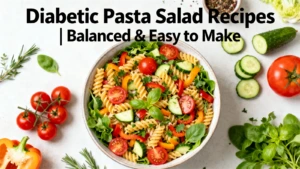
If you’ve ever thought pasta salad is off-limits for diabetics, you’re not alone. I used to think the same — that anything with pasta meant a guaranteed blood sugar spike. But after years of trial and error (and quite a few kitchen experiments), I’ve learned how to make pasta salads that are not only delicious but also fit perfectly into a diabetic-friendly meal plan.
The secret lies in the ingredients you choose: using high-fiber or low-carb pasta, adding lean protein, mixing colorful vegetables, and keeping the dressing light but flavorful.
In this article, we’ll go step by step through everything you need to know. We’ll cover what makes a pasta salad diabetic-friendly, which ingredients to use and avoid, and I’ll share three of my favorite diabetic pasta salad recipes. You’ll also learn about the best dressings, storage tips, and a few kitchen lessons I’ve learned from my early mistakes — so you can skip them and get it right the first time.
What Makes a Pasta Salad Diabetic-Friendly
Before we start chopping veggies or boiling pasta, it’s important to understand why some pasta salads work well for diabetics while others don’t. A pasta salad becomes diabetic-friendly when it balances low-GI carbs, lean protein, fiber, and heart-healthy fats. Let’s unpack these.
1. Low Glycemic Index (GI) Pasta Choices
Not all pastas are created equal. Traditional white pasta made from refined flour digests quickly and causes blood sugar spikes. In contrast, whole wheat, lentil, or chickpea pasta digest more slowly and have a lower GI. This means your blood sugar rises gradually, not sharply.
Whenever I make pasta salad for my diabetic-friendly menu, I usually go for:
- Whole wheat rotini or penne (for a chewy texture)
- Chickpea pasta (great for protein)
- Lentil pasta (holds dressing well without getting soggy)
- Shirataki noodles (for very low-carb options)
These pasta types are high in fiber and protein — two key nutrients that slow digestion and improve satiety.
2. Balanced Ingredients
A good diabetic pasta salad isn’t just about the pasta — it’s about what surrounds it. I always follow this simple rule:
- ½ vegetables + ¼ pasta + ¼ protein + a drizzle of healthy fat
This ratio ensures balance without feeling restricted. Fill your bowl with fiber-rich vegetables (like spinach, peppers, zucchini, cucumbers, or cherry tomatoes), add lean proteins (like tuna, grilled chicken, tofu, or beans), and finish with a spoon of olive oil or avocado-based dressing.
3. Healthy Fats & Dressings
Dressings can make or break your pasta salad. Store-bought ones are often loaded with sugar, salt, and preservatives. Making your own at home takes just 2–3 minutes and gives you full control.
For example:
- Olive oil + lemon juice + oregano for a Mediterranean touch
- Greek yogurt + herbs for a creamy dressing
- Balsamic vinegar + Dijon mustard for something tangy
I’ll share the best dressing options later — the trick is to keep sugar low and flavor high.
Ingredients to Use and Avoid
Let’s be realistic — one wrong ingredient can turn a balanced pasta salad into a carb-heavy trap. So before jumping into recipes, let’s look at what to use and what to skip.
Use These Ingredients
- Whole grain or legume pasta (fiber-rich, slow carbs)
- Non-starchy vegetables: bell peppers, broccoli, spinach, kale, cucumber, zucchini
- Lean proteins: tuna, chicken, tofu, eggs, beans
- Healthy fats: olive oil, avocado, nuts, seeds
- Low-fat dairy: Greek yogurt, feta, cottage cheese
- Herbs & spices: basil, dill, garlic, oregano, parsley
Avoid These Ingredients
- White pasta or rice noodles
- Heavy mayo-based dressings
- Sweetened sauces or honey mustard
- Processed meats like salami
- Cheese in excess
- Croutons or fried toppings
Remember, the goal is balance, not restriction. Once you understand how each ingredient affects your blood sugar, you can mix and match with confidence.
3 Easy Diabetic Pasta Salad Recipes
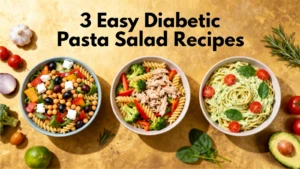
Now for the part everyone loves — the recipes. Each of these serves 4 people, uses simple pantry ingredients, and is fully balanced for a diabetic-friendly plate. I’ve tested them multiple times, adjusting seasoning and portions until the flavor felt right without compromising health.
1. Mediterranean Chickpea Pasta Salad
This one is my go-to summer pasta salad. It’s vibrant, refreshing, and rich in fiber and protein.
Serves: 4
Prep time: 15 minutes
Cook time: 10 minutes
Ingredients:
- 2 cups cooked chickpea pasta (about 6 oz dry)
- 1 cup cherry tomatoes, halved
- 1 cucumber, diced
- ½ cup red onion, finely sliced
- ½ cup kalamata olives, sliced
- ½ cup feta cheese, crumbled (optional)
- 2 tbsp extra virgin olive oil
- 1 tbsp lemon juice
- 1 tsp dried oregano
- Salt and pepper to taste
Steps:
- Cook the pasta — Boil chickpea pasta according to the package instructions, usually 7–8 minutes. Don’t overcook; chickpea pasta can become mushy. I usually stop cooking when it’s just al dente.
- Rinse in cold water — This stops the cooking process and helps the pasta hold its texture.
- Prep your veggies — While the pasta cools, chop all the veggies and place them in a large bowl.
- Make the dressing — Whisk olive oil, lemon juice, balsamic vinegar, oregano, salt, and pepper in a small cup.
- Combine everything — Add cooled pasta to the bowl, pour the dressing, and toss gently until everything is evenly coated.
- Chill before serving — Let it sit in the fridge for at least 20 minutes before serving — the flavors blend beautifully!
My Tip:
I sometimes add a few spinach leaves or roasted red peppers for extra texture. This salad keeps well in the fridge for 2–3 days — perfect for meal prep lunches.
2. Tuna and Veggie Protein Pasta Salad
If you prefer something savory and protein-rich, this one’s perfect. Tuna provides lean protein, and the mix of veggies keeps the carbs in check.
Serves: 4
Prep time: 20 minutes
Cook time: 10 minutes
Ingredients:
- 2 cups whole wheat rotini pasta, cooked
- 1 can tuna in water, drained
- 1 cup steamed broccoli florets
- ½ cup red bell pepper, chopped
- ½ cup celery, chopped
- 2 tbsp Greek yogurt
- 1 tbsp Dijon mustard
- 1 tbsp olive oil
- 1 tsp lemon juice
- Salt and black pepper to taste
Steps:
- Boil the pasta — Cook it until al dente (about 8–9 minutes), then drain and rinse under cool water.
- Prepare the dressing — In a small bowl, mix Greek yogurt, olive oil, vinegar, mustard, salt, and paprika until smooth.
- Combine ingredients — In a large bowl, mix pasta, tuna, chopped vegetables, and the dressing.
- Toss well — Make sure every bite gets coated with that creamy yet light dressing.
- Serve chilled or at room temperature.
From My Kitchen Experience: The first time I tried this, I used mayo instead of Greek yogurt — big mistake! Mayo adds unnecessary fat and calories. Greek yogurt gives a creamy texture without spiking sugar or making it greasy.
This recipe is high in protein and fiber, making it a satisfying lunch option for diabetics who struggle with post-meal sugar spikes.
3. Creamy Avocado & Whole Wheat Pasta Salad
This salad proves you don’t need mayonnaise for a creamy texture. The avocado dressing gives richness while keeping blood sugar stable.
Serves: 4
Prep time: 10 minutes
Cook time: 10 minutes
Ingredients:
- 2 cups whole wheat penne pasta, cooked
- 1 ripe avocado
- 1 tbsp lime juice
- 2 tbsp Greek yogurt
- 1 tbsp olive oil
- 1 garlic clove
- 1 cup cherry tomatoes, halved
- ½ cup spinach leaves
- Salt and pepper to taste
Steps:
- In a blender, mix avocado, yogurt, lime juice, olive oil, and garlic until smooth.
- In a bowl, combine pasta, spinach, and tomatoes.
- Pour avocado dressing and toss until evenly coated.
- Chill for 20–30 minutes before serving.
Tip:
If you plan to store it, keep the dressing separate until ready to serve — avocado oxidizes quickly. I sometimes sprinkle a few crushed walnuts for crunch.
For more real-world tips on pasta salad and blood sugar management, check out this Reddit discussion thread.
My Kitchen Tips: Mistakes I Fixed in Early Tries
When I started making diabetic pasta salads, I made several rookie mistakes — adding too much pasta, using sugary dressings, or skipping protein. Here’s what I learned that might save you time:
- Don’t overcook the pasta. Overcooked pasta has a higher GI and turns mushy when chilled.
- Cool pasta before mixing. This helps maintain texture and prevents soggy salads.
- Add dressing only when pasta is cool. Warm pasta absorbs too much oil.
- Taste before salting. Ingredients like feta or olives are already salty.
- Use portion control. For 4 servings, 350 g (about 12 oz) dry pasta is perfect.
Each of these tweaks made a noticeable difference — especially in my glucose readings.
Best Dressings for Diabetic Pasta Salads

Let’s talk about the secret weapon of every pasta salad — the dressing. A diabetic-friendly dressing should have healthy fats, no added sugar, and bright flavors. Here are some of my top tested favorites:
1. Olive Oil & Lemon Dressing
- 2 tbsp olive oil
- 1 tbsp lemon juice
- Pinch of salt and oregano
Light, zesty, and classic.
2. Balsamic Vinaigrette
- 1 tbsp balsamic vinegar
- 1 tbsp olive oil
- ½ tsp Dijon mustard
Perfect with Mediterranean-style salads.
3. Creamy Yogurt-Herb Dressing
- 2 tbsp Greek yogurt
- 1 tsp olive oil
- ½ tsp garlic powder
- Fresh dill or parsley
This gives a creamy texture without sugar or excess fat.
How to Store and Meal Prep Diabetic Pasta Salads
If you’re meal prepping for the week, diabetic pasta salads are a dream. They’re easy to store, nutrient-dense, and taste even better the next day.
- Refrigerate in airtight containers for up to 3 days.
- Keep dressing separate until ready to eat to avoid sogginess.
- For resistant starch benefits, cook, cool, and refrigerate pasta — this lowers its GI slightly.
- Refreshing tip: Add a splash of lemon juice before serving to revive flavors.
FAQs About Diabetic Pasta Salad Recipes
Can diabetics eat pasta salad?
Yes, as long as it’s made with whole grain or legume pasta, plenty of vegetables, lean protein, and light dressing.
What’s the best pasta for diabetics?
Chickpea pasta, lentil pasta, and whole wheat pasta are the best options.
What dressing is best for diabetic pasta salad?
Homemade olive oil-based or yogurt-based dressings are ideal — avoid sugar-loaded bottled ones.
Can I make pasta salad with low carb?
Yes, replace traditional pasta with shirataki noodles or spiralized zucchini for ultra-low-carb versions.
How much pasta should a diabetic eat?
About 1 cup cooked pasta per meal is a safe portion for most diabetics, paired with protein and veggies.
Conclusion: Diabetic Pasta Salad Recipes
So, the next time someone tells you pasta salad isn’t for diabetics — you’ll know better. With the right pasta type, balanced portions, and fresh ingredients, it’s entirely possible to enjoy a diabetic-friendly pasta salad that’s satisfying, colorful, and blood-sugar-friendly.
Whether it’s a Mediterranean chickpea mix, a protein-packed tuna salad, or a creamy avocado bowl, each recipe brings flavor without guilt. Remember — portion control, fiber, and protein are your best allies.
So grab your cutting board, pick your favorite pasta, and start mixing! Because a healthy diabetic meal doesn’t have to be boring — it just needs the right balance.