
Pasta doesn’t have to be off-limits if you have diabetes. With the right choices and portioning, you can enjoy a comforting bowl without a big blood-sugar spike. Diabetic friendly pasta is about picking lower-GI, higher-fiber options and balancing the meal with protein, fat and vegetables.
Diabetics can eat pasta safely, but only when you choose the right type, control portions, and pair it with protein and fiber. A few small changes make a big difference.
In this article I’ll show you — step by step — what makes a pasta diabetic-friendly, which pasta types and brands to try, exactly how to cook and portion pasta to lower its glycemic impact, and what I learned testing several options in my own kitchen. I’ll also give recipes, sample plate ideas and quantities for 4 people (you can scale up/down). Read on and you’ll be able to make pasta a regular, controlled part of a diabetes meal plan.
What Makes Pasta “Diabetic Friendly”?
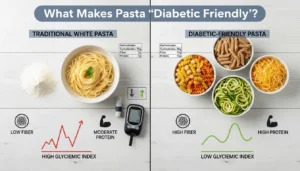
Before we jump into brands or recipes, it’s important to understand what actually makes pasta suitable for someone managing blood sugar levels. In short, it’s about the Glycemic Index (GI), fiber content, and portion size.
1. Understanding the Glycemic Index (GI)
The Glycemic Index measures how quickly carbohydrates in food raise your blood sugar. Foods with a low GI (below 55) are digested more slowly, leading to a gradual increase in blood glucose rather than a sharp spike.
Regular white pasta made from refined wheat flour tends to have a moderate to high GI, while whole grain pasta or legume-based pasta (like lentil or chickpea) usually ranks lower on the GI scale.
2. Fiber Content and Complex Carbs
Another key element is fiber. Fiber slows down digestion and helps maintain steady blood sugar levels. Whole wheat pasta or lentil pasta contains significantly more fiber than traditional pasta made from durum wheat semolina. That’s why these are considered diabetic pasta options.
3. Portion Control and Balance
Even the best pasta can cause issues if you eat too much of it. Portion size matters — about 1 cup (cooked) per meal is generally ideal for most diabetics, paired with a source of lean protein (like grilled chicken or tofu) and healthy fats (like olive oil).
(From my experience, I once overestimated my serving size — thinking one extra ladle wouldn’t matter — and noticed my energy dip afterward. Since then, I’ve learned to measure my portions properly.)
Now that we know what makes pasta diabetic-friendly, let’s look at which types actually work best.
Best Types of Pasta for Diabetics
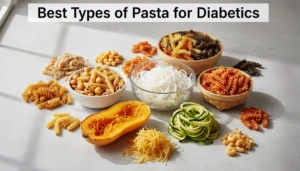
Choosing the right pasta can make all the difference. Let’s explore some of the most reliable options:
1. Whole Wheat Pasta
Whole wheat pasta retains the bran and germ, which adds fiber and nutrients like magnesium and B vitamins. This helps slow down carbohydrate absorption.
However, not all whole wheat pasta brands are equal — some are coarsely ground and may cook unevenly. Look for those labeled 100% whole grain and check the fiber per serving (at least 4g or more is great).
2. Lentil Pasta
Made entirely from lentil flour, this pasta is high in protein and fiber and naturally gluten-free. It’s one of the best diabetic pasta options because it keeps you full longer and minimizes blood sugar spikes.
I’ve personally found that red lentil pasta holds up well in creamy sauces and keeps a nice firm texture — just don’t overcook it, as it can become mushy.
3. Chickpea Pasta
Another great option, chickpea pasta offers a slightly nutty flavor and is packed with plant-based protein. It’s perfect for those following a vegan diet or Plant-based diet, and it has a lower GI compared to regular pasta.
4. Brown Rice Pasta
Brown rice pasta is a good alternative for people who want something mild and gluten-free. It’s less fibrous than lentil or chickpea varieties, but still better than traditional white pasta.
5. Shirataki Noodles
If you’re looking for a super low-carb option, shirataki noodles (made from konjac yam fiber) are practically carb-free. They can be a bit slippery in texture, but with the right sauce and preparation, they make a solid choice for those needing tight blood sugar control.
Is Whole Wheat Pasta Really Better?
This is one of the most common questions — is whole wheat pasta good for diabetes?
In short, yes, but it’s not a magic fix. Whole wheat pasta has more fiber, nutrients, and a lower GI than refined pasta, but the overall effect still depends on portion size and meal composition.
For example, pairing your whole wheat spaghetti with grilled vegetables and olive oil will have a very different impact than pairing it with a creamy, high-fat sauce.
(When I first switched to whole wheat pasta, I didn’t love the taste — but once I combined it with tomato-based sauces and herbs, it grew on me.)
So, yes — whole wheat pasta is a good choice for diabetics, but moderation and balance are key.
Portion Control and Glycemic Index Tips
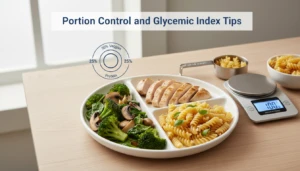
We’ve already mentioned portion size briefly, but it deserves its own spotlight because it’s one of the biggest mistakes people make.
1. Measure the dry pasta
For a main course for one adult, aim for 45–60 g dry pasta (about 1/2 to 2/3 cup dry, which cooks to ~1 cup). For 4 people, use 350 g (12 oz) dry pasta total. This yields roughly 4 main-course portions. (I keep a small digital scale in my kitchen — it changed my portioning game.)
2. Cook al dente
Cook to firm-to-bite — al dente pasta has a lower GI than overcooked pasta because the more intact starches digest more slowly. Cook 1–2 minutes less than the longest time stated on the packet to keep the texture right.
3. Add protein on the plate
Aim for 20–30 g protein per meal (chicken, fish, tofu, beans). Protein slows digestion and balances blood sugar.
4. Add fiber-rich vegetables
Fill half the plate with non-starchy veggies (spinach, broccoli, zucchini, mushrooms). This reduces total carb density.
5. Use healthy fats
A drizzle of olive oil, a sprinkle of nuts, or avocado helps further blunt post-meal glucose response.
6. Watch the sauce
Tomato-based or herb-olive oil sauces are safer than heavy cream or sugar-sweetened jarred sauces.
- Practical plate example (for 1 person): 1 cup cooked chickpea pasta + 1 cup sautéed vegetables + 90–120 g grilled chicken (or 1/2 cup white beans) + 1 tsp olive oil + lemon/herbs. That meal balances carbs, protein and fats.
How to Cook Diabetic Friendly Pasta Lower Its GI

Cooking technique changes digestion and GI. Follow these steps exactly to make pasta friendlier for blood sugar control.
Step 1 — Choose the right pasta
Pick a legume or whole-grain pasta (e.g., lentil or chickpea). Check label: aim for ≥6–8 g fiber and >8–12 g protein per serving for legume pastas.
Step 2 — Measure and portion
For 4 people use 350 g dry pasta (about 3½–4 cups dry depending on shape). Measure with a scale or use 3 cups dry if you don’t have a scale.
Step 3 — Boil with plenty of water
Use a large pot and plenty of water. Salt the water lightly. Bring to a full rolling boil.
Step 4 — Cook al dente
Set a timer for 1–2 minutes less than package directions. Test early. Remove when there’s a slight resistance in the center. Drain quickly.
Step 5 — Shock or cool (optional, for resistant starch)
If you’re planning a pasta salad or want to increase resistant starch, rinse the pasta under cold water or chill it — then reheat or serve cold. Studies show cooking, cooling and reheating can increase resistant starch and lower glycemic response in legume pasta. This is a practical trick if you make pasta salads for meal prep.
Step 6 — Emulsify with sauce and pasta water
Use the reserved starchy pasta water (a few tablespoons) to emulsify your sauce and help it cling — this reduces the need for extra oils or cream and improves mouthfeel.
Step 7 — Serve with protein and veggies
Plate as described above to keep the meal balanced.
Cooking notes & small technique tips (I learned these by trial)
- Don’t overcrowd the pan when sautéing mushrooms or vegetables — browning adds flavor without extra sugar.
- Finish pasta in the pan with the sauce for a minute so flavors marry and the sauce adheres — this also reduces the need to add more sauce later.
- Use lemon or vinegar to brighten flavors — acid can make smaller portions feel more satisfying.
- If reheating, add a splash of water or plant milk to restore the creamy texture rather than adding extra fat.
From my experience, the “cook-cool-reheat” trick made chickpea pasta salads noticeably more filling and gentler on my glucose logs.
Compare nutrition: regular vs whole grain vs legume pastas (what the labels show)
Here’s a quick comparison of typical per-serving numbers (approximate; check labels for exact):
- Regular semolina pasta (56 g dry / 1 cup cooked): ~200 kcal, 40 g carbs, 2–3 g fiber, 7 g protein.
- Whole wheat pasta: ~200 kcal, 38 g carbs, 6–7 g fiber, 8 g protein.
- Chickpea/lentil pasta: ~200–220 kcal, 30–35 g carbs, 6–11 g fiber, 12–15 g protein.
You can see legume pasta reduce net carbs while boosting fiber and protein — that’s why many dietitians recommend them for blood-sugar control. EatingWell+1
Best Brands for Diabetic Friendly Pasta in the US
Let’s talk about real products that you can find in stores or online. These brands are widely available and dietitian-approved for diabetic meal plans:
- Banza Chickpea Pasta – High in protein and fiber; great texture.
- Tolerant Organic Lentil Pasta – Made from 100% lentil flour.
- Barilla Protein+ – Blended with lentil, chickpea, and pea protein; good for those who want a traditional feel.
- Explore Cuisine Black Bean Spaghetti – Unique flavor, very high in fiber.
- Dreamfields Pasta – Designed specifically for people managing insulin resistance and blood sugar levels.
(Personally, I’ve tested most of these — and Banza and Barilla Protein+ have been the easiest to cook without texture issues.)
What Are the Health Benefits of Choosing Diabetic Friendly Pasta?

Now that we’ve covered the practical side, let’s look at the health side.
1. Better Blood Sugar Management
Low-GI pastas made from whole grains, chickpeas, or lentils release glucose slowly, helping prevent spikes.
2. More Nutrients
These options are richer in fiber, iron, and plant-based protein — supporting overall energy and metabolism.
3. Supports a Balanced Diet
Including diabetic-friendly pasta occasionally allows variety in a balanced diet without giving up favorite dishes. It’s especially suitable for people following a Plant-based diet.
Evidence & why this approach works (brief science notes)
- A review of GI values for pasta shows wide variability, but overall pasta can be a medium–low-GI food — meaning it often raises blood sugar more slowly than many starchy foods, especially when cooked al dente and paired correctly. PubMed Central+1
- Practical guidance from diabetes organizations emphasizes carbohydrate awareness and meal patterns rather than one-size-fits-all rules — measuring, balancing macronutrients and choosing higher-fiber carbs is recommended. American Diabetes Association+1
- Recent research shows cooking, cooling and reheating some pastas (including legume pastas) can increase resistant starch, which reduces the postprandial glycemic response — a useful strategy for meal prep and pasta salads. PubMed Central
Mistakes people make (and how to avoid them)
- Assuming “gluten-free” = low GI. Many gluten-free pastas are rice-based and can spike blood sugar. Always check fiber and protein.
- Overcooking pasta. Overcooked pasta digests faster and raises blood sugar quicker — aim al dente.
- Huge portions. A big bowl negates the benefits of low-GI pasta. Measure portions.
- Sauce pitfalls. Creamy, sugary, or extra-oily sauces add calories and sometimes hidden carbs — prefer tomato, olive oil, herbs, or light nut/plant bases.
- Skipping protein/fat/veg. Pairing is essential; protein and healthy fats slow glucose rise.
Storage, reheating and meal prep tips
- Cook smaller batches and cool rapidly for meal prep; refrigerated pasta dishes can be eaten within 2–3 days.
- Reheat gently with a splash of plant milk or water to restore texture.
- For pasta salads, cook, cool, and refrigerate — resistant starch may increase and the GI can be lower on reheating/serving cold.
My Experience Testing Diabetic Friendly Pasta
From my own kitchen experiments, I learned that not all gluten-free pastas are ideal for diabetics — some raise blood sugar quickly. Lentil and chickpea pastas worked best for me, keeping energy steady and flavor satisfying. The secret is balance: pair your pasta with veggies, olive oil, and lean proteins. Be patient — it takes a few tries to find what truly fits you.
FAQs About Diabetic Friendly Pasta
Can diabetics eat pasta safely?
Yes, as long as you choose low-GI, high-fiber varieties and keep portions moderate.
What pasta is good for diabetics?
Options like lentil pasta, chickpea pasta, and whole grain pasta are best.
Is whole wheat pasta good for diabetes?
Yes, it has a lower Glycemic Index than white pasta and contains more fiber and nutrients.
What are the best pasta brands for diabetics?
Banza, Tolerant, Explore Cuisine, and Dreamfields are reliable picks.
Can gluten-free pasta help diabetics?
Some gluten-free pastas (like those made from legumes) are great, but others (made from rice or corn) can still spike blood sugar.
Conclusion: Diabetic Friendly Pasta
To wrap it up — pasta doesn’t have to be off the table if you have diabetes. The key is smart selection, proper portioning, and balanced meals.
Whether you prefer whole grain, lentil, or chickpea varieties, you can enjoy pasta as part of your diabetic meal plan — just remember: moderation is everything.
Cooking al dente, adding protein and fiber, and keeping portions in check are small steps that make a big difference.
So next time you crave comfort food, reach for diabetic friendly pasta — because it’s possible to have both flavor and control on your plate.