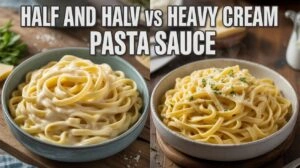
For most rich Italian-style pasta sauces, heavy cream pasta sauce gives you a thicker, richer texture. On the other hand, half and half cream sauce is a lighter version that works well if you know how to adjust it. The choice really depends on your taste, health goals, and the type of pasta dish you’re preparing.
In this guide, I’ll explain everything you need to know — the Half and Half vs Heavy Cream Pasta Sauce: A Complete Guide, how they behave in sauces, step-by-step cooking methods, substitutions, and even my own kitchen-tested tips. You’ll learn exactly which one fits your pasta, your budget, and your lifestyle — all without confusion.
What is Half and Half?
Let’s start simple before diving into the differences. Half and half is a dairy product made by blending an equal-parts mixture of milk and cream. It usually contains between 10.5 and 18 percent milkfat, which gives it a light, smooth texture. It’s pasteurized (and sometimes ultra-pasteurized) to increase its long shelf life, making it one of the most common beverages and foods used in coffee, breakfast cereals, and light sauces.
In a half and half cream sauce, this blend gives a silky base but not as much thickness as heavy cream. It’s less dense and can separate if overheated. When I first used half and half for a pasta sauce, I made the mistake of pouring it straight into the pan while the sauce was boiling — it curdled instantly! Now I always warm it gently before mixing, and the sauce stays smooth every time.
Most half and half you’ll find in stores today is made through industrial production, and it may include stabilizers, nutritive sweeteners, or flavoring ingredients (both natural and artificial) to maintain texture and taste. It’s a convenient liquid product that balances flavor and creaminess — ideal for low-fat pasta sauce options when you don’t want something too heavy.
What is Heavy Cream?
Now that you know what half and half is, let’s compare it with heavy cream, the richer, more luxurious alternative for creamy pasta lovers. Sometimes labeled as sweet cream or whipping cream, this cream is composed of milkfat levels of 36% or higher. That high butterfat content gives it a thick, velvety texture, making it perfect for a classic heavy cream pasta sauce.
Unlike half and half, heavy cream doesn’t curdle easily and can handle higher heat. It’s what gives restaurant dishes like Fettuccine Alfredo, creamy garlic pasta, and cheese sauce their luxurious, melt-in-the-mouth texture.
The best part? It coats the pasta beautifully, clinging to every strand, especially when mixed with butter and Parmesan cheese. The result is a richer variant of standard Italian recipes — the kind you’d expect in high-end dining.
However, since it contains high levels of saturated fat, it’s definitely an indulgence. I always tell home cooks — don’t avoid it completely; just use it smartly. When you make heavy cream pasta sauce for 3–4 people, about 1 cup of cream and 2 tablespoons of butter are enough for a balanced, rich result without going overboard.
Half and Half vs Heavy Cream Pasta Sauce — Key Differences

Now that we’ve covered both ingredients, let’s see exactly how they differ side by side:
| Feature | Half and Half | Heavy Cream |
| Fat Content | 10.5–18% | 36%+ |
| Texture | Light and smooth | Thick and rich |
| Heat Stability | Prone to curdling | Highly stable |
| Calories | Lower | Higher |
| Taste | Mild | Deep, buttery |
| Ideal For | Light sauces, soups | Alfredo, vodka sauce, baked pasta |
The differences between half and half and heavy cream come down to fat and stability. The more fat a sauce has, the more it resists heat and curdling. That’s why heavy cream is your best bet when you want a perfectly smooth pasta sauce consistency.
If you’re after a lighter taste or cutting calories, half and half works well — but only with care. For instance, lower the heat while simmering and use less liquid to prevent a watery finish.
Nutritional Comparison: Half and Half vs Heavy Cream Pasta Sauce
Nutrition often drives people to ask about half and half vs heavy cream calories. Here’s a basic comparison (per 100ml):
| Half and Half | Heavy Cream | |
| Calories | 120 | 350 |
| Fat | 12g | 36g |
| Saturated Fat | 8g | 23g |
| Protein | 3g | 2g |
| Carbs | 3g | 2g |
If you’re following a low-fat or balanced diet, half and half is lighter and less caloric. But for keto or high-fat diets, heavy cream actually fits better because of its butterfat content.
I personally switch between them depending on my week — if it’s a “comfort meal” night, I reach for heavy cream; on weekdays, half and half keeps my pasta light yet creamy.
Cooking Behavior: How Each Reacts in Pasta Sauce
When it comes to cooking, the difference between the two becomes very clear.

This is where things get interesting. When cooking, heavy cream behaves like a loyal friend — stable, forgiving, and thickens easily. You can boil it gently, reduce it, and still end up with a perfect creamy sauce texture.
Half and half, on the other hand, needs extra care. It’s more delicate and can split or curdle if exposed to high heat. That’s why it’s important to temper it first — by adding a few spoons of hot sauce to the cold half and half before mixing.
When you’re cooking with half and half, reduce the heat to low and let it thicken slowly. If the sauce feels thin, here’s how to make pasta sauce thicker:
- Simmer longer to let water evaporate
- Add a small roux (1 tbsp butter + 1 tbsp flour)
- Mix in Parmesan cheese or a bit of cornstarch slurry
Once, I skipped the roux step, and my sauce turned watery. Now, I always add that tiny roux for perfect consistency every time.
When to Use Each: Half and Half vs Heavy Cream Pasta Sauce
Now that you understand their behavior, let’s discuss when to use each for the best results.
Best Scenarios for Heavy Cream
- Rich, indulgent sauces like Alfredo, four-cheese, or pesto cream pasta
- When you’re cooking for guests or a main course where texture matters
- Perfect for baked pasta or shelf-stable Alfredo sauces, as it reheats smoothly
Best Scenarios for Half and Half
- Everyday pasta dishes for 2–3 people
- Lighter Italian recipes that still need a creamy base
- When combined with cheese-making elements like mozzarella or feta — it balances the fat nicely.
So, think of it this way: use heavy cream when you want a restaurant-quality sauce; use half and half when you want something homestyle and light.
How to Make Pasta Sauce with Each
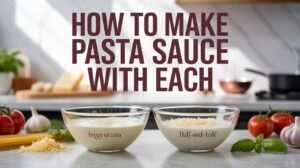
Let’s make both versions — heavy cream pasta sauce and half and half pasta sauce — step by step. You’ll see how they differ in richness, texture, and thickness. These recipes serve 3–4 people and use simple ingredients you likely already have at home.
A. Heavy Cream Pasta Sauce (Serves 3–4)
This version is rich, silky, and restaurant-style — perfect for Alfredo or creamy mushroom pasta.
Ingredients:
- 1 cup heavy cream
- 2 tablespoons butter
- ½ cup Parmesan cheese (grated)
- 2 cloves garlic, minced
- Salt and pepper to taste
- A pinch of nutmeg (optional but adds depth)
Step-by-Step Method:
Step 1: Melt Butter and Sauté Garlic
Place a medium-sized pan on low heat. Add 2 tbsp butter and let it melt gently — you don’t want it to brown.
Once melted, add minced garlic. Stir for about 30–40 seconds, just until you smell that wonderful aroma. Don’t let the garlic turn brown — that makes it bitter.
My tip: I used to rush this step and ended up with burnt garlic. Now, I always keep the flame low and stir continuously — that’s the secret to a perfect base.
Step 2: Add the Heavy Cream Slowly
Lower the heat even more, then pour in 1 cup heavy cream. Stir continuously as you pour — it helps the butter and cream blend smoothly. You’ll notice small bubbles forming around the edges — that’s the sign it’s gently heating.
Important: Never boil heavy cream. Boiling breaks it and makes the sauce oily. A light simmer is enough.
Step 3: Simmer Until Slightly Thick
Let it simmer gently for 5–7 minutes while stirring occasionally. You’ll see the sauce thickening slowly — it should lightly coat the back of your spoon.
If it gets too thick, add a splash of milk or pasta water to loosen it up.
From my experience: I once got distracted and reduced it too long — the sauce turned almost solid! Since then, I’ve learned to keep a close eye and stir every minute. The texture should stay smooth and creamy, not sticky.
Step 4: Add Parmesan and Seasoning
When the sauce is slightly thickened, turn off the heat and add ½ cup Parmesan cheese. Stir gently until the cheese melts completely into the cream.
Season with salt, pepper, and a pinch of nutmeg. The nutmeg enhances that creamy flavor beautifully.
Step 5: Toss with Pasta
Add freshly cooked pasta (like fettuccine or penne) straight into the sauce. Toss until each piece is coated evenly.
If it feels too thick, add 1–2 tablespoons of hot pasta water to balance it.
Your heavy cream pasta sauce is now ready — rich, smooth, and velvety. Serve immediately while hot and top with extra Parmesan or parsley for that restaurant look.
My Pro Tip:
To keep the sauce silky, always simmer gently — never rush the process. That soft simmer helps the cream and cheese merge perfectly.
Perfect Pairings:
- Fettuccine Alfredo
- Creamy Pesto Pasta
- Mushroom Chicken Pasta
This sauce holds its texture beautifully and reheats well — just add a splash of milk when warming it up later.
B. Half and Half Pasta Sauce (Serves 3–4)
This version is lighter, less fatty, and ideal for everyday cooking. It gives a creamy texture without feeling too heavy.
Ingredients:
- 1 cup half and half
- 1 tablespoon butter
- 1 tablespoon flour (for thickening)
- ¼ cup grated cheese (Parmesan or mild cheddar)
- Salt, pepper, and herbs (like oregano or parsley)
Step-by-Step Method:
Step 1: Make the Roux Base
In a medium pan, melt 1 tbsp butter on low heat. Once melted, add 1 tbsp flour and whisk quickly.
You’ll see a smooth paste forming — that’s your roux. Keep whisking for about 30–45 seconds to remove the raw flour taste.
Personal note: The first time I made this, I didn’t whisk enough and ended up with a grainy sauce. Now, I always whisk continuously until the roux turns pale and smooth.
Step 2: Add Half and Half Gradually
Keep the heat low and slowly pour in 1 cup half and half while whisking continuously.
This helps the mixture stay lump-free and smooth. Pouring it too fast or not whisking will cause clumps.
Tip: I hold the jug in one hand and the whisk in the other — pouring a thin stream while whisking nonstop. It’s a small trick, but it makes a big difference!
Step 3: Simmer to Thicken
Once combined, let the sauce cook gently for 4–5 minutes. You’ll see it start to thicken — it should feel creamy, not watery.
If it gets too thick, you can always add a tablespoon of milk to loosen it up.
My experience: Once I got impatient and turned the heat high — the sauce split and looked grainy. The secret is low and slow. Always use a gentle simmer for that smooth texture.
Step 4: Add Cheese and Seasonings
Turn the heat to low, add ¼ cup grated cheese, and stir until melted.
Then season with salt, black pepper, and herbs. Oregano adds a nice Italian touch, while parsley gives freshness.
Step 5: Mix with Pasta
Toss your cooked pasta (spaghetti, penne, or fusilli) right into the sauce. Stir for a minute until evenly coated.
If you want extra creaminess, add a tablespoon of reserved pasta water.
Serve immediately — it should look glossy and smooth, not heavy or greasy.
My Pro Tip:
If you prefer a lighter sauce, reduce cheese slightly and add more herbs. It gives a fresher flavor without losing creaminess.
Perfect Pairings:
- Creamy Spinach Pasta
- Garlic Herb Penne
- Chicken or Shrimp Pasta
This version is perfect for those who want a balanced creamy sauce — not too rich, but still comforting.
I’ve added a few helpful resources for you. I read Quora threads and watched YouTube videos about using half and half in pasta sauces. They taught me some great tips that I’m excited to share with you.
Substitution Guide: Can You Swap Them?
Yes, you can — with a few rules.
If you’re substituting half and half for heavy cream, add fat to make up for the difference. Mix ¾ cup half and half + 1 tbsp butter for every 1 cup of heavy cream.
However, this doesn’t work for whipped cream or extremely thick sauces. For those, you need the real thing.
For the reverse — using heavy cream instead of half and half — you can dilute with ¼ cup milk per 1 cup cream to create a lighter texture.
This substitution trick saved me many times when I ran out of one or the other!
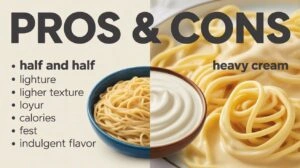
Pros & Cons (Half and Half vs Heavy Cream Pasta Sauce)
| Half and Half | Heavy Cream | |
| Pros | Lighter, cheaper, fewer calories | Thicker, more stable, richer taste |
| Cons | May curdle, needs care | Higher calories, more saturated fat |
| Best For | Light sauces, weekday meals | Classic Italian cream sauces |
| Cooking Tip | Keep heat low | Simmer gently, don’t boil |
Bottom line: both have their place. The key is understanding your pasta sauce texture comparison and your health goals.
Tips & Best Practices for Creamy Pasta Sauces
- Always bring dairy products to room temperature before adding to hot sauce.
- Add dairy last to avoid curdling.
- Use fresh Alfredo sauces when possible; shelf-stable Alfredo sauces or Alfredo sauce powder can be handy backups.
- For richer texture, add a bit of butter or cheese just before serving.
- Choose pasta types wisely:
- Heavy cream → fettuccine, rigatoni, penne.
- Half and half → linguine, spaghetti, shells.
Choosing the Right Cream for Your Pasta
Here’s a simple flow:
- Want a lighter sauce? → Use half and half.
- Want a richer flavor and perfect pasta sauce consistency? → Go with heavy cream.
- Watching calories? → Choose low-fat pasta sauce options using dairy alternatives in pasta sauce, like milkette, soy cream, or oat cream.
Your final decision depends on your taste and purpose — no one-size-fits-all rule. The beauty of creamy sauce variations is that you can customize endlessly.
FAQs About Half and Half vs Heavy Cream Pasta Sauce
Q1: What’s the difference between pasteurized and ultra-pasteurized cream?
Ultra-pasteurized cream lasts longer but may not whip as well; both are fine for sauces.
Q2: Can I use milkette or coffee creamer in pasta sauces?
Only in emergencies. They’re sweetened liquid products, not true dairy products.
Q3: Do natural or artificial ingredients affect sauce quality?
Yes, artificial stabilizers can alter taste. Always choose brands with minimal additives.
Q4: Are shelf-stable Alfredo sauces as good as fresh?
Not quite — they’re convenient but lack the depth of fresh, fermented cream flavors.
Q5: Which pasta shapes hold creamy sauces best?
Short, ridged pasta like penne or rigatoni hold cheese sauce and cream better than smooth ones.
Conclusion: Half and Half vs Heavy Cream Pasta Sauce
Both sauces have their charm — it just depends on what kind of meal you want.
If you’re craving something indulgent and restaurant-like, go for heavy cream. It gives that smooth, buttery richness everyone loves.
But if you prefer something lighter and healthier for weeknights, half and half is your best friend — easy to digest and still beautifully creamy.
From my kitchen experience: I use heavy cream for weekend dinners or guests, and half and half when I want something quick and light. Both have earned a permanent place in my pasta rotation.