They look almost identical on the plate — but linguine and spaghetti are built differently, behave differently in a pan, and work best with completely different sauces. Here’s everything you need to know.
Quick Answer: Linguine vs Spaghetti
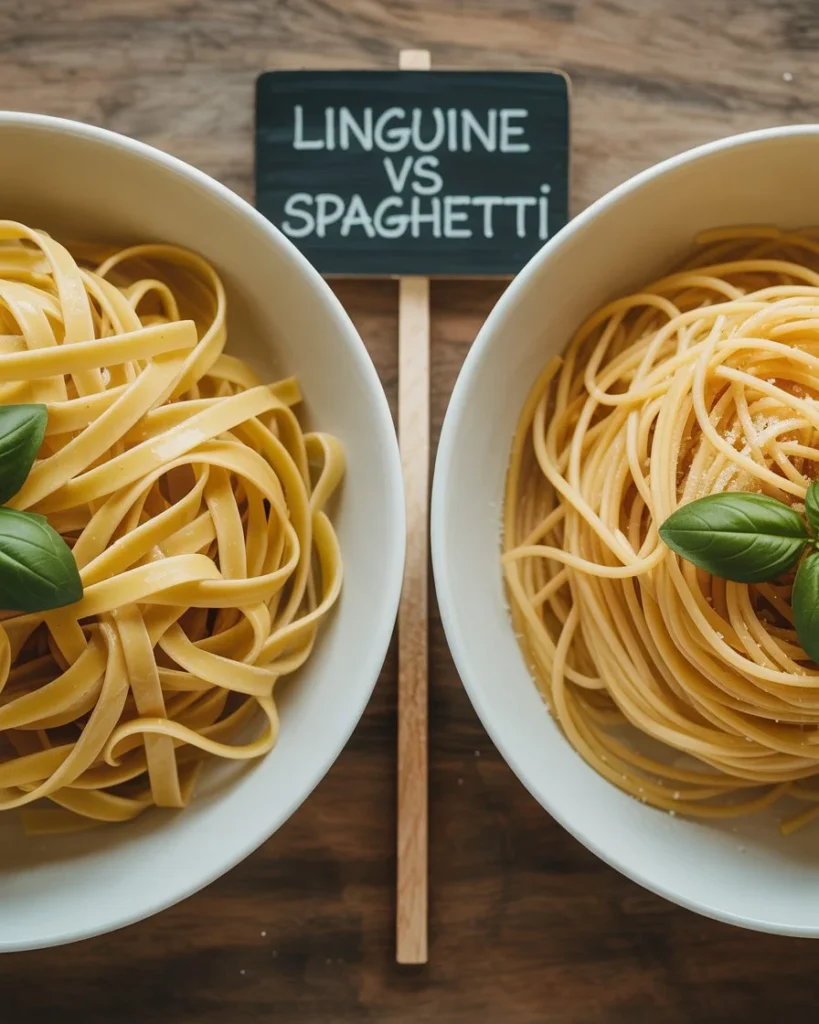
Linguine is a flat, oval-shaped pasta — slightly wider and flatter than spaghetti. Its name means “little tongues” in Italian.
Spaghetti is a perfectly round, cylindrical pasta. Its name means “little strings” in Italian.
The key difference is cross-section shape: linguine is oval/flat, spaghetti is round. This changes how each pasta holds sauce, which sauces work best, and the overall eating experience.
Side-by-Side Comparison
| Feature | Linguine | Spaghetti |
|---|---|---|
| Shape | Flat, oval cross-section | Round, cylindrical |
| Width | ~4mm wide, ~2mm thick | ~2mm diameter (round) |
| Name meaning | “Little tongues” | “Little strings” |
| Origin | Liguria, northwestern Italy | Naples, southern Italy |
| Texture | Slightly chewy, silky surface | Springy, firm bite |
| Sauce grip | Better — flat surface clings to sauce | Less surface area — sauce slides more |
| Best sauces | Clam sauce, pesto, seafood, light cream | Marinara, Bolognese, aglio e olio, carbonara |
| Cooking time | 9–11 minutes (dried) | 8–10 minutes (dried) |
| Mouthfeel | Wider, more substantial per bite | Thinner, lighter per bite |
The Shape Difference — Why It Matters
This is the core distinction most people overlook.
Linguine’s flat, oval shape creates more surface area on the top and bottom of each strand. Sauce clings to both flat sides — which is why linguine is the traditional choice for chunky, oil-based, or cream-light sauces like vongole (clam sauce) where you want the sauce to coat every strand.
Spaghetti’s round shape has less flat surface area. Sauce wraps around the outside of the cylinder rather than clinging flat. This works brilliantly for smooth, emulsified sauces like carbonara or simple marinara that coat evenly — but chunky sauces can slide off the rounded surface rather than adhering.
In short: flat pasta = more cling. Round pasta = better wrap.
Best Sauces for Linguine
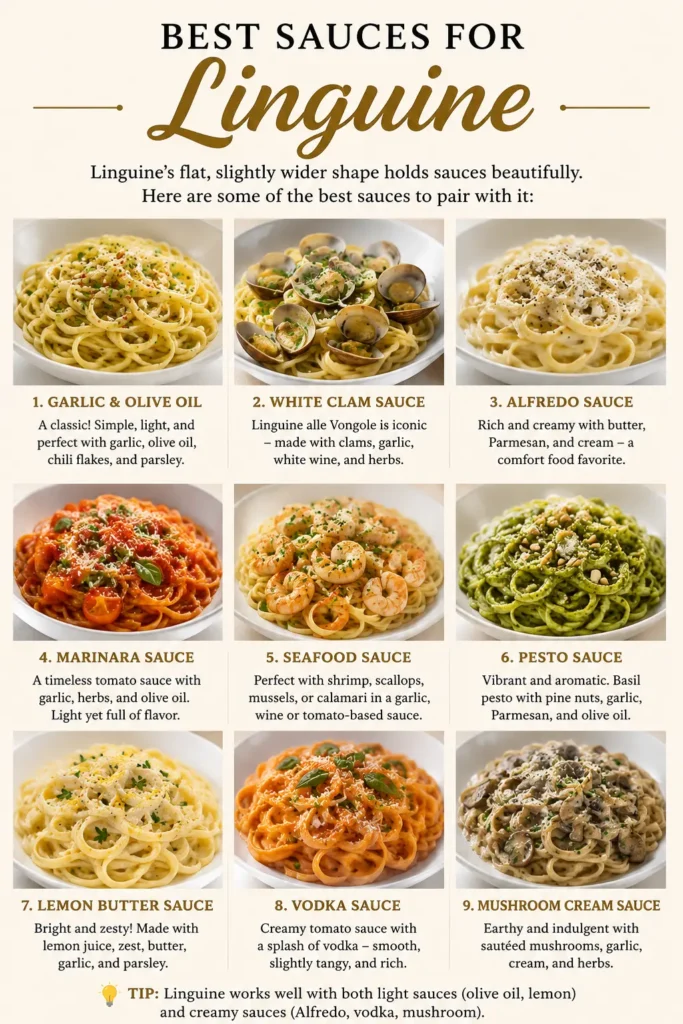
Linguine’s flat shape makes it the superior choice for:
Linguine alle Vongole (Clam Sauce) — The Classic
White clam sauce is linguine’s defining dish. The flat strands pick up every drop of the white wine, garlic, and clam juice broth. Most Italian chefs insist spaghetti should never be used here.
Pesto
Pesto’s oil-based texture clings to linguine’s flat surfaces better than it wraps around round spaghetti. The result is a more evenly coated, flavorful dish.
Seafood Sauces
Shrimp, scallops, mussels — linguine pairs naturally with seafood across the board, a legacy of its Ligurian coastal origins.
Light Cream and Butter Sauces
Light cream or butter-lemon sauces coat the flat surface of linguine in a thin, even layer that stays on the pasta rather than pooling at the bottom of the bowl.
Aglio e Olio
While traditionally made with spaghetti, many cooks prefer linguine here — the garlic and olive oil emulsion clings more evenly to the flat strand.
Best Sauces for Spaghetti
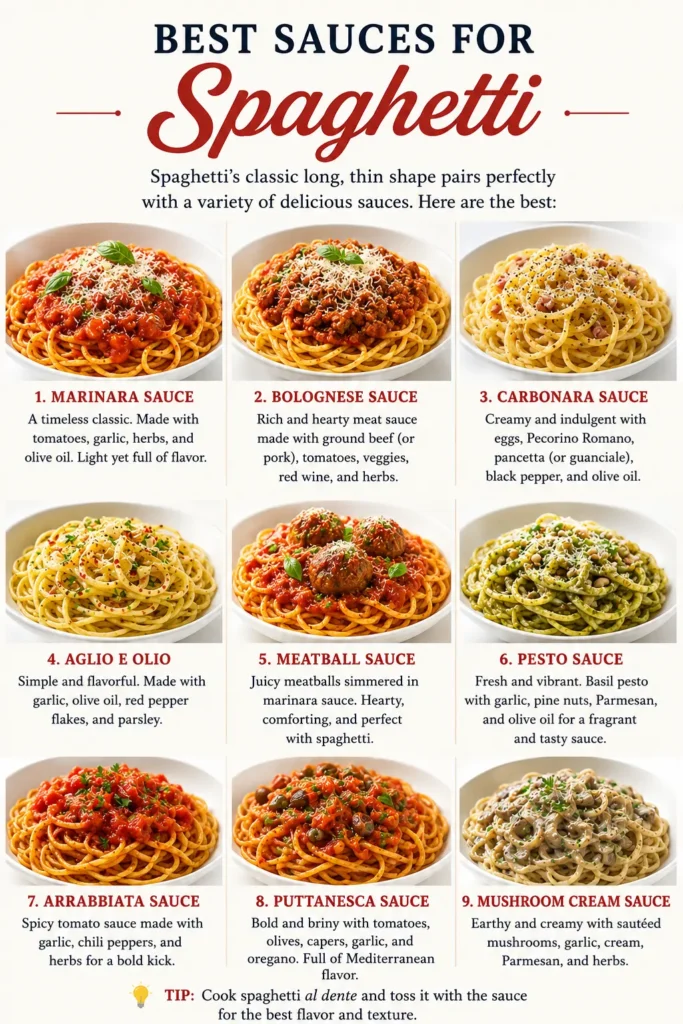
Spaghetti’s round shape makes it the superior choice for:
Marinara / Pomodoro
The round strands twirl through smooth tomato sauce beautifully, picking up the sauce in coils. The classic pairing in Italian cuisine.
Carbonara
Spaghetti carbonara is traditional for good reason — the egg and Pecorino emulsion wraps uniformly around each round strand, coating it perfectly.
Bolognese
Long, slow-cooked meat sauce pairs with spaghetti in most traditional southern Italian households. The round strand coats evenly with the smooth, oil-based ragu.
Aglio e Olio
The Roman classic — garlic, olive oil, chili flakes — is traditionally made with spaghetti. The simplicity of the sauce matches the simplicity of the shape.
Meatballs and Tomato
The universally recognized pairing. Spaghetti and meatballs is an Italian-American institution for a reason — round pasta, round meatballs, smooth sauce. It works.
Can You Substitute One for the Other?
Yes — with caveats.
Linguine and spaghetti are the most interchangeable of all pasta shapes. In a pinch, one works in almost any recipe calling for the other. The dish won’t be wrong — it just won’t be at its best.
When substituting linguine for spaghetti: The dish will be slightly more substantial. Heavier sauces coat better. Light broths may feel slightly overwhelmed by the wider strand.
When substituting spaghetti for linguine: Works in most preparations. Seafood sauces will lose a little cling. Pesto won’t coat quite as evenly.
Where substitution fails: Clam sauce (vongole). This dish is built around linguine — the flat strand is integral to the experience. Using spaghetti is a noticeable downgrade that any Italian cook will point out immediately.
Cooking Both Correctly
Both pasta types cook using the same fundamental method — but the details matter.
The non-negotiables for both:
- Use a large pot — pasta needs room to move
- Salt the water aggressively — it should taste like mild seawater (~1 tbsp per 4 liters)
- Cook to al dente — firm to the bite, with a tiny white dot visible in the center when broken
- Reserve pasta water before draining — the starchy liquid is your sauce’s best friend
- Finish in the pan with the sauce — never dump sauce on top of drained pasta in a bowl
Cooking times (dried pasta):
| Pasta | Al Dente | Fully Tender |
|---|---|---|
| Linguine | 9 min | 11 min |
| Spaghetti | 8 min | 10 min |
Fresh pasta cooks in 2–3 minutes for both.
Linguine-specific tip: Because of its flat shape, linguine can clump when draining. Toss immediately with your sauce or a drizzle of olive oil the moment it comes out of the pot.
Spaghetti-specific tip: Spaghetti twirls better when there’s enough sauce to act as lubrication. If the dish feels dry, add pasta water 1 tbsp at a time while tossing.
Nutritional Comparison
Dried linguine and dried spaghetti are nutritionally almost identical — they are both made from the same ingredients (durum wheat semolina and water in most cases).
| Nutrient | Linguine (100g dry) | Spaghetti (100g dry) |
|---|---|---|
| Calories | ~350 | ~350 |
| Protein | ~12g | ~12g |
| Carbohydrates | ~71g | ~71g |
| Fat | ~1.5g | ~1.5g |
| Fiber | ~3g | ~3g |
No meaningful nutritional difference. Choose based on the sauce, not the nutrition label.
Which Is More Popular?
Spaghetti is the most consumed pasta in the world. It is the default pasta in most households globally and anchors some of the most iconic Italian-American dishes.
Linguine is the specialist. Less ubiquitous than spaghetti, it is the deliberate choice of cooks who know what it does better — particularly with seafood and oil-based sauces.
In Italy, both are everyday pantry staples. Outside Italy, spaghetti outsells linguine significantly — but anyone who cooks Italian food seriously keeps both on hand.
At a Glance: When to Reach for Each
| Situation | Use Linguine | Use Spaghetti |
|---|---|---|
| Clam sauce (vongole) | ✅ Always | ✗ Not traditional |
| Carbonara | ✗ Acceptable | ✅ Traditional |
| Bolognese | ✗ Acceptable | ✅ Traditional |
| Pesto | ✅ Better cling | ✗ Acceptable |
| Marinara | ✗ Works fine | ✅ Classic |
| Seafood sauces | ✅ First choice | ✗ Second choice |
| Aglio e olio | ✅ Works well | ✅ Traditional |
| Butter and lemon | ✅ Better | ✗ Works |
| Meatballs | ✗ Acceptable | ✅ Classic |
| Cream sauce | ✅ Coats well | ✗ Works |
Frequently Asked Questions
Is linguine the same as spaghetti? No. Both are long pasta, but linguine is flat and oval in cross-section while spaghetti is round and cylindrical. Linguine is wider (~4mm) and slightly flatter; spaghetti is thinner and perfectly round (~2mm diameter). The shape difference affects how each holds sauce.
Which is better — linguine or spaghetti? Neither is universally better — each is better for specific sauces. Linguine outperforms spaghetti with seafood, pesto, and oil-based sauces because its flat shape holds more sauce. Spaghetti outperforms linguine with smooth tomato sauces, carbonara, and Bolognese because its round shape coats evenly with smooth emulsified sauces.
Can I use spaghetti instead of linguine for clam sauce? You can, but it’s not traditional and most Italian cooks would disagree with the choice. Linguine’s flat surface clings to clam sauce’s olive oil, white wine, and clam juice broth more effectively than spaghetti’s round surface. The dish works — it’s just noticeably better with linguine.
Why is linguine flatter than spaghetti? Linguine originated in Liguria, a coastal region of northwestern Italy, where it developed to pair with the region’s seafood and pesto dishes. The flatter shape was specifically suited to lighter, oil-based sauces common in Ligurian cooking. Spaghetti originated in Naples, where smooth tomato sauces are dominant — a round strand coats better with those preparations.
Does linguine or spaghetti hold sauce better? Linguine holds sauce better overall because its flat, oval surface area gives sauce more to cling to on both sides of the strand. Spaghetti’s round shape means sauce wraps around the outside only, which works well for smooth sauces but less well for oil-based or chunky ones.
Are linguine and fettuccine the same? No. Both are flat pasta, but fettuccine is significantly wider (~6–7mm) and thicker than linguine (~4mm). Fettuccine is made with egg in most traditional recipes, giving it a richer, more tender texture. Linguine is typically egg-free. Fettuccine is best with rich cream sauces (Alfredo); linguine is best with lighter oil and seafood sauces.
The Bottom Line
Linguine and spaghetti are close relatives, not twins. The shape difference is small but meaningful — flat pasta clings, round pasta coats. Match the shape to the sauce and every dish performs at its best.
Default to spaghetti for tomato, meat, and egg-based sauces. Reach for linguine when the sauce is seafood, pesto, or oil-based.
Keep both in your pantry. The right pasta for the right sauce is one of the simplest upgrades in home cooking.
What’s your go-to pasta shape for weeknight dinners? Tell us in the comments.