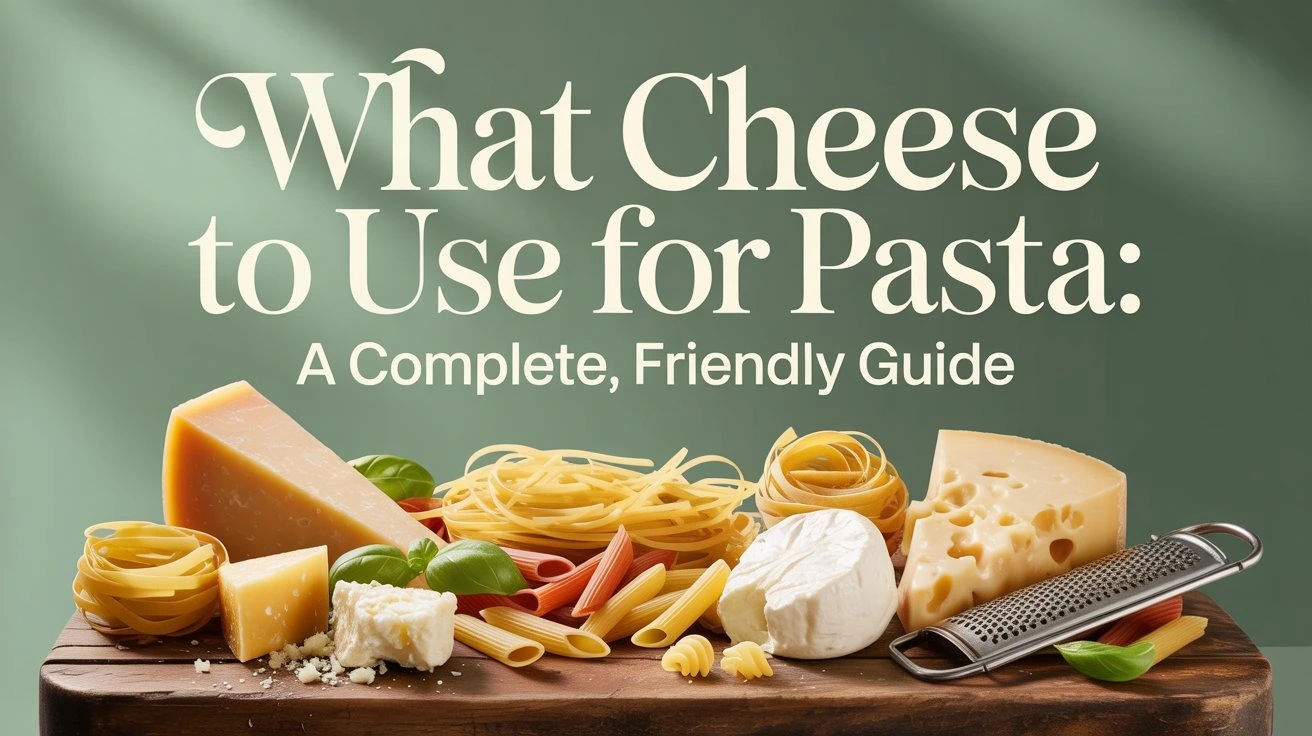

What cheese to use for pasta is the very first question many cooks ask when they want a great pasta meal. Cheese changes the taste, the texture, and the whole feel of the dish. It can make a simple bowl of pasta turn into something warm, rich, and comforting.
Now, let me give you a short direct answer: the best cheeses for pasta are Parmesan, Mozzarella, Ricotta, and Pecorino Romano, depending on the sauce and the pasta shape.
In this article I will explain everything step by step. You will learn types of cheese, how to check quality, exact quantities per person, how to prepare cheeses (grating, draining), how and when to add cheese to avoid mistakes, storage and ripening tips, diet substitutions, and troubleshooting. I’ll use simple steps and short recipes for 1–4 people so you can cook right away.
Why cheese matters in pasta
Cheese does three main things in pasta: it adds flavors, it changes texture, and it improves richness.
- Flavors: Cheese brings salt, umami, and distinctive notes (nutty, tangy, creamy). This helps balance the sauce.
- Texture: Cheeses can melt into a silky sauce, give stringy stretch, or stay crumbled and crumbly. Think of the difference between a soft Ricotta filling and a browned layer of Mozzarella on top of baked pasta.
- Richness: Cheese adds milk-fat and protein which makes the mouthfeel richer and more satisfying.
Now that you know why cheese matters, we will move to how cheeses interact with different kinds of sauce and pasta. This will make choosing easier.
How cheese interacts with sauce and pasta
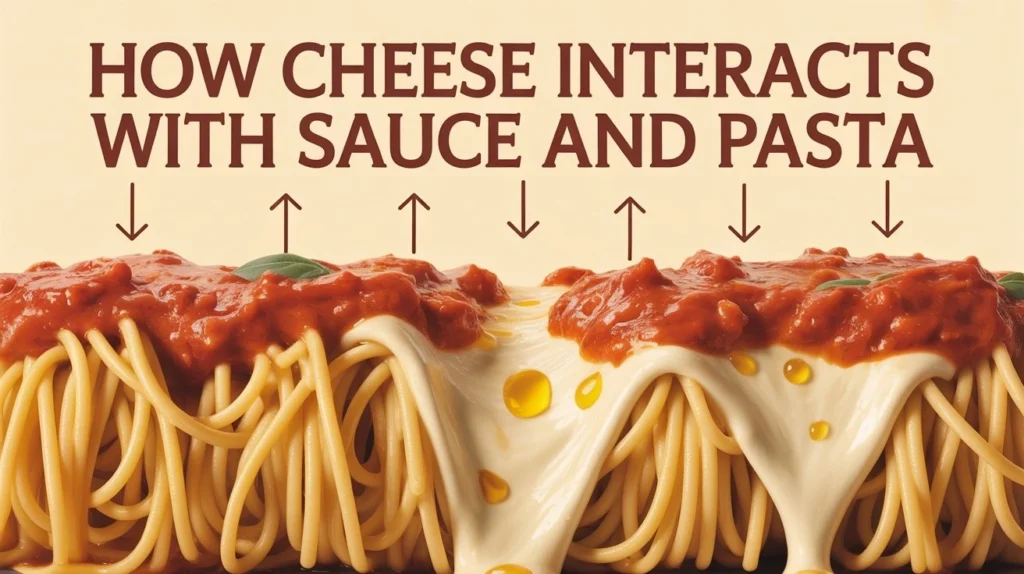
Different sauces and pasta shapes need different cheeses.
- Tomato-based sauces (marinara, arrabbiata): work best with grated aged cheeses like Parmesan or Pecorino Romano. These add salt and umami without making the sauce heavy.
- Cream-based sauces (alfredo, four-cheese): love soft, melting cheeses — Mascarpone, Ricotta, Gorgonzola, and Mozzarella help make a silky texture.
- Olive oil or herb-based (aglio e olio, pesto): do well with fresh cheeses like Burrata, Feta, or Goat Cheese that add brightness.
- Baked pasta (lasagna, baked ziti): needs stretching and browning — Mozzarella, Provolone, and a grated hard cheese on top (like Grana Padano) are ideal.
By matching melt and flavor intensity you make each bite balanced. Next we’ll explain cheese categories so you can quickly navigate choices.
Categories of Cheese for Pasta
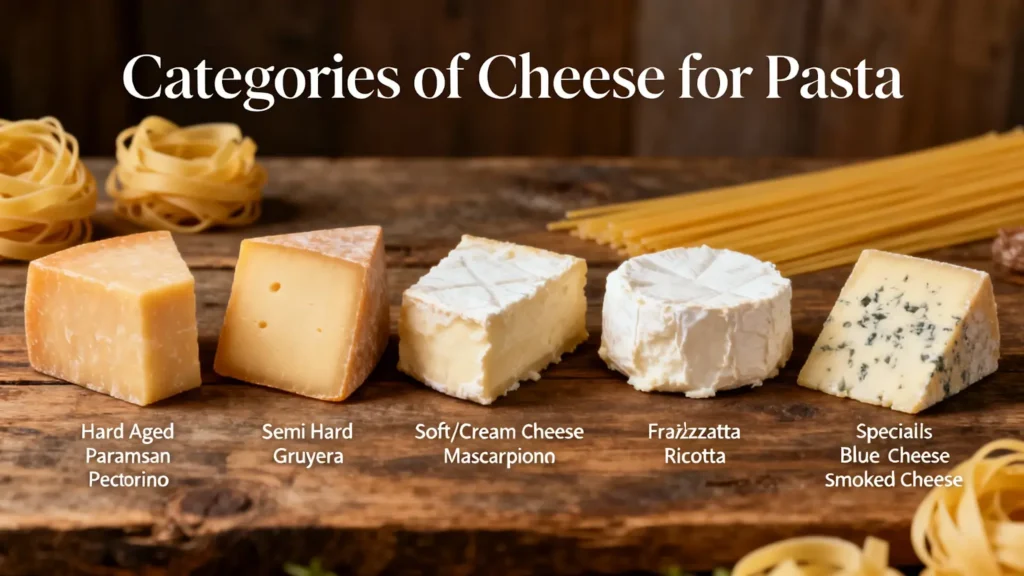
Before we talk about the best cheeses for pasta, it’s very important to understand their basic types of cheese. Each category has its own texture, flavors, and melting behavior. These differences affect how the cheese performs in your dish — whether it’s creamy, stretchy, or crumbly. So, let’s go through them one by one in detail.
Hard / Aged Cheeses
Hard cheeses like Parmesan, Pecorino Romano, and Grana Padano are aged for months, sometimes even years. This long process of storing and ripening cheeses helps remove moisture and concentrate milk protein, giving them a strong, salty, and nutty taste. Because of this processing, they develop a protective rind that preserves their texture and extends their storage life.
These cheeses are best for grating over pasta or mixing into sauces just before serving. For example:
- Parmesan (Parmigiano-Reggiano) is the go-to choice for spaghetti, fettuccine Alfredo, and lasagna. It melts beautifully and adds a deep umami flavor.
- Pecorino Romano is sharper and saltier, perfect for traditional Roman dishes like carbonara and cacio e pepe.
- Grana Padano is a milder option, great for lighter tomato or vegetable-based sauces.
From my own experience, I’ve learned that adding freshly grated Parmesan right before serving gives a rich aroma and balanced saltiness — it truly brings the whole pasta dish together.
Semi-Hard Cheeses
Semi-hard cheeses such as Mozzarella (low-moisture), Provolone, and Gouda are known for their excellent melting quality. They contain a moderate level of milk-fat, which makes them stretch and brown perfectly under heat. Because of this, they are ideal for baked pasta dishes like lasagna, baked ziti, or stuffed shells.
- Mozzarella, especially the low-moisture kind, is wonderful for creating that golden, stretchy top layer in oven-baked dishes.
- Provolone adds a subtle smoky flavor and melts evenly, giving a beautiful glossy finish to the pasta.
- Gouda, although not traditionally Italian, pairs nicely with creamy or mushroom-based sauces because of its buttery taste.
Soft / Cream Cheeses
Next, we have soft cheeses, also known as cream cheeses, such as Mascarpone, Ricotta, and Cream Cheese. These are made with higher milk-fat content and minimal aging. Because they retain more whey and curd, they have a smooth and creamy texture — perfect for mixing directly into sauces.
- Mascarpone makes creamy pasta sauces silky and luxurious, especially when added to mushroom or Alfredo recipes.
- Ricotta is light and slightly sweet; it’s the best choice for filling ravioli, cannelloni, and lasagna layers.
- Cream Cheese gives a subtle tang and velvety body to tomato or white sauces.
If you’re cooking for two people, about 100–120 grams of Ricotta or Mascarpone is enough to create a smooth, thick sauce. From my personal kitchen experience, I always make sure to drain Ricotta before using it; this prevents the sauce from becoming watery and keeps the texture creamy yet firm.
Fresh Cheeses
Fresh cheeses like Fresh Mozzarella, Burrata, Goat Cheese, and Feta are very high in moisture and have not gone through long aging. Since they are not heavily processed, they offer a mild flavor and delicate creaminess. These cheeses are great for light pasta dishes, especially summer recipes that include fresh herbs, olive oil, or vegetables.
- Fresh Mozzarella melts gently and is amazing in caprese-style pasta or baked penne with tomato sauce.
- Burrata adds a creamy surprise inside its outer shell, making fresh pasta recipes like spaghetti pomodoro truly special.
- Goat Cheese brings a tangy twist — excellent with spinach, roasted peppers, or zucchini pasta.
- Feta, though Greek, pairs beautifully with olive oil-based pasta and roasted vegetables for a Mediterranean touch.
Specialty / Blue & Smoked Cheeses
Finally, there are specialty cheeses, including blue cheeses like Gorgonzola, and smoked cheeses such as smoked Provolone or smoked Gouda. These are unique because they often contain aromatic molds or flavoring agents that give them distinctive, bold tastes.
- Gorgonzola, an Italian blue cheese, adds a creamy and slightly pungent flavor — perfect for rich cream-based sauces with mushrooms, nuts, or spinach.
- Smoked Provolone brings a deep, roasted aroma to baked pasta dishes and pairs well with meats.
- Smoked Gouda gives a sweet, smoky flavor that works beautifully with bacon or caramelized onion pasta.
Mixing and Matching
Now that we’ve explored these categories, you can easily mix cheeses with confidence. For instance:
- Combine a hard cheese (like Parmesan) with a soft cheese (like Ricotta) for both sharpness and creaminess.
- Or try blending a semi-hard (like Mozzarella) with a specialty cheese (like smoked Provolone) to create both stretch and bold aroma.
What Are The Best Cheeses for Pasta (Main List)
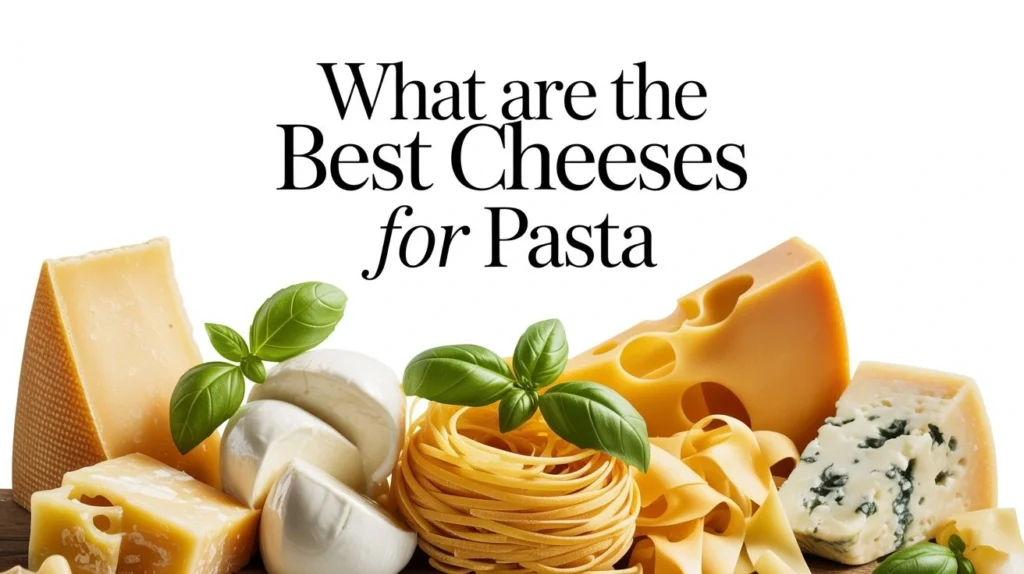
Below I list the main cheeses with uses, and I explain some practical steps like draining or grating.
Parmesan (Parmigiano-Reggiano)
- Type: Hard cheeses.
- Flavor: Nutty, salty, complex from aging.
- Use: Grate on top of pasta, mix into sauces for umami.
- Tip: Always grate fresh from a wedge. Fresh-grated cheese melts into sauce better than pre-shredded.
- My experience: A sprinkle of Parmesan turns a simple tomato spaghetti into a restaurant-style plate.
Pecorino Romano
- Type: Hard cheeses (sheep’s milk).
- Flavor: Sharper and saltier than Parmesan.
- Use: Classic for cacio e pepe and carbonara. Use a little less if you’re also salting the pasta water.
- Tip: Because it is saltier, taste before adding more salt.
Grana Padano
- Type: Similar to Parmesan but milder.
- Use: Everyday grating cheese for pasta and bakes.
Mozzarella
- Type: Semi-Hard Cheeses (fresh and low-moisture versions).
- Flavor: Mild, milky.
- Use: Baked pasta, lasagna, pizza. Fresh Mozzarella gives creaminess; low-moisture browns and stretches better.
- Tip: For lasagna, use low-moisture slices or shredded low-moisture so the top browns and doesn’t water down the dish.
Ricotta
- Type: Soft / Cream Cheeses.
- Flavor: Mild and slightly sweet.
- Use: Stuffed pasta (ravioli, manicotti), mix into sauces for creaminess, lasagna layers.
- How to drain: Put ricotta in a sieve for 30–60 minutes to remove extra whey if you need a firmer texture. This avoids watery fillings.
- My note: I always drain ricotta for lasagna — it keeps the layers clean and not soggy.
Ricotta Salata
- Type: A pressed, saltier version of ricotta.
- Use: Grate or crumble over roasted veg pasta for saltiness and texture.
Mascarpone
- Type: Soft / Cream Cheeses with high milk-fat.
- Use: Add to tomato or cream sauces to make them velvety. A spoonful at the end smooths the sauce.
Gorgonzola / Blue cheese
- Type: Speciality Cheeses with aromatic molds.
- Use: Melt into cream sauces for bold flavor. Pair with walnuts and mushrooms.
- Note: Strong cheese — use in small amounts.
Feta
- Type: Fresh cheese (crumbly).
- Use: Great for olive oil/herb pastas, roasted vegetable pasta.
- Tip: Crumble just before serving.
Provolone / Gouda / Cheddar
- Type: Semi-hard; cheddar is not Italian but works.
- Use: Baked pastas and mac & cheese. Mix cheddar with Parmesan for deeper flavor.
Burrata
- Type: Fresh cheese with creamy center.
- Use: Place on top of warm pasta right before serving for a luxurious creamy center that breaks into the pasta.
How to choose cheese quality and quantity

Quality checklist
- Look at the origin of the milk (cow, sheep, buffalo) — labels often say this.
- Check date and firmness; for aged cheeses, the label will show aging months.
- For soft cheeses check storage life and refrigeration status.
- Read ingredients — avoid unexpected flavoring agents or preservatives if you want natural taste.
Quantity rule (simple)
- Use 25–35 g (about 1 to 1.25 oz) of grated hard cheese per person for a finishing sprinkle.
- For creamy sauces, use 30–50 g per person depending on richness.
- For baked pasta, plan 60–100 g of melty cheese per person (mix of Mozzarella + grated hard cheese).
These are starting points. Taste and adjust.
How to Use Cheese in Pasta — Method & Timing
Follow these steps to avoid common problems like grainy sauce or watery pasta.
Step 1 — Prepare cheese
- Grate hard cheeses fresh for best melt. Pre-shredded often contains anti-caking agents and does not melt as smoothly.
- Drain Ricotta if it is watery. Put in a sieve lined with cheesecloth for 30 minutes.
- Let cold cheeses reach room temperature for 10–15 minutes before mixing into warm sauce — cold cheese can make sauce seize.
Step 2 — Add cheese to sauce at the right time
- If you are finishing a stovetop sauce, take it off high heat and cool for 20–30 seconds before adding cheese. This keeps the emulsion stable.
- Add Mascarpone or Ricotta at the end for creaminess.
- Stir grated Parmesan into the sauce slowly, not all at once.
Step 3 — For baked pasta
- Layer sauce, pasta, and cheeses. Put grated hard cheese on top to brown.
- Bake until bubbling; broil briefly for a golden crust.
Step 4 — For topping
- If using Burrata or fresh Mozzarella, add after plating. Fresh cheeses are best when not overcooked.
My tip: Always add cheese gradually and taste. Small adjustments help.
I found a useful Reddit thread on what cheese to use for pasta, showing which cheeses work best for different dishes, like Parmesan for topping and Mozzarella for baking. I’m sharing it so you can quickly see real user advice without searching.
Storage, ripening, and safety
Cheeses need different care. Some key terms and tips:
- Storing and ripening cheeses: Hard cheeses last longer when wrapped in breathable paper in the fridge. Soft cheeses need airtight containers.
- Protective rind: Some aged cheeses have a natural protective rind; do not eat rind unless it’s edible or you like the flavor.
- Storage life: Hard cheeses keep longer (weeks) while fresh cheeses last a few days.
- To preserve leftover cheese, wrap it in parchment paper then a loose plastic bag. This keeps humidity right.
Always check the smell and texture. If a cheese has off smell or visible harmful mold (not the expected type like blue cheese), discard.
Diet considerations and substitutions
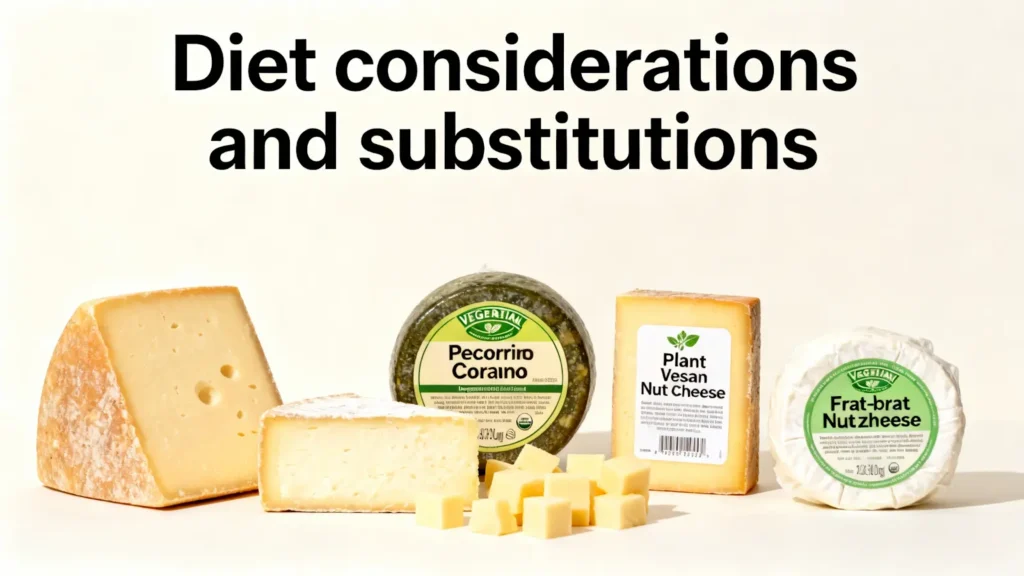
- Lactose intolerance: Aged cheeses like Parmesan and Pecorino Romano are low in lactose because of cheesemaking and aging; many people tolerate them better.
- Vegetarian: Look for cheeses made with vegetarian rennet or labeled vegetarian.
- Vegan: Use plant-based cheeses made from nuts or soy, but check melt and flavor; sometimes blending with nutritional yeast helps the flavor profile.
- Low-fat: Use part-skim Mozzarella or low-fat Ricotta for lighter dishes.
Remember: milk protein and curd are central to how cheese behaves — they determine melting and texture.
Common mistakes and how to fix them
- Mistake: Adding cold cheese to boiling sauce → sauce breaks or becomes grainy.
Fix: Remove sauce from heat, cool slightly, then add cheese slowly. - Mistake: Using watery fresh cheese in lasagna → soggy layers.
Fix: Drain Ricotta or pat fresh Mozzarella dry. - Mistake: Over-salting because cheese is salty.
Fix: Taste sauce before adding extra salt; remember Pecorino Romano is saltier than Parmesan. - Mistake: Pre-shredded cheese that won’t melt well.
Fix: Grate from block for best melt.
My personal tips (small, practical habits)
I like to combine two cheeses — a hard grated cheese for flavor and a melty cheese for texture. For example:
- Pecorino + Ricotta in a quick carbonara-style sauce (less salty if you use less Pecorino).
- Parmesan + Mozzarella for baked ziti.
I always let cheese come closer to room temperature and grate fresh for better texture. When I make lasagna for 4 people, I plan 300–350 g total cheese (mix of Ricotta, Mozzarella, and grated hard cheese).
Exploring more cheeses (short list)
- Provolone — smoky and melts well for baked dishes.
- Goat Cheese — tangy and great with vegetables.
- Burrata — luxury topping for summer pasta.
- Cheddar — for mac & cheese; mix with Italian cheeses for balance.
Each cheese brings a different texture and flavors. Use them to create contrasts.
FAQs About What Cheese to Use for Pasta
1. Can I mix different cheeses in one pasta dish?
Yes, you can! Mixing cheeses gives pasta more depth and balance. For example, using Parmesan for sharpness and Mozzarella for stretch creates both flavor and texture. Just remember to balance strong cheeses (like Gorgonzola) with milder ones (like Ricotta) so one flavor doesn’t overpower the other.
2. What cheese is best for baked pasta dishes like lasagna or pasta al forno?
Mozzarella, Ricotta, and Parmesan are best for baked pasta. Mozzarella melts and stretches beautifully, Ricotta adds creaminess between layers, and Parmesan gives a golden, crispy top when baked. Together, they create a perfect balance of gooey, creamy, and slightly crunchy textures.
3. What cheese should I avoid in pasta?
Avoid cheeses that don’t melt smoothly or have very strong flavors that can dominate your dish. For example, aged cheddar or blue cheese can be overpowering if not balanced well. Also, fresh cheeses like Feta can curdle in hot sauces, so they’re better as toppings instead of main sauce ingredients.
4. Can I use vegan cheese for pasta?
Yes, there are excellent vegan cheeses made from nuts, soy, or coconut oil. For creamy sauces, cashew-based cheeses work well. For melt and stretch, vegan mozzarella-style cheese is great. When I tried vegan pasta myself, I found that adding a bit of nutritional yeast boosted the flavor to taste more like Parmesan.
5. How do I store leftover cheese after making pasta?
Wrap cheese tightly in parchment or wax paper and store it in an airtight container in the fridge. Hard cheeses like Parmesan last up to 3–4 weeks, while soft cheeses like Ricotta should be used within 3–5 days. Always keep them cold to preserve texture and flavor.
Conclusion: What Cheese to Use for Pasta
Choosing what cheese to use for pasta is not hard if you think about three things: texture (melt vs. crumbly), salt and flavor intensity, and the type of sauce. Use aged hard cheeses for finishing and umami (Parmesan, Pecorino Romano), soft cheeses like Ricotta and Mascarpone for creaminess, and Mozzarella or Provolone for melty, browned toppings.
Try starting simple: pick one hard cheese and one melty cheese, match them to your sauce, and taste as you go. Cooking is part technique and part feeling — the cheese will guide you.
Enjoy your pasta, and remember: the right cheese makes every bite better.