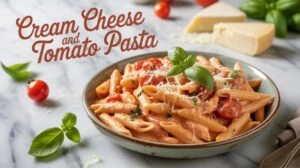
Cream cheese and tomato pasta is a simple, comforting dish that combines mild, creamy cheese with fresh, bright tomatoes. It’s quick to make, tastes fresh and indulgent at the same time, and works as a weeknight dinner or a relaxed weekend meal.
This dish gives you a creamy sauce without heavy cooking — ideal if you want great taste with minimal fuss. If you like a slightly fresher, brighter bite, try the cream cheese cherry tomato pasta variation covered below.
Now, in this article I’ll show you exactly what to buy, how much to use, every small step from chopping to serving, key production method notes for the sauce, how to control milk fat and higher fat content choices, and the most common mistakes I made (and fixed) so your dish turns out great every time.
Why cream cheese and tomato pasta works
Let’s begin with the idea behind the dish so you know what to expect. The pairing of soft, mild-tasting cream cheese and tomatoes creates a sauce with a gentle, creamy texture and a bright tomato taste. Because cream cheese is a fresh cheese with a mild profile, it doesn’t overpower the tomatoes — instead it softens acidity and gives a silky mouthfeel that clings to pasta.
Now that we know why the combo is appealing, let’s answer the most common beginner question directly: can you make a restaurant-style, smooth sauce at home with cream cheese? Yes — by controlling heat, warming the dairy, and using pasta water to bind the sauce, you get a glossy, well-emulsified finish. I’ve cooked this many times; the same three tricks (warm cheese, reserved pasta water, low heat) fixed nearly every problem I initially had.
Next, we’ll go through precise ingredients, explain why each matters (including decisions about milk and cream and milk fat), and then I’ll walk you step-by-step through the exact cooking process so nothing is left out.
Ingredients — what to buy and why (exact quantities for 4 people)

Here’s a simple shopping list and the reasoning behind each choice. Keep every ingredient on hand before you start.
- Dry pasta: 350 g (12 oz) — penne, fusilli, rigatoni or farfalle (shapes that hold sauce). This amount serves 4 people comfortably.
- Cream cheese: 200 g (7 oz) — full-fat for the creamiest result. If you prefer lighter, use low-fat but expect less silky texture.
- Cherry tomatoes: 300 g for the cherry tomato version OR 400 g canned diced tomatoes for a cooked classic. Cherry tomatoes give bursts of sweetness and color.
- Olive oil: 2 tbsp — for sautéing.
- Butter (optional): 1 tbsp — adds richness and helps finish the sauce.
- Garlic: 2 cloves, minced — aroma and depth.
- Onion or shallot: 1 small, finely chopped (optional) — builds flavor base.
- Fresh basil or parsley: a handful, chopped — finish and freshness.
- Salt & freshly ground black pepper: to taste.
- Parmesan (optional): 30–50 g grated for finishing.
- Reserved pasta water: about 250 ml (1 cup) — keep this before draining.
- Optional protein/vegetables: 150 g shredded cooked chicken, 100 g sautéed mushrooms, or a handful of spinach.
Why these quantities? 350 g pasta with 200 g cream cheese and 300 g tomatoes balances sauce and pasta so the dish is creamy but not overly heavy. Adjust slightly if you know your diners like saucier or drier plates.
Quick notes on cream cheese and tomato choices
- Cream cheese is a soft, fresh cheese with a mild-tasting profile — it blends without masking the tomato flavor. Pre-flavored or whipped cream cheeses often contain stabilizers; block-style cream cheese melts more reliably.
- If you prefer richer mouthfeel, add 50–100 ml cream (this increases milk fat and higher fat content, making the sauce silkier). For a lighter option, use low-fat cream cheese and replace some of the cream with warm milk.
- Cherry tomatoes vs canned: Cherry tomatoes burst and give freshness, color, and a sweet pop — perfect for the cream cheese cherry tomato pasta variant. Canned tomatoes yield a more uniform, saucy base and are great if tomatoes aren’t in season.
Step-by-step method to make cream cheese and tomato pasta
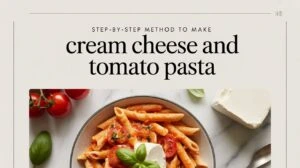
This is the heart of the guide. I’ll give explicit timing, temperatures, and small tips I learned from real cooking experience so your sauce never clumps or separates. Read it through before you start.
Prep (10 minutes)
- Remove cream cheese from the fridge and cut into 1–2 cm cubes — let it sit to reach room temperature (about 15 minutes recommended). Warming slightly helps it melt smoothly.
- Halve the cherry tomatoes (if using), or open your canned tomatoes and lightly mash them.
- Finely chop the onion/shallot and mince the garlic. Grate any finishing cheeses.
- Fill a large pot with water and bring to a rolling boil — we’ll salt it right before adding pasta.
Why: having ingredients ready prevents overcooking and keeps the sauce temperature controlled — critical when working with dairy.
Cook the pasta (timing)
- Add salt to boiling water (about 1 tbsp for a large pot). Add 350 g pasta.
- Cook to al dente — usually 1–2 minutes less than package time. For example, if the package says 9–11 minutes, aim for 8–9 minutes.
- Before draining, reserve 250 ml (1 cup) of pasta cooking water; set aside. Drain pasta and toss briefly with a tiny drizzle of olive oil to prevent sticking.
Why: al dente protects texture; reserved water is starchy and helps emulsify the sauce.
Make the tomato base (5–8 minutes)
- In a wide skillet, heat 2 tbsp olive oil over medium heat. Add chopped onion and cook 3–4 minutes until translucent.
- Add minced garlic and cook for 20–30 seconds — do not brown (browned garlic becomes bitter).
- Add halved cherry tomatoes and a pinch of salt. Cook, stirring occasionally, until they blister and begin to release juices (about 5–7 minutes). If using canned tomatoes, simmer for 6–8 minutes to reduce excess liquid.
My note: The first time I tried this I used high heat to speed up cooking and burnt the garlic — the whole sauce tasted off. Medium heat is patient but pays off.
Bring in the cream cheese (the crucial stage)
- Reduce heat to low. Add the cubed cream cheese a few pieces at a time, stirring gently after each addition. The goal is to melt the cream cheese slowly into the tomato juices.
- If the mixture feels too thick or clumpy, add 2–3 tablespoons of the reserved pasta water and stir; repeat until smooth. Use more water if needed — the sauce should be glossy and able to coat pasta.
Key concept: Never add cold cream cheese to a super-hot pan — it can clump. Warm the pan slightly and add in small batches. This is the single biggest mistake I made early on; the cure was simple: lower the heat and whisk in small amounts of liquid.
Adjust texture and seasoning (1–2 minutes)
- Taste and season with salt and fresh black pepper. Add a pinch of crushed chili flakes if you like a little heat.
- If you want extra richness, stir in 1 tbsp butter or 30–50 ml cream now (optional). This increases milk fat and gives a silkier finish.
Combine pasta and sauce (1–2 minutes)
- Add drained pasta directly to the skillet and toss gently so each piece is coated. Use tongs or a spatula — do not overwork the pasta.
- If the sauce seems too thick, add reserved pasta water a tablespoon at a time until the sauce clings to the pasta evenly.
My experience: tossing for 30–60 seconds off the direct heat helps the sauce settle and prevents overcooking.
Finish and serve (30 seconds)
- Remove from heat and stir in chopped fresh basil or parsley.
- Plate and top with grated Parmesan and an extra grind of pepper. Serve immediately.
Serving tip: garnish with whole basil leaves and a drizzle of extra virgin olive oil for shine.
The cherry tomato variant (cream cheese cherry tomato pasta) — what changes and why
If you want a brighter, fresher plate, go with cream cheese cherry tomato pasta. The differences are:
- Use 300 g halved cherry tomatoes instead of canned. They cook quickly and burst, creating a fresh, colorful sauce with bits of tomato flesh and skin — visually appealing and lighter in taste.
- Cook tomatoes just until they blister and begin to collapse (5–7 minutes). Do not overcook or they’ll lose texture.
- Because cherry tomatoes are sweeter and less watery than some canned tomatoes, you may need slightly less pasta water to reach the desired consistency.
Variations and additions (ideas you can use right away)
These are tested by me and simple to add.
- Protein boost: Add shredded rotisserie chicken (150 g) or sautéed shrimp (150 g). Warm them through in the sauce before adding pasta.
- Vegetable mix: Add mushrooms, bell peppers or baby spinach. Sauté mushrooms first until browned, then set aside; add back before combining.
- Garlic-butter finish: After tossing, stir in 1 tbsp butter for gloss and richness.
- Lighter swap: Use 150 g cream cheese + 100 g plain Greek yogurt (add yogurt off heat) for tang and protein.
- Herb twist: Stir in a spoon of pesto at the end for basil punch.
- Spicy: Add a teaspoon of crushed red pepper or a fresh chopped chili with garlic.
These small changes transform the dish from weeknight comfort to a party-worthy main.
Common mistakes, causes and exact fixes

I’ll list every problem you might meet and give the exact fix — these are the real issues I encountered and solved.
Problem A — Sauce clumps or becomes grainy
- Cause: adding cold cream cheese to very hot sauce or overheating after dairy is added.
- Fix: remove pan from heat, add 1–2 tbsp warm reserved pasta water or warmed milk, whisk slowly until smooth. Next time, cut cream cheese into small cubes, add gradually on low heat.
Problem B — Sauce separates, oily layer forms
- Cause: too high heat or excessive fat without enough starch/water to bind.
- Fix: whisk in hot pasta water slowly to re-emulsify. Lower heat and add a small knob of butter to bring back cohesiveness.
Problem C — Pasta is mushy
- Cause: overcooking or letting pasta sit in sauce too long.
- Fix: always cook al dente; if mushy already, serve immediately and avoid baking. Next time, reduce cooking time by 1–2 minutes.
Problem D — Sauce too watery
- Cause: very juicy tomatoes or too much reserved water.
- Fix: simmer for a few minutes to reduce, or add a small spoon of cream cheese or grated hard cheese to thicken. For immediate correction, lift the lid and increase heat briefly, stirring constantly.
Problem E — Sauce bland
- Cause: under-salting pasta water or not seasoning sauce.
- Fix: season sauce gradually and taste; a little grated Parmesan at the end raises umami.
These fixes are the quickest ways to rescue a dish during cooking. I learned each under pressure — once I accepted the need to taste and correct early, my results improved dramatically.
Nutritional Information — Cream Cheese and Tomato Pasta
We’ve covered all the common mistakes, causes, and exact fixes, so your pasta turns out perfect every time. Now, let’s take a closer look at the nutrition behind this comforting dish. Here’s a quick breakdown of what one serving of cream cheese and tomato pasta provides.
| Nutrient | Per Serving (Approx.) | Details / Source |
| Calories | 520 kcal | From pasta, cream cheese, olive oil, and cherry tomatoes |
| Carbohydrates | 58 g | Mainly from pasta and tomatoes |
| Protein | 15 g | From pasta, fresh cheese, and milk and cream content |
| Fat | 24 g | Mostly from milk fat in cream cheese and olive oil |
| Saturated Fat | 12 g | From higher fat content cream cheese |
| Cholesterol | 50 mg | From dairy ingredients |
| Fiber | 4 g | From cherry tomatoes and herbs |
| Sugars | 7 g | Natural sugars from tomatoes and milk |
| Calcium | 160 mg | Supplied by milk-based food like cream cheese |
| Iron | 1.5 mg | From pasta and tomatoes |
| Sodium | 420 mg | From cheese, salt, and seasoning |
| Vitamin C | 18 mg | From fresh cherry tomatoes |
| Vitamin A | 800 IU | From tomatoes and herbs |
| Potassium | 480 mg | From tomato base and pasta |
| Trans Fat | 0 g | None when using pure olive oil |
Storage, reheating, and shelf-life (practical details)
Leftovers are normal — here’s how to keep them good.
- Refrigerate leftovers in an airtight container for 2–3 days. Because of dairy, don’t keep it much longer.
- Reheat on the stove over low heat with a splash of water or milk to loosen the sauce. Stir gently until just warm. Avoid high heat.
- Freezing is not recommended (cream cheese texture can change). If you must freeze, freeze only the tomato base (without dairy) and add fresh cream cheese when reheating.
Serving suggestions and pairings
A few last pro tips from my kitchen experiments:
- Fresh green salad with lemon vinaigrette brightens the meal.
- Garlic bread or crusty baguette complements creaminess.
- Wine pairing: a crisp white like Pinot Grigio or a light rosé; if you added pancetta or bacon, a light red (Beaujolais) works.
- For a balanced plate, add a side of roasted vegetables or a simple sauté of greens.
FAQs (Cream Cheese and Tomato Pasta)
1. Can I make cream cheese and tomato pasta without olive oil?
Yes, you can replace olive oil with butter or even a light drizzle of neutral oil like sunflower oil. However, olive oil adds a distinct Mediterranean aroma and is traditional in most Italian food recipes. Butter makes the sauce richer and creamier but slightly heavier.
2. What’s the difference between cream cheese and mascarpone in pasta sauces?
Mascarpone has a higher fat content and a sweeter, silkier flavor, while cream cheese is more tangy and mild-tasting. If you substitute mascarpone, reduce other fats in the dish (like butter or cream) to keep balance.
3. Can I bake cream cheese and tomato pasta like a casserole?
Absolutely! After preparing the sauce and combining it with pasta, transfer to a baking dish, sprinkle with Parmesan or mozzarella, and bake for 15–20 minutes at 180°C (350°F) until golden. This gives a crisp top and deeper flavor — a fun twist on the traditional recipe.
4. How can I make this recipe vegan or dairy-free?
Use vegan cream cheese made from soy, almonds, or cashews. Replace milk and cream with oat milk or coconut cream. The sauce will still have a smooth texture, but the flavor becomes nuttier and lighter.
5. Why does my sauce taste too tangy or sour?
This happens if your tomatoes are very acidic. To balance, add ½ teaspoon of sugar or a splash of milk and cream to soften acidity. A little butter also helps round the taste and create smoother flavor harmony.
Final thoughts: Cream Cheese and Tomato Pasta
Cooking cream cheese and tomato pasta is truly about balance — between creamy richness and tomato freshness, between simplicity and satisfying flavor. You’ve learned the complete process step by step, from choosing fresh cheese and understanding its production method to selecting cherry tomatoes for natural sweetness and making small adjustments for perfect texture every time.